❝A dog has one aim in life… to bestow his heart.” ― J. R. Ackerley❞
❝A dog has one aim in life… to bestow his heart.” ― J. R. Ackerley❞
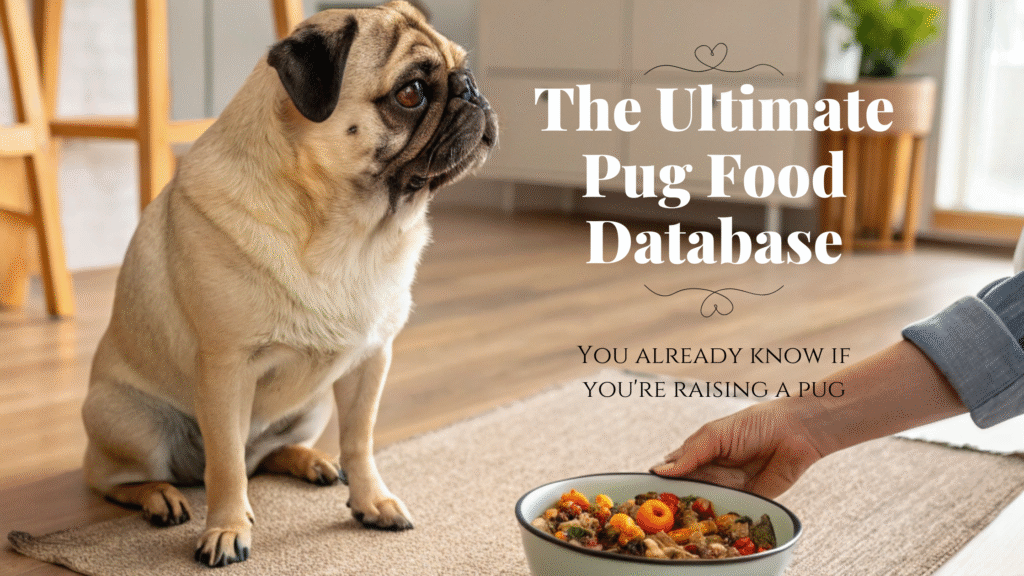
Pug Food Database: You already know if you’re raising a pug you’re caring for a tiny, snorty ball of love, not just a dog. And every meal matters. The food you put in that little bowl shapes everything, including their belly, energy, mood, and lifespan.
This guide is the ultimate deep dive into feeding your pug the right way. We’re talking real foods, real advice, and a food database built for their squishy faces and sensitive tummies. This is more than just a blog entry. It’s a pug love letter.
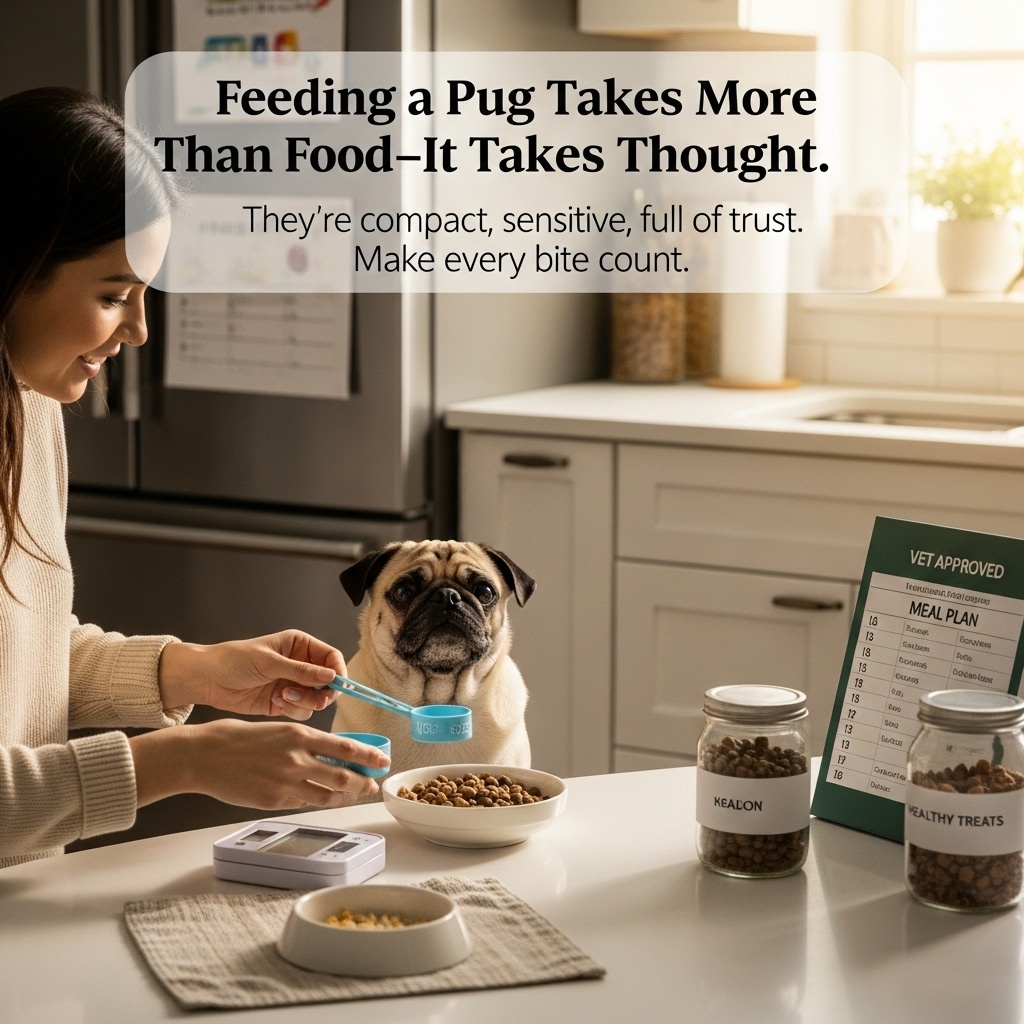
Pugs aren’t like other dogs. They’re more compact, more sensitive, and wildly expressive about what they want (and don’t want). Because of their short snouts, they cooperate to breathe and chew. A little too much food leads to a lot too much weight because of their slow metabolism. Additionally, they trust you to make the best decisions because of their small, devoted hearts.
There is no one-size-fits-all approach to feeding a pug; it involves love, science, and art combined in a bowl.
Food Type | Best Options | Benefits | Things to Watch For |
Dry Kibble | Royal Canin Pug Adult, Wellness CORE, Orijen | Easy to portion, dental support | Avoid fillers, corn, and meat “meals.” |
Wet Food | Merrick Grain-Free, Blue Buffalo, Hill’s | Great for hydration and picky eaters | Check sodium and fat levels |
Homemade Meals | Chicken, turkey, brown rice, green beans | Full control over ingredients and quality | Balance is crucial—consult your vet |
Raw Diet | Primal, Stella & Chewy’s (vet-approved) | Potential for lean body and clean teeth | Risk of bacteria, not for every pug |
Fresh Delivery | The Farmer’s Dog, Ollie, Nom Nom | Vet-approved, pre-portioned, real ingredients | Pricey for long-term; needs refrigeration |
Treats & Snacks | Sweet potato, baby carrots, freeze-dried liver | Training and bonding—can help behavior too | Keep under 10% of daily food intake |
Here’s a handy database-style table with the best food options, types, and how they support your pug’s health. Use this like a menu or a food checklist.
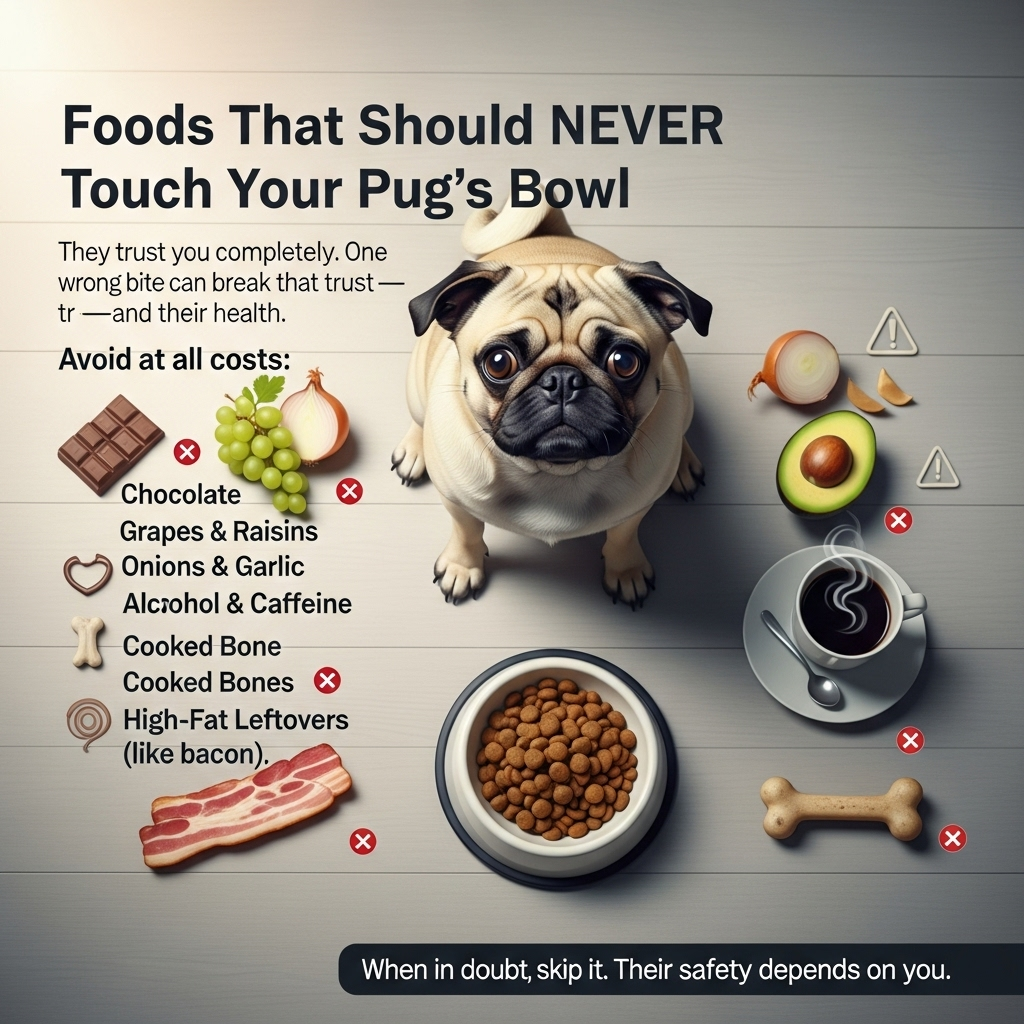
Your pug trusts you like no one else. And those puppy eyes? They’ll try to convince you that anything is edible. But some foods are dangerous—deadly even.
Absolutely avoid feeding:
Chocolate
Grapes and raisins
Onions and garlic
Avocado
Alcohol
Caffeine
Cooked bones (they can splinter and cause choking)
High-fat leftovers (like bacon or fried foods)
One wrong bite can lead to vomiting, kidney failure, or worse. So when in doubt, skip it.
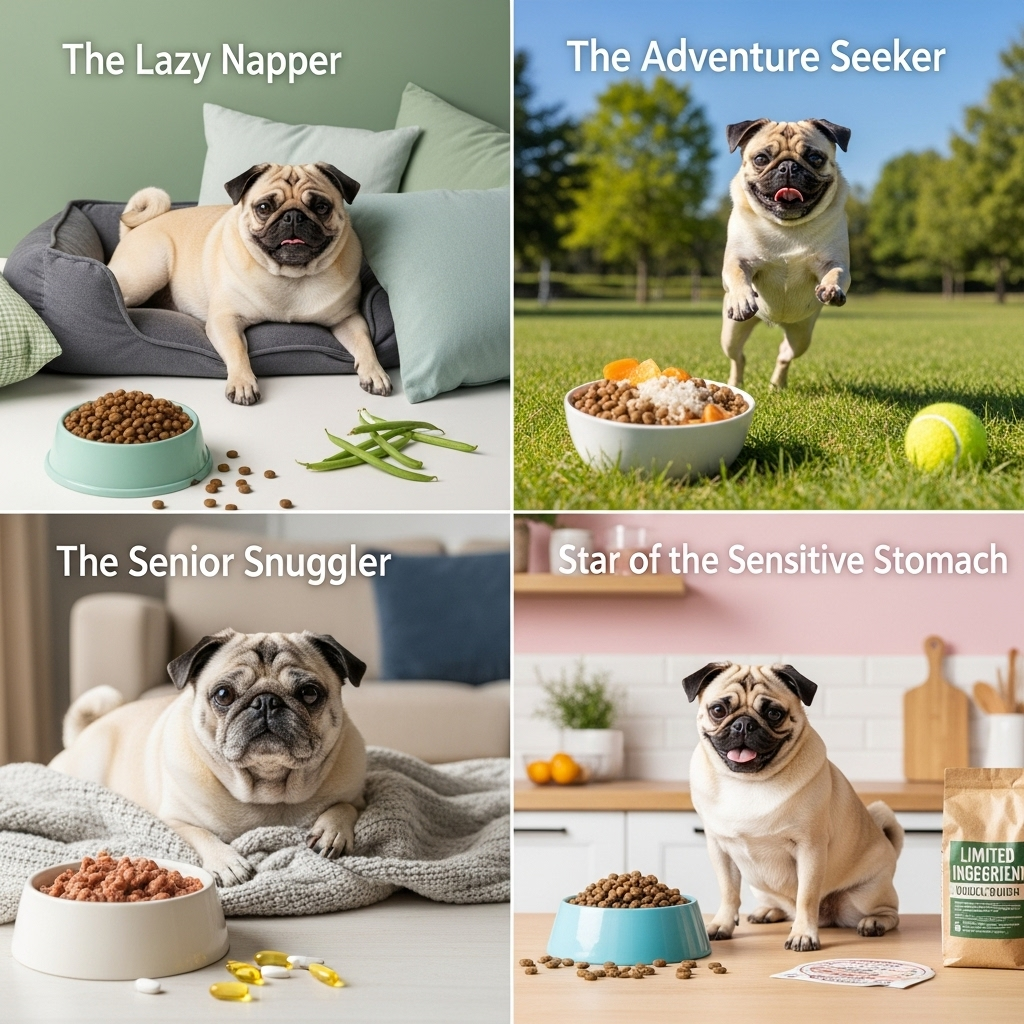
Not all pugs eat the same way. Here’s how to match their food to their vibe:
The Lazy Napper: To prevent weight gain while sleeping, they require calorie restriction and a high-fiber diet.
The adventure seeker requires more protein, grains that sustain energy, and joint support.
The Senior Snuggler requires easy digestion, soft textures, and joint care.
The Star of the Sensitive Stomach Few ingredients are required, perhaps a new protein like salmon or duck.
Their behavior can tell you what’s working and what’s not. Are they gassy? Sluggish? Too much scratching? Let their body be your guide.
As soon as they finish their breakfast, pugs will tell you they haven’t eaten in years. However, overfeeding causes heart strain, breathing problems, and weight gain.
General guideline:
Puppies: 3–4 meals daily
Adults: 2 meals
Seniors: 2 smaller, softer meals
Adapt to your pug’s age, weight, and degree of activity. Reduce them if they resemble a loaf of bread. If they’re always hungry and losing weight, check with your vet.
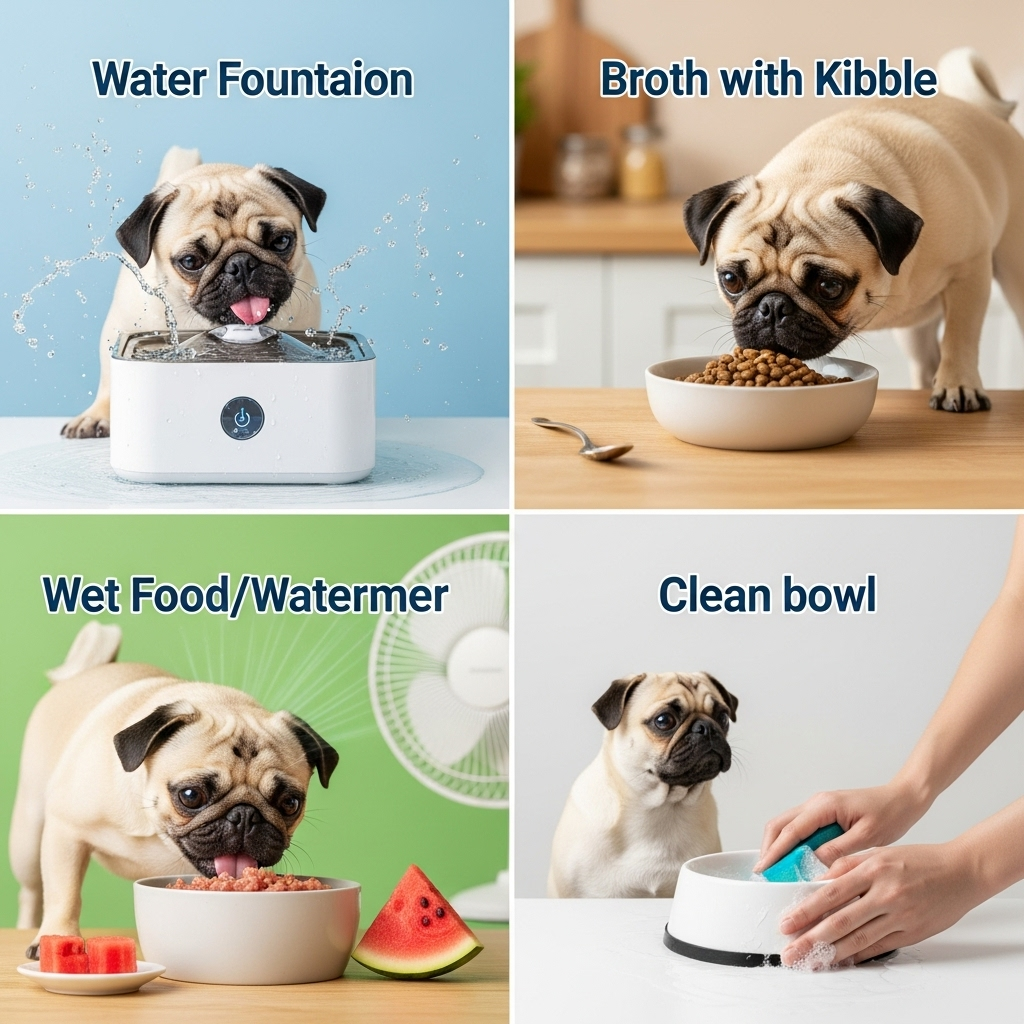
Because of their facial structure, some pugs struggle with consistent water intake. But hydration is life—it helps with digestion, temperature regulation, and joint function.
Keep it flowing.
Use water fountains for pets
Add low-sodium broth to kibble
Offer wet food or watermelon on hot days
Clean bowls daily (gunk builds fast)
If your pug’s urine is dark yellow or they’re panting more, they may be low on water.
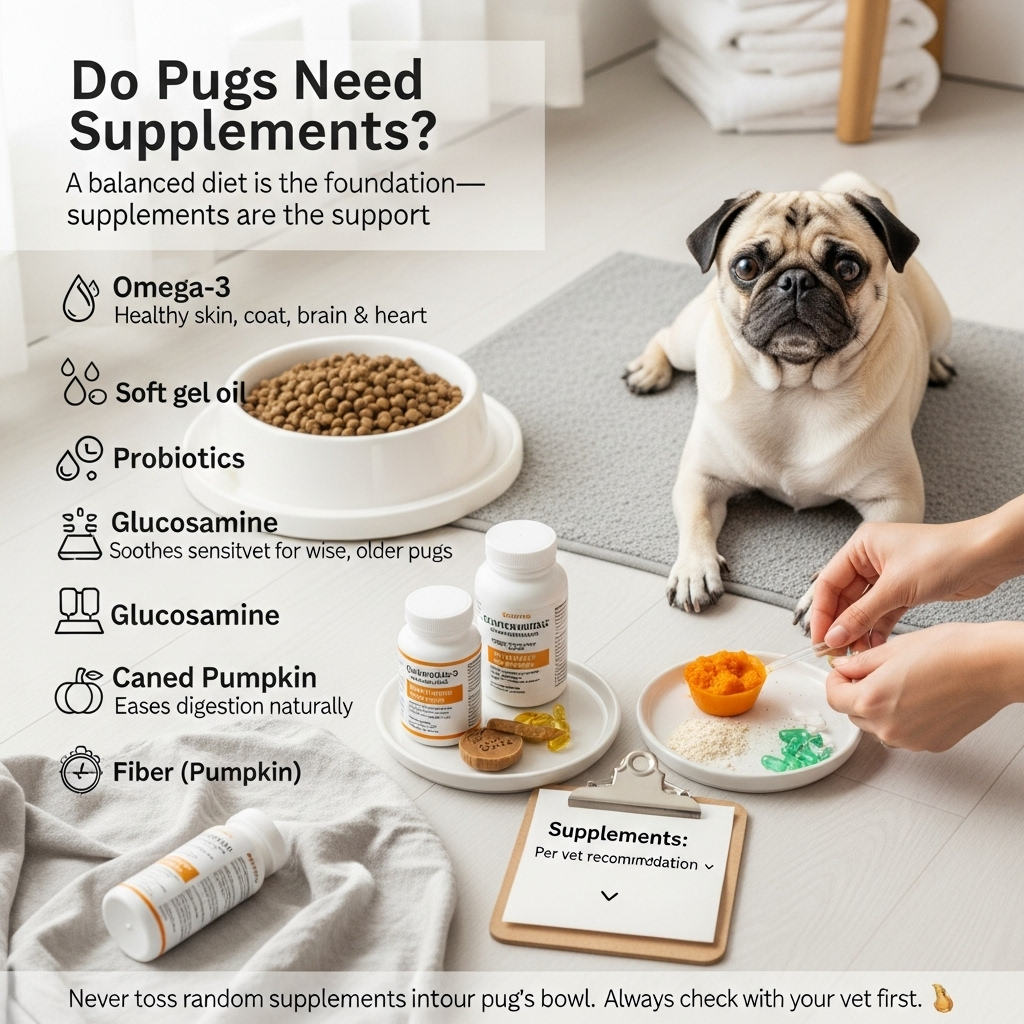
Short answer? Occasionally. A complete, well-balanced diet should be supplemented, not replaced.
Beneficial supplements safe for pugs:
Omega-3: For the health of the skin, coat, brain, and heart
Probiotics: For digestive issues
Glucosamine: For older adults’ joint support
Fiber: For easier digestion, try canned pumpkin.
Never toss random supplements into the bowl. Get vet advice first.
Labels can be confusing, but here’s what to look for:
✅ Real meat as the first ingredient
✅ Named ingredients (like “salmon,” not “meat meal”)
✅ No artificial colors, flavors, or preservatives
✅ AAFCO nutritional adequacy statement (it means the food meets standards)
❌ Avoid vague things like “animal by-products” or “poultry flavor.”
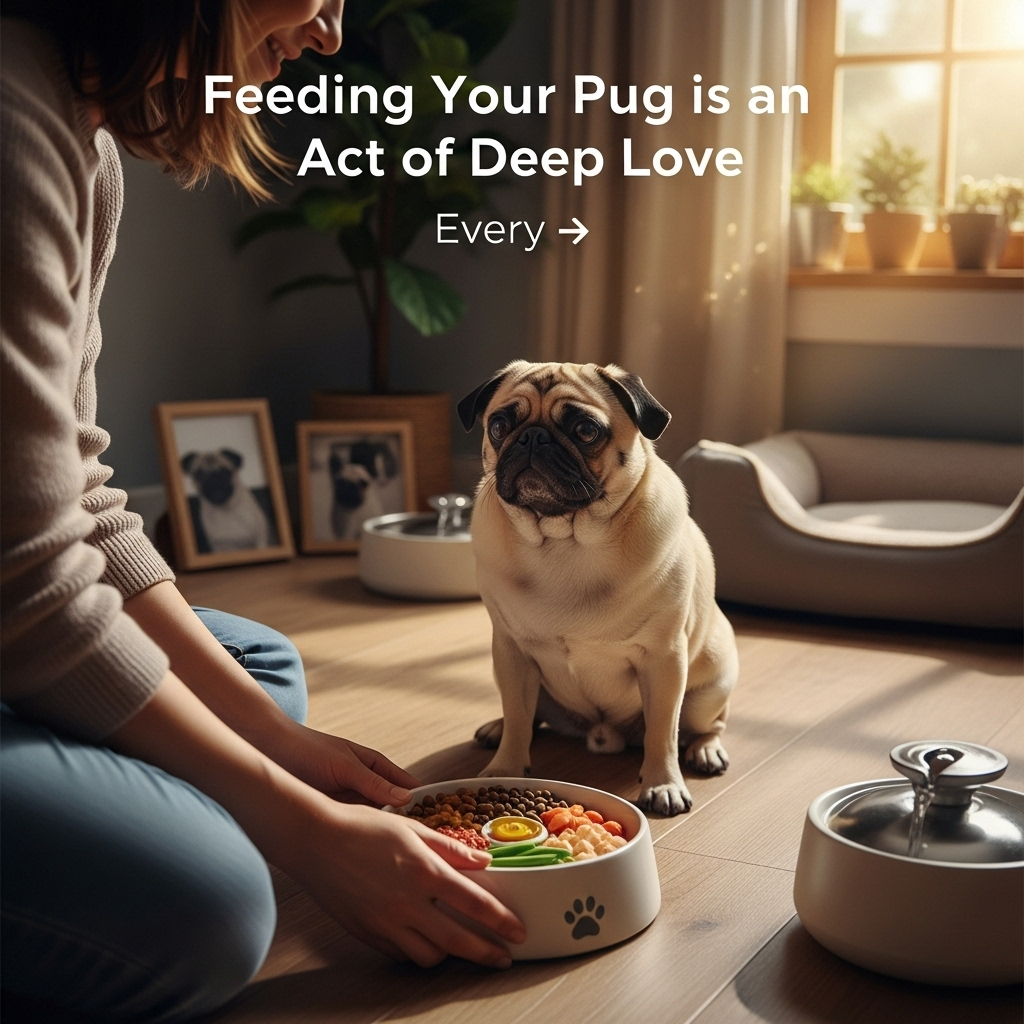
There is so much more to every meal you serve your pug than just food. It’s a connection. It is protection. It’s one of the subtle, common ways to say, “I see you.” I care about you. I want to spend as much time as possible with you. Your pug may not comprehend nutrition labels or ingredients, but they do understand comfort, consistency, and the love that goes into your decisions.
It is a sign of trust to feed your pug. They totally depend on you to make choices that affect their energy, well-being, and body image. You are providing them with safety when you use better ingredients, measure portions, and consider how food affects them. You’re giving them the opportunity to have more happy days, more fun times, and more relaxing naps while curled up next to you.
Being a great pug parent doesn’t require you to be flawless. Perfection is not the goal. Care is. Daily thoughtful decisions are far more important than the odd indulgence or error. What really matters is learning, adapting, and showing up. You already have the love and instinct to take care of your pug. All this guide does is give you the resources and self-assurance to match that heart.
Routine is comfort, and food is routine as well. Your dog learns that eating is a sign of safety, coziness, and the comforting presence of their favorite person. Those small moments eventually become a part of your relationship. A bowl placed carefully becomes an assurance that you will watch out for them at all times.
So go ahead. Feed your little shadow with intention. Feed them with kindness. Give them food as if they were tiny, snorting kings. One meal at a time, each loving decision you make adds another strand to the lovely life you are creating together.
Inhale before the bowl even touches the ground. This small pause is powerful. It is the point at which care becomes a daily commitment and routine becomes intention.
Has the portion been carefully calculated to fit your pug’s particular body? Just right for today, neither too much nor too little?
Is there clean, fresh water close by, ready to sustain their body and ensure their comfort?
Are the ingredients in this dish familiar to you? Do you feel comfortable giving them to a creature you cherish and wish to keep safe?
Will this meal do more than just sate hunger? Will it improve their digestion, boost their immunity, nourish their joints, and make them feel good about themselves?
Meeting your pug’s basic needs is only one aspect of feeding them. It comes down to prioritizing care over convenience. It is about being mindful and loving every single day. You shouldn’t feel overwhelmed by these questions. They serve as gentle reminders that paying attention is important.
You give your pug more than just a meal when you take your time and feed with intention. You provide them with security, solace, and confidence.
Yes. Your pug’s daily mood is greatly influenced by their diet. The proper diet promotes mood, skin comfort, energy, and digestion. Your pug is more playful, at ease, and emotionally balanced when they are in good physical health.
Absolutely. One of your most regular daily interactions is during mealtime. Pugs identify food with security, affection, and confidence. The way you feed them reassures them that they are taken care of and strengthens your relationship.
You are not a bad pet parent because mistakes do happen. The most important things are to keep caring, adapt, and learn. Attempting to be flawless has far less of an impact than gradual improvements.
Watch your pug closely. A healthy digestive system, consistent energy, a glossy coat, easy breathing, and a stable weight are all indicators that their diet is effective. Changes in weight, lethargy, or itching may indicate that changes are necessary.
Overfeeding is not a prerequisite for love. With premium ingredients, safe treats, and portion control, you can spoil your pug. For them, play, affection, and attention are just as satisfying as snacks.
Although no food can ensure longevity, a healthy diet promotes general well-being, eases physical stress, and helps avoid weight-related problems. These advantages may eventually lead to a longer, more comfortable life.
At least once a year, or whenever your pug’s age, weight, level of activity, or health changes, review their diet. Frequent check-ins guarantee that their diet will continue to satisfy their needs.
Although pugs are inherently food-motivated, routine, anticipation, and emotional connection can also be reflected in excitement. Because it symbolizes coziness and unity, mealtime is one of their favorite parts of the day.
Stable energy and digestion are supported by a balanced diet, which can lessen stress brought on by discomfort. Additionally, slow feeding and puzzle feeders provide mental enrichment that reduces anxious behaviors.
Feeding your pug is an act of love, not just a chore. Care, consistency, and thoughtful decision-making are far more important than perfection. You are providing your pug with safety, comfort, and a trusting life when you feed with purpose.