❝A dog has one aim in life… to bestow his heart.” ― J. R. Ackerley❞
❝A dog has one aim in life… to bestow his heart.” ― J. R. Ackerley❞
17 Smart Winter Care Tips for Pugs: Keep Your Dog Warm, Relaxed and Thriving Indoors This Season
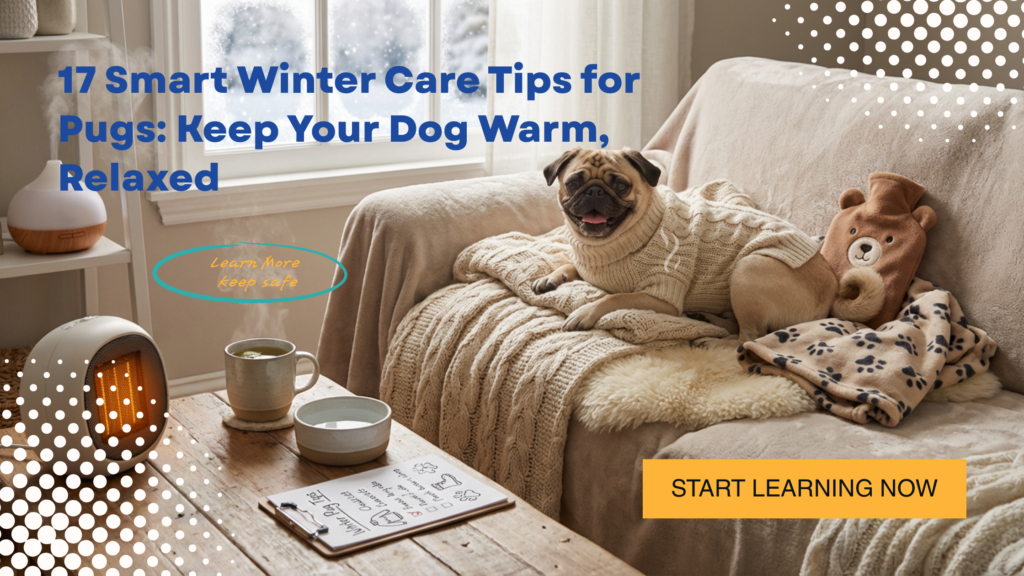
How to keep a pug warm in winter: With its crisp air, peaceful mornings, and longer nights spent indoors, winter can be a lovely season. However, for pug owners, colder months can also bring new concerns. Pugs are small, compact dogs that belong to a brachycephalic breed group, which means they have shortened snouts and are more sensitive to temperature shifts than many other dogs. As temperatures drop, many pug owners begin asking important questions: To what extent is it too cold? Should their pug wear jackets? Is dry winter air harmful? What are the safest ways to exercise indoors?
The purpose of this article is to confidently, carefully, and clearly address those questions. Particularly in homes with hectic daytime schedules and chilly mornings, winter weather can restrict outdoor activities, shorten sunlight hours, and decrease general activity. These seasonal shifts make indoor spaces crucial for wellness, comfort, and enrichment. Pugs can stay active, relaxed, and cozy all winter long with careful preparation.
The following 17 winter care suggestions provide helpful advice backed by general pet safety guidelines, veterinary-informed concepts, and climate considerations. These are not medical guidelines and are not meant to take the place of expert veterinary advice. recommendations and are not meant to take the place of expert veterinary advice. Instead, they provide accessible and helpful strategies to support a pug’s comfort during winter.
The needs of older pets, younger pets, and pets with lower activity levels during the winter are also taken into account in this guide. Many owners observe changes in paw pad sensitivity, increased sleep, decreased interest in long walks outside, and increased use of beds or blankets throughout the winter. These behaviors are typical, and winter can continue to be a peaceful, fulfilling, and secure season for pug households with the right attention and comprehension.
Maintaining warmth, comfort, and general well-being is the same whether winter in your area brings heavy snow, icy sidewalks, frigid rain, or just lower indoor temperatures. Keeping that in mind, these are the first steps to meeting your pug’s winter needs.
Indoor temperature control is one of the most important aspects of winter care for pugs. Despite having fur coats, pugs are more susceptible to the cold due to their small stature and shorter muzzles. Their breathing system, which functions differently from longer-snouted dogs, means chilly air can feel harsher and more uncomfortable. Maintaining a consistent indoor temperature helps prevent sudden temperature shocks and supports their ability to relax comfortably throughout the day.
Many pet owners find success keeping the home within a general comfort range of approximately 68–75 degrees Fahrenheit. During the colder months, this range supports normal indoor living conditions, making it easy for pugs to eat, rest, and nap. While the exact number may vary depending on household preferences, it is beneficial to avoid dramatic fluctuations. Discomfort may result from abrupt temperature changes, such as turning the heat on and off frequently.
Drafts can also influence temperature exposure. Older windows, sliding doors, and tile floors can occasionally produce cooler air pockets inside the house. Heavy bedding, window curtains, and rugs on walkways can all contribute to more evenly distributed indoor temperatures. Observing how your pug behaves in cooler rooms is helpful. If they naturally gravitate toward warmer areas, they may be signaling a need for additional heat retention.
Temperature control is not about overheating the home. Overly warm air can dry the skin and cause sluggishness. Comfort, consistency, and balance are the objectives.
Winter weather conditions influence sleep patterns. Many pugs naturally increase rest time during colder seasons, especially when outdoor activity decreases. A warm, comfortable, and supportive sleeping environment can improve your pug’s temperament, energy balance, and overall well-being.
Your pug is gently shielded from cooler floor surfaces by a soft bed with cushions. Additional warmth retention and draft protection are provided by beds with raised sides or bolsters. While hardwood and tile floors are common in modern homes, they conduct cold air more than carpeted surfaces, increasing heat loss from a pug’s body during rest.
Blankets and throws can be layered to create a warmer comfort zone, particularly for pugs that enjoy nesting. Many pug owners notice that their dogs burrow into blankets more frequently in winter. Allowing access to several layers encourages natural comfort-seeking behaviors. It’s also beneficial to make sure the bedding stays dry, clean, and odor-free, particularly in times of year when moisture from the outside may seep inside.
Bed placement also matters. Avoid placing beds near drafty hallways, open windows, or outside doors. Thick curtains, draft guards, or more rugs could be helpful if moving sleeping areas is not an option.
Multiple rest locations may also benefit pugs during winter. Some dogs prefer daytime naps in living rooms and nighttime sleep in bedrooms. Offering at least two comfortable spaces helps ensure warmth remains consistent no matter where they choose to settle.
Clothing can be a helpful tool during winter, especially for outdoor trips or for pugs living in colder regions. Winter jackets and sweaters provide a comfortable physical barrier between the pug’s body and outdoor temperatures, helping prevent heat loss during short walks or trips to the yard. When chosen correctly, winter clothing supports comfort without restricting movement.
However, winter clothing is not required for every pug. Some may prefer natural body heat retention, while others are more comfortable in a light sweater during colder days. Owners may notice symptoms of discomfort, such as shivering, stiffness, or reluctance to go outside. If these signs appear, clothing may provide benefits.
When selecting winter clothing, breathable, lightweight fabrics that conform well to body shape without being tight are recommended. Coats that fasten securely but comfortably allow dogs to move freely. When indoors, stay away from clothing that is heavy, irritating, or too warm. Wearing clothing all day inside the home is not generally necessary unless indoor temperatures are unusually cool.
The purpose of clothing is to create comfort and reduce winter stress, not to overheat. Clothing can be removed once indoor warmth is regained, especially after outdoor walks.
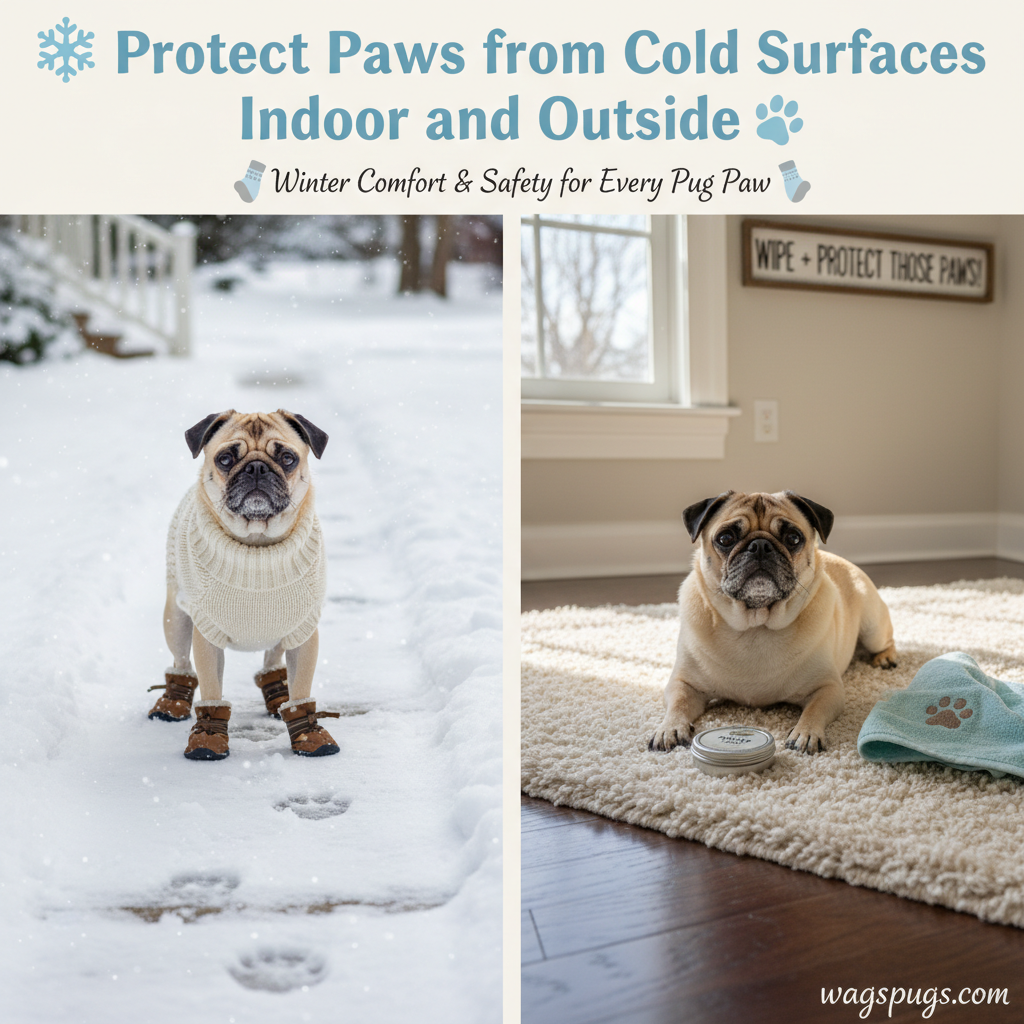
Cold air can affect paw pads the same way it affects human skin. During winter, surfaces become cooler, and dry air reduces natural moisture retention. Exposure to cold indoor flooring or surfaces outside could cause discomfort. Some pugs seem hesitant to stand still for extended periods of time, lift their paws off the ground, or hesitate when walking.
Rugs, blankets, or soft mats can lessen the transfer of cold from wood or tile flooring indoors. Pugs often follow the warmest areas in the home, and offering cushioned walking paths may reduce physical stress. Outdoors, additional caution may be necessary. In regions where sidewalks are treated with salt or chemical de-icers, paw pads can become irritated. Avoiding these surfaces when possible can help prevent discomfort.
Dryness can gradually increase during winter due to reduced moisture in the air. Although many pug owners choose to moisturize paw pads, it is important to use products intended for dogs only. Using human moisturizers may not be suitable. Indoor activity alone is often enough to maintain paw pad comfort, especially when supported by soft resting surfaces.
Monitoring paw pads periodically throughout winter helps owners notice small changes that may otherwise go unnoticed. If paw sensitivity appears higher in colder months, offering brief indoor warm-up periods before going outside may make walks easier.
Winter walking routines often change for both owners and dogs. Outdoor activities might be longer, more frequent, and more varied during the warmer months. Pugs may be less comfortable and mobile overall in the winter due to cold temperatures, icy sidewalks, and frosty air. Because pugs are particularly sensitive to colder air, brief and purposeful outdoor outings are generally recommended.
Short outdoor walks help maintain daily movement while reducing exposure to cold streets or winter wind. Many owners notice that shorter, more structured outings suit their pug’s comfort level better in winter. A typical approach is two or three shorter walks spaced throughout the day instead of one longer outing. This makes it possible for pugs to stay active, stretch their legs, and take in the fresh air without having to deal with inclement weather.
Walking during warmer periods of the day may also increase comfort. In many regions, afternoon temperatures are higher than early morning or evening. Adjusting the routine in this way offers greater stability and convenience. Owners may find that winter sunlight, even if restricted, gives pugs constructive stimulation. Natural light exposure may also support a sense of calm.
Sidewalk conditions can change quickly throughout winter. Salted pathways can irritate paw pads, and snow, slush, and ice can make surfaces slick. Observing ground conditions and selecting walking locations thoughtfully supports safety. If weather is particularly harsh or roads are icy, indoor exercise alternatives may be more comfortable.
In addition, cold air may influence breathing intensity during active moments outdoors. Reducing the time may be beneficial if a pug is reluctant to walk further, stops frequently to rest, or seems uncomfortable. Walks in the winter should continue to be pleasant, carefree, and secure.
Winter hydration for pugs: Hydration is important all year, but winter can introduce additional challenges. Indoor heating systems remove moisture from the air, increasing the likelihood of mild dehydration. Even if water intake seems normal, indoor dryness can accelerate fluid loss more subtly. Ensuring that fresh water remains available at all times is essential, especially when activity becomes more confined to indoor spaces.
Water bowls should be cleaned and refilled daily. Some pugs may drink less if water becomes stale or room temperature changes noticeably. Stainless steel bowls are often preferred for hygiene and durability. Ceramic bowls may also be used, particularly for households seeking heavier materials that remain steady on the floor.
Hydration levels vary from dog to dog, and winter routines sometimes cause increased sleep or reduced movement, which indirectly affects water consumption. Encouraging water breaks throughout the day may help maintain balanced moisture levels. Some owners find that offering water after indoor play sessions encourages better hydration.
Monitoring water intake can be especially helpful for households with senior pugs. Older dogs may be more sensitive to changes in hydration, particularly when physical activity decreases. Offering several water stations in different areas of the home may make drinking more convenient.
While water-rich foods, such as wet dog food, may increase hydration slightly, they are not necessary for every dog. Hydration and indoor humidity are closely related. Skin texture, nasal comfort, and general moisture levels can all be impacted by dry air. The following winter care consideration follows naturally from that.
Indoor humidity levels often decrease during winter because heating systems reduce moisture in enclosed spaces. Dry air can affect both humans and dogs, sometimes contributing to nasal sensitivity or a feeling of dullness in the skin. Although pugs have fur, they still benefit from balanced indoor air quality.
Humidity can be supported in several simple ways. Some households use a small humidifier to increase moisture in specific rooms. Others leave bowls of water near heating vents to encourage natural evaporation. Although indoor humidity devices are not necessary for every home, they can be useful in particularly dry climates or buildings.
Balanced humidity may help maintain general comfort during colder months. Many owners notice that their pug seems more relaxed when indoor air is less dry. While mild dryness is not typically dangerous, it may cause slight discomfort, especially in regions with cold winters and frequent indoor heating cycles.
Pugs that spend most of the day indoors may benefit from moisture-balanced air. Your pug might be feeling the same way if you feel dry at home, such as if your skin or lips are dehydrated. Observing seasonal changes and adjusting indoor settings as needed is a reasonable approach.
Indoor air circulation matters as well. Fresh airflow helps prevent stale or stagnant indoor climates, especially when windows remain closed for extended periods. Periodically airing out rooms, even for brief intervals, can support indoor freshness.
Overall, maintaining balanced humidity helps create a more stable indoor environment, supporting comfort during long winter months.
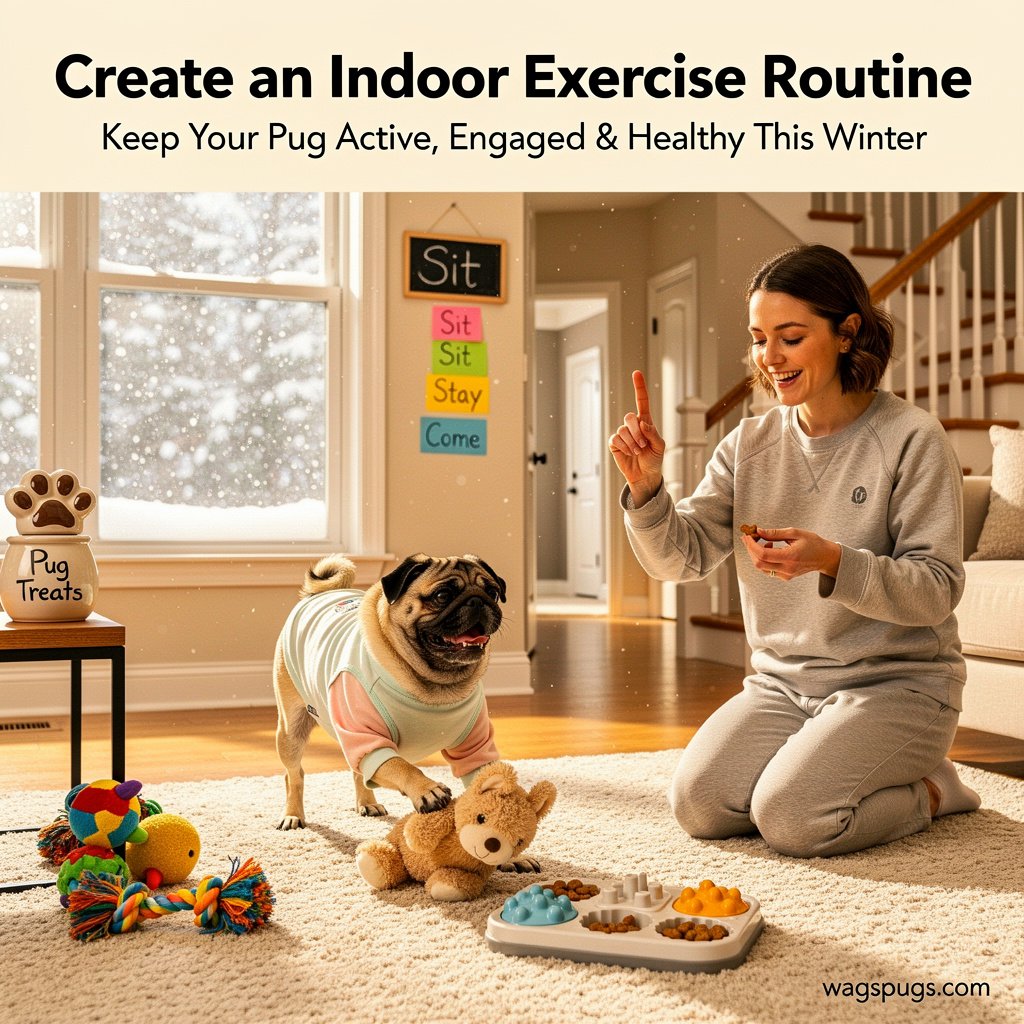
Pug winter care guide: Winter weather may limit outdoor exercise opportunities for pugs. The duration and frequency of outdoor walks may be impacted by less daylight, lower temperatures, and slick surfaces. This results in more time spent indoors for many households. While indoor rest is beneficial, exercise remains important for physical and mental well-being.
Indoor exercise routines help maintain a healthy energy balance and support muscle comfort. Light activity may improve sleep quality and reduce restlessness. The intensity of activity does not require a significant change. Instead, gentle, consistent engagement helps avoid excessive sedentary behavior.
Indoor games offer structured movement in a safe environment. Short retrieval exercises, indoor tug games, and fetch with a soft toy could all be beneficial. Puzzle toys are another excellent option, providing both entertainment and mental stimulation. Puzzle feeders with hidden treats promote deliberate, leisurely interaction, particularly on chilly days when outdoor time is scarce.
In multi-level homes, gentle stair climbing may provide a modest increase in physical activity. This should be done with caution, though, particularly for older or less mobile pugs. Playful interaction, frequent movement breaks, and quick walks down the hallway all contribute to an active daily routine. daily routine.
Another type of indoor activity is training sessions. To engage the mind and create structure in the home, simple commands like “sit,” “stay,” “wait,” and “come” can be practiced. Pugs often respond well to training because of their social nature and interest in human interaction.
Indoor exercise does not need to replace outdoor play completely. Instead, it complements winter routines by filling gaps caused by weather restrictions. Variety, stimulation, and soft movement are the objectives.
Mental stimulation is especially important during winter. Limited outdoor time may reduce environmental variety. Encouraging indoor engagement helps maintain alertness and emotional balance. Pugs are highly social, intelligent dogs, and they benefit from experiences that challenge the mind as much as the body.
Interactive toys provide one form of mental enrichment. Toys that dispense treats, scent-finding games, and puzzle feeders all promote problem-solving skills. These activities also lengthen play sessions, helping pugs remain occupied and engaged.
Rotating toys is another effective method. Instead of leaving all toys available at once, offering a few at a time creates novelty. Weekly rotation may rekindle interest in familiar items.
Social interaction also contributes to mental stimulation. Enrichment can take many forms, such as talking to your pug, brushing their coat, giving them supervised indoor freedom, and giving them gentle petting sessions. Calm indoor engagement often becomes more central during winter when outdoor routines slow.
Expanding sensory exposure may be achieved by introducing new experiences in subtle ways, such as rearranging indoor play areas or altering walking routes. Pugs love variety, especially when their surroundings restrict their ability to explore.
Mental enrichment does not need to be complicated or time-consuming. It simply requires consistency and curiosity. These efforts, combined with physical exercise, help maintain a balanced routine throughout the winter season.
Winter naturally shifts daily rhythms. Many pugs rest more frequently during colder months. Longer nights and reduced daylight encourage slower pacing and longer sleep cycles, especially when combined with reduced outdoor activity. Owners may notice a more relaxed household routine, including longer naps and quieter evenings.
Rest is a natural seasonal adaptation, not a sign of stagnation. Maintaining a balanced routine that supports both rest and gentle activity ensures that winter remains a comfortable period.
Senior pugs, in particular, may rest more frequently. Pacing activity to match their energy level helps maintain comfort. Younger pugs may alternate between bursts of winter energy and deeper rest cycles.
The goal is equilibrium, a calm balance between winter activities, indoor mobility, and restorative downtime.
Pug winter health advice: Indoor space becomes the primary setting for comfort during winter months. Seasonal well-being is supported by establishing a peaceful, cozy, and organized environment. A sense of stability is influenced by routine, temperature, humidity, and lighting.
Pugs frequently look for familiar places in the house, such as places where sunlight streams in, blankets are layered, or their favorite people congregate. Supporting these natural preferences deepens comfort.
During winter, households may benefit from predictable routines. Regular meal plans, regular playtimes, and designated rest periods all contribute to a sense of security. In the outdoors Due to weather-related schedule changes, indoor structure aids in maintaining emotional equilibrium.
The consistency of cheerful indoor routines may also support owner well-being. Winter can be a busy and sometimes stressful season, and calm indoor habits benefit the entire household.
As winter progresses, dry air and cold ground surfaces can influence paw pad texture and sensitivity. Paw pads serve as natural protective layers, absorbing movement pressure and helping provide traction. These areas may become dry, rough, or slightly cracked during the winter. It’s beneficial to keep an eye on the condition of the paw pad throughout the season.
After outdoor walks, gently clean your paws to get rid of debris, slush, and salt. Many households use a soft towel to dry paws thoroughly. This simple step helps prevent cold air from lingering in the pad creases and reduces the risk of slipping indoors. For homes that experience heavy snow or salted sidewalks, wiping paws becomes especially useful. Some dogs show more interest in licking their paws during cold months, often in response to dryness or surface irritation.
Owners may consider placing soft mats or rugs in resting areas to reduce exposure to cold floors. Between paw pads and flooring materials like wood, tile, or concrete, these surfaces provide insulation. Cold floor surfaces tend to pull heat from the body, and this effect is more noticeable in smaller breeds.
If paw pads appear very dry, consult a veterinarian before selecting a moisturizing solution. Avoid using human products, as they may be unsuitable for dogs. The goal is to protect paw pads without covering or sealing them. Winter is a period when gentle care and observation can make a meaningful difference in comfort levels.
Grooming patterns may shift slightly in winter. While outdoor shedding may decrease, dryness from indoor air can influence coat texture. Maintaining a clean, comfortable coat and minimizing the accumulation of natural oils, dander, or loose hair are two benefits of gentle grooming sessions. Regular brushing supports skin health and encourages circulation.
Indoor heating systems reduce humidity and can lead to slight dryness in the skin. Brushing helps distribute natural oil, which supports healthy fur and skin texture. It also allows owners to check for signs of seasonal irritation, including flakiness or mild redness. Grooming does not need to be intensive. Even short brushing sessions offer benefits.
Bathing frequency may also change during winter. Fewer outdoor activities may reduce the need for frequent baths. Just as with moisturizing paw pads, dog-safe products should always be utilized; never use human soaps or shampoos. Overbathing can remove natural oils, so a balanced schedule is recommended.
Facial fold hygiene is another winter consideration. Pugs have skin folds that require routine cleaning to stay comfortable. Moisture, food particles, and natural oils can be gently wiped away with a soft cloth. Winter does not eliminate the need for facial fold care, even when activity levels decrease.
Grooming can also serve as indoor bonding time. Many pugs enjoy the tactile connection involved. Combining grooming with mental stimulation creates calmness and provides beneficial structure during colder months.
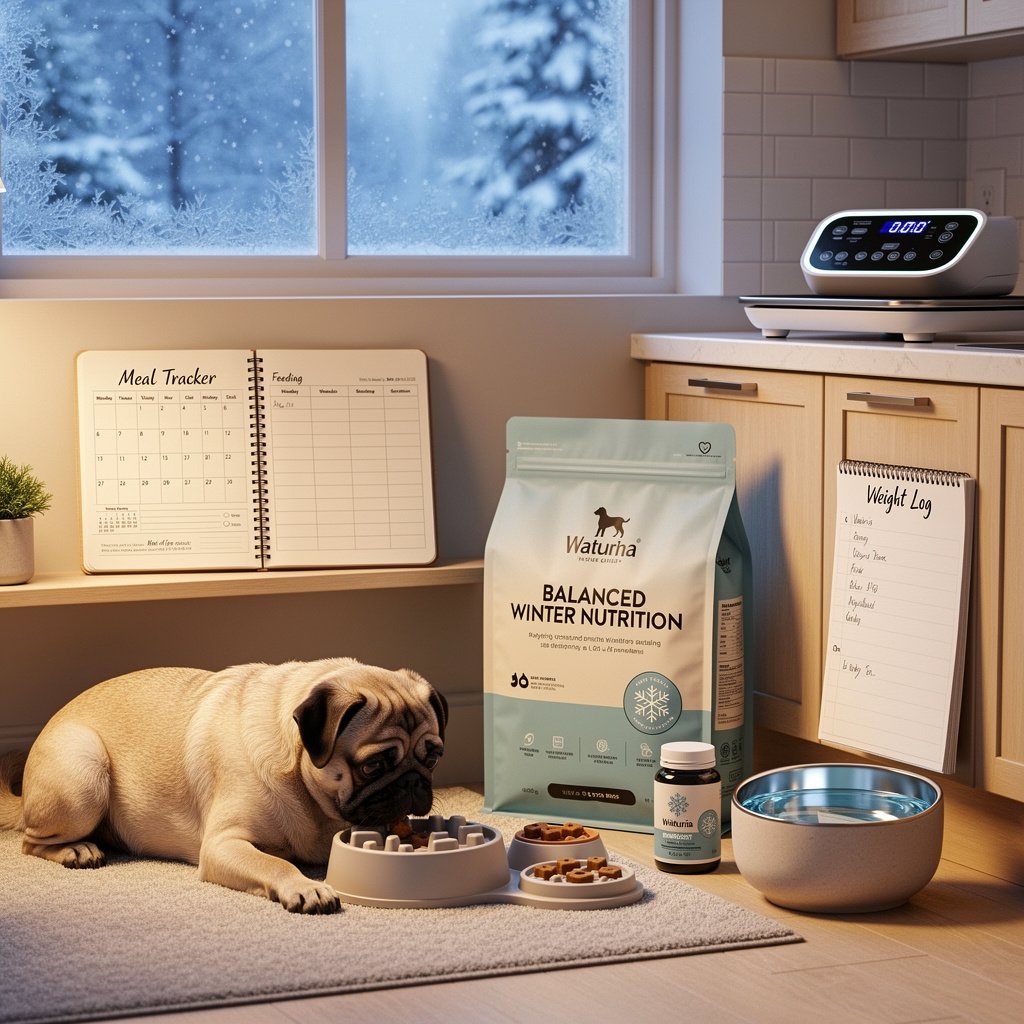
Dietary needs may shift in winter. Lower outdoor activity levels may lead to decreased energy expenditure, although individual differences are common. Owners can monitor weight and body shape to ensure healthy balance throughout the season.
Some dogs may benefit from slightly increased calories if they remain active. Others may require the same amount of food or even slightly less. Careful observation helps determine what is appropriate. Sudden weight gain may occur if food intake remains high while movement decreases, which is common during colder weather.
Hydration plays a significant role in nutritional balance. Indoor air dryness can lead to increased thirst. Offering adequate water supports digestion and general well-being. Dog-safe hydration treats sometimes help encourage water intake, though they are not necessary for all households.
Winter may also be an opportunity to evaluate food quality. Choosing nutritionally balanced meals supports year-round health. Different dietary needs may apply to older pugs, younger pugs, and pugs with sensitivities. If significant changes are being contemplated, a veterinarian may be beneficial.
Monitoring feeding schedules remains important. Regular meal timing creates predictability and reduces overeating. Indoor enrichment tools such as slow feeders may support both digestion and mental activity during winter months.
Winter comfort is not limited to a single resting space. Many dogs enjoy exploring different areas throughout the day. Providing more than one warm resting location increases comfort and flexibility.
One space may be preferred for daytime naps, while another may be better for evening rest. Variety and movement can be promoted with extra blankets, bed layers, or cozy mats. For homes with multiple floors, offering a warm option on each level helps ensure convenience and comfort.
Placement matters. Avoid resting areas in direct paths of drafts or near exterior doors. Areas beneath windows may also cool quickly in the afternoon or evening. Pugs tend to choose warm, soft, familiar spaces, especially during winter. Observing where your dog naturally prefers to rest can be informative.
Creating low-traffic zones may also benefit rest patterns. Winter routines often include longer quiet periods, and peaceful resting spaces support relaxation. Those with older pugs may notice that these dogs prefer more private areas during colder seasons. Offering options helps respect individual preference.
Soft bedding is especially helpful for senior dogs who may experience stiffness. Deeper sleep and more peaceful recovery are encouraged by warm rest. Comfort and the quality of one’s sleep are particularly crucial for one’s physical and mental health during the winter.
Understanding how pugs communicate temperature discomfort supports proactive care. Visual cues may indicate when adjustments are needed. These could include curled body positions, shivering, tucked posture, difficulty walking, or shifting where you sleep.
Some pugs may prefer to sit closer to heating vents or under blankets. Others may move more slowly when rising from rest. These changes are not necessarily signs of health issues. Instead, they often reflect the body reacting to colder conditions.
Owners can watch for subtle patterns. For example, if a pug begins sleeping closer to household members on the sofa, it may be responding to cooler air conditions. If outdoor walks become shorter by choice, weather may be influencing comfort.
Observing paw pad sensitivity can also provide insight. If a pug lifts one or more paws while outside, it may be reacting to cold surfaces. Indoors, repeatedly shifting positions may indicate the need for an extra blanket or warmer bedding.
Awareness allows owners to respond quickly and calmly. Winter routines do not require constant adjustment. Rather, they benefit from understanding how seasonal changes influence daily comfort.
Senior pug winter care: Senior pugs may require additional winter considerations. Dogs that are older tend to be less flexible, move more slowly, and take more breaks. Cold air and reduced sunlight may increase stiffness or discomfort. Comfort is maintained by providing additional warmth, reducing the amount of time spent exercising, and increasing bedding support.
Senior pugs may also prefer gentler indoor play or reduced stair use. Providing easy access to resting areas encourages movement while reducing strain. Multiple soft beds on each floor may be helpful.
Nutrition may also change in senior dogs. Monitoring weight and appetite becomes especially important. Hydration levels may shift as well. Since indoor heat can cause dryness, encouraging water intake supports overall balance.
Mental engagement remains useful. During the winter, small indoor games, training exercises, and puzzle toys offer stimulation. Keeping routines consistent helps support emotional stability.
Winter often brings quiet, slower days that can be very comfortable for older pugs. With thoughtful support and observation, senior pets can enjoy calm, restful seasonal routines.
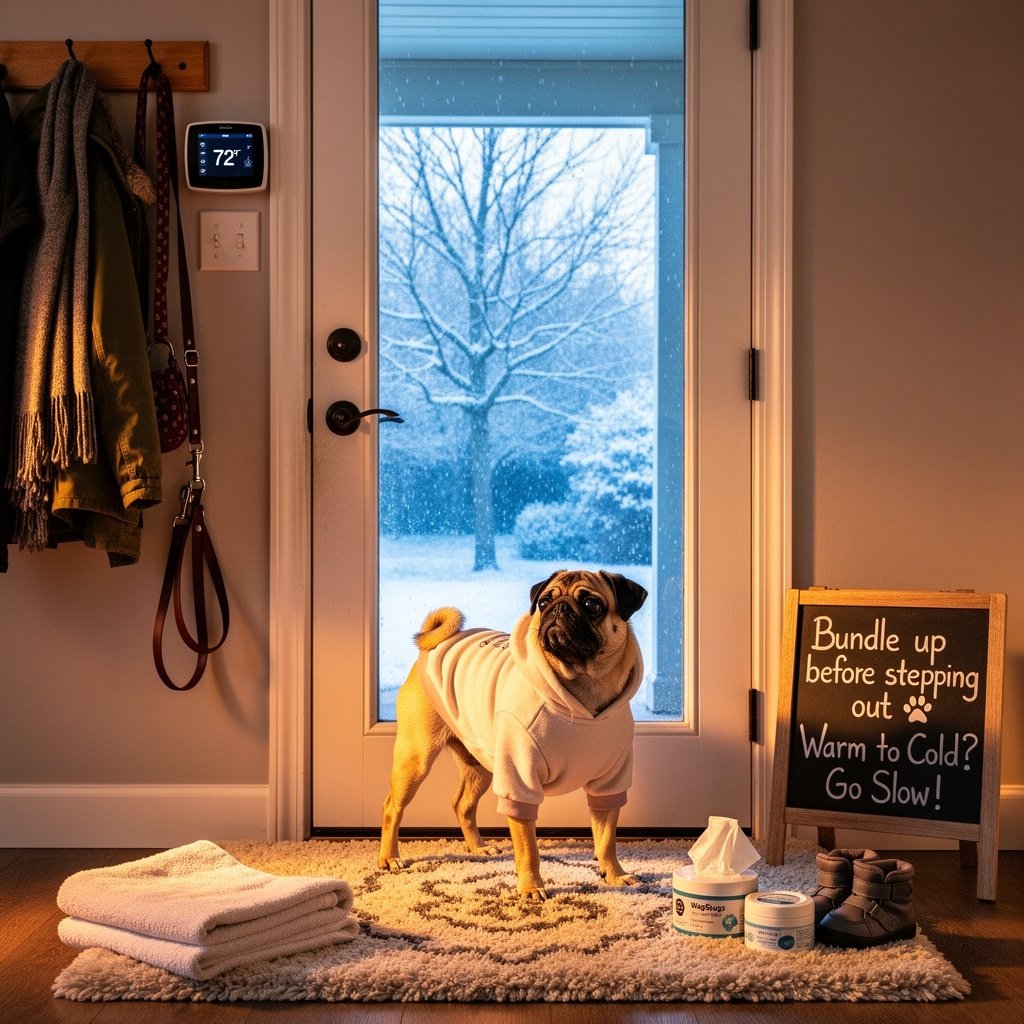
Pug comfort tips for winter: Sudden changes in temperature can be uncomfortable for pugs. Transitioning from warm indoor environments to cold outdoor air may require additional care. A gradual shift reduces the stress of abrupt cold exposure, particularly for short outdoor trips.
Using a covered porch or protected landing space before going outside can create a small buffer zone. Similarly, after outdoor activity, drying fur and paws before reentering cold spaces helps retain warmth.
If a pug appears reluctant to go outdoors during colder months, offering encouragement while maintaining brief, purposeful outings may help. Winter house training regimens occasionally call for adaptability, particularly in icy or snowy conditions.
Temperature stability indoors is equally important. Avoiding dramatic thermostat shifts maintains comfort and reduces energy fluctuations. Sleep quality, relaxation, and seasonal wellness are all supported by a consistent indoor environment.
Routines contribute to a sense of structure, and winter often changes daily habits. Shorter daylight hours and reduced outdoor activity patterns may influence mood. Maintaining emotional equilibrium is aided by establishing regular sleep, play, and feeding schedules.
Pugs respond positively to predictable rhythms. Structured days help reduce stress and create security. Indoor activities fill spaces left by reduced outdoor exploration.
A consistent routine is encouraged by simple cues like brushing every day, playing in the evening, or taking regular morning walks. These routines foster comfort, familiarity, and trust. Winter often emphasizes family time and indoor bonding periods, which pugs generally appreciate.
Predictable, gentle structure transforms winter from a restrictive season into a peaceful and rewarding one.
Winter brings unique household rhythms. Families may gather more frequently in shared spaces, making living rooms and dens common rest areas for both humans and pets. Indoor soundscapes tend to become quieter, punctuated by soft routines and longer periods of rest.
Pugs often reflect the mood of the home. If the overall environment feels calm, their behavior tends to follow suit. Soft lighting in the evening, for instance, might promote relaxation. Music or white noise can create a sense of peaceful continuity. Indoor comfort becomes a central theme of winter care.
Many pugs enjoy consistent company during colder months. Humans often spend more time indoors, offering additional social interaction. Gentle physical closeness, such as sitting near family members, is common. Winter may become a season of increased companionship.
Offering sensory consistency is helpful. Indoor stability is enhanced by well-maintained play areas, warm floors, clean bedding, and regular feeding schedules. Seasonal decorations, if used, should avoid obstructing safe pathways. Simple adjustments help preserve comfortable movement throughout the home.
Winter care, at its core, is about balance. It is about noticing small changes in the home environment and responding with steady, thoughtful support.
Winter conditions require thoughtful awareness. While many aspects of seasonal care take place indoors, outdoor environments remain part of a pug’s daily routine. Dogs are exposed to cold temperatures, wind, and weather-related ground conditions even on short walks or bathroom breaks. Combining indoor comfort with safe outdoor habits allows pugs to maintain familiar routines without discomfort.
The safest times to engage in outdoor activities are determined by tracking weather patterns throughout the winter. Slush, ice, heavy snow, and light snow all affect how sidewalks feel underfoot. Frozen paths may become slippery, increasing the chance of sudden slips for both the owner and the dog. When temperatures drop significantly, reduced air moisture can sharpen sensations on exposed skin and nasal passages. Observing how your pug responds to these changes supports proactive decision-making.
Even within cold regions, winter is not uniform. Some days remain mild and bright, while others involve freezing rain or deep snowfall. Planning routines around favorable moments maintains comfort and strengthens the human-dog bond. When the weather restricts outdoor time, indoor play can fill the void.
Owners who live in areas where winter weather affects transportation and access may choose to prepare ahead. Supplies that can be useful include extra blankets, charged flashlights, non-slip shoes, and indoor grass pads for short-term bathroom use. bathroom use. Though most households will never need them, preparedness contributes to calm winter planning.
The winter season is not simply a cooling of the environment but also a shift in the way households function. Developing awareness of indoor and outdoor realities reinforces safety and supports a calm seasonal rhythm.
Pugs are very gregarious dogs that value company, interaction, and attention. During winter, human gatherings often take place indoors. New social environments can be introduced through family visits, holidays, and winter celebrations. Pugs may enjoy these activities, especially if they are comfortable around people.
Providing a quiet space within the home allows the dog to retreat if stimulation becomes overwhelming. Soft bedding in a calm corner can serve as a refuge if visitors raise energy levels. It is advisable to encourage visitors to let the pug approach at its own pace. Food items, packaging, and seasonal decorations should be kept out of reach because people may become more curious at gatherings.
Winter socialization also extends to outdoor activities when weather is favorable. Meeting neighbors or passing other dogs during short walks offers routine stimulation. Many pugs enjoy greeting new people and observing neighborhood activity. Even if outdoor outings are brief, these interactions contribute to emotional balance.
Wintertime emotional well-being extends beyond physical comfort. Social engagement and companionship build confidence and familiarity. Owners who spend more time at home during winter offer additional bonding opportunities. Supportive closeness is created by reading, watching TV, or working close to the dog.
Winter is often thought of as a quiet season, yet it can encourage meaningful connection. Social enrichment, when paired with warmth and rest, supports a well-rounded seasonal experience.
Winter starts out slowly and ends slowly. Early winter may involve mild temperatures that allow longer outdoor walks. Midwinter may bring the coldest, darkest days of the year, requiring increased indoor planning. Late winter often includes unpredictable weather patterns that alternate between cold and warm.
Being flexible with routines allows owners to respond to these shifts. For example, early winter may be a time for longer walks that taper into shorter outings during midseason. Toys and indoor games may be more important during peak winter. Near the end of winter, daylight increases and outdoor opportunities expand once more.
When necessary, owners can modify indoor humidity devices, blanket placement, and heating schedules. Personal comfort is often a measure of how a pug may feel. It’s possible that a dog will feel the same way about a dry, chilly, or draft-prone home environment as a human.
Seasonal change brings both challenges and opportunities. Winter encourages introspection and steadiness, while spring introduces renewed energy. Recognizing these transitions supports relaxed planning and prevents stress.
Winter is not a static season. It evolves. Responding to changing conditions creates stability for the dog and supports comfort throughout all phases of the winter cycle.
In some homes, winter comes with increased indoor noise. Background noise can be influenced by seasonal construction, home appliances, heating systems, and holiday festivities. Pugs often respond to noise with curiosity or alertness. Creating a calm auditory environment helps maintain emotional relaxation.
Soft music or reliable background sound can provide continuity. Many dogs find comfort in familiar sounds. Silence can also be reassuring, allowing natural house rhythms to emerge.
Lighting may also change during winter. Shorter daylight hours lead to earlier evenings, and artificial lighting becomes more prominent. Selecting warm indoor lighting may support calmness. Sudden light changes, such as power flickers, may startle some dogs, especially during windy storms.
Environmental stimuli influence emotional wellness, and steady surroundings support calm behavior. Organizing physical spaces to reduce clutter allows dogs to move freely. Clear pathways prevent slipping and reduce the chance of sudden environmental surprises.
Winter encourages safe, predictable indoor settings. Gentle consistency supports emotional well-being and enhances the sense of security within the home.
Caring for a pug during winter is not only about addressing immediate needs. The patterns formed during the season carry forward. Long-term comfort is influenced by regular rest periods, mental enrichment, balanced indoor exercise, and adequate hydration.
Stable routines can promote emotional stability, improve muscle tone, and lessen stress. Pugs that feel safe indoors tend to rest more deeply and show improved focus during play. Indoor training periods sharpen communication and reinforce bonding.
Winter also creates an opportunity to evaluate household systems. New play structures, indoor organization, and bedding upgrades might be helpful long after the season is over. Owners who experiment with new enrichment ideas during winter often keep the most enjoyable activities throughout the year.
Thoughtful winter care is a foundation upon which future routines can build. Winter promotes mindfulness, even though every season has its own difficulties. It encourages owners to pay close attention to behavior, comprehend comfort preferences, and make deliberate adjustments.
As winter concludes, patterns of care developed during the season can transition smoothly into spring routines. As a result, winter care becomes a component of a more comprehensive wellness strategy.
Every winter is unique, but seasonal preparation remains helpful. Owners might think about making a quick checklist to go over at the start of every winter season. Example items include:
Winter preparation does not require significant time or expense. Small adjustments often provide the greatest comfort.
Planning ahead allows winter to be a season of calm rather than concern.
|
Product |
Type |
Price |
Notes |
|
Unisex T-shirt |
~$30.99 |
There are several colors available for this casual pug outline t-shirt. |
|
|
Unisex T-shirt |
~$30.99 |
||
|
Women’s Premium Tee |
~$35.49 |
||
|
Hoodie |
~$49.99 |
||
|
Sweatshirt |
~$36.49 |
This seasonal item is ideal for gift-giving and colder weather. |
|
|
Long Sleeve/Hoodie |
~$35.49 |
available in a variety of styles, such as hoodies and t-shirts. |
|
|
Women’s Tee |
~$26.99 |
An inexpensive floral-patterned graphic shirt featuring a pug. |
Winter influences household dynamics. Daily rhythms become quieter, indoor rest increases, and outdoor routines shift. Pugs adapt to these seasonal changes when owners understand and respond to their unique needs.
Winter can be made more comfortable rather than difficult by maintaining steady indoor temperatures, providing cozy resting areas, planning gentle exercise routines, and monitoring paw and coat health. Warmth and consistent care benefit senior pugs, while younger dogs enjoy indoor play and mental enrichment. All pugs thrive with companionship and emotional stability.
The colder months offer an opportunity to strengthen the bond between owner and pet and to create indoor environments that support overall well-being. Winter care does not require dramatic changes; it simply calls for thoughtful consideration of comfort and routine.
With careful planning and attention, winter can become a calm, safe, and rewarding season for both pugs and their families.
Pug owners often ask similar questions about winter. This expanded FAQ offers clear, accurate, and motivating information. expanded FAQ.
Pugs are more sensitive to cold temperatures than many other dogs. Owners often find that temperatures under 45 degrees may be uncomfortable for longer outdoor walks. Short bathroom breaks are still acceptable, especially if they are accompanied by warm clothing and a timely return to the house.
Yes. If a home is very cool, or if a pug rests on a cold floor for long periods, the dog may feel chilled. By providing cozy mats, blankets, or warm resting spots, this risk can be reduced.
In cold regions, boots can help protect paws from ice and salted sidewalks. Some pugs enjoy wearing boots, while others prefer brief walks without them. Boots are not required for every dog, but they can be helpful.
Some pugs benefit from light sweaters indoors if the temperature is low. However, most pugs remain comfortable without indoor clothing if household temperatures stay stable.
Indoor exercise can safely support physical and mental well-being. Household space may limit movement, so shorter, more frequent activity is helpful. Dogs do not need outdoor exercise exclusively to stay healthy.
Feeding amounts depend on energy expenditure. Some pugs may need small adjustments if outdoor activity decreases. Owners can monitor body shape and weight to determine needs.
Yes. Many dogs naturally sleep more during winter, especially if activity becomes less intense. Increased rest is often normal and comfortable.
Older pets might need more warmth, softer bedding, and more frequent rest. Gentle indoor activities are often ideal. Seasonal routines may shift toward increased comfort and steady hydration.