❝A dog has one aim in life… to bestow his heart.” ― J. R. Ackerley❞
❝A dog has one aim in life… to bestow his heart.” ― J. R. Ackerley❞
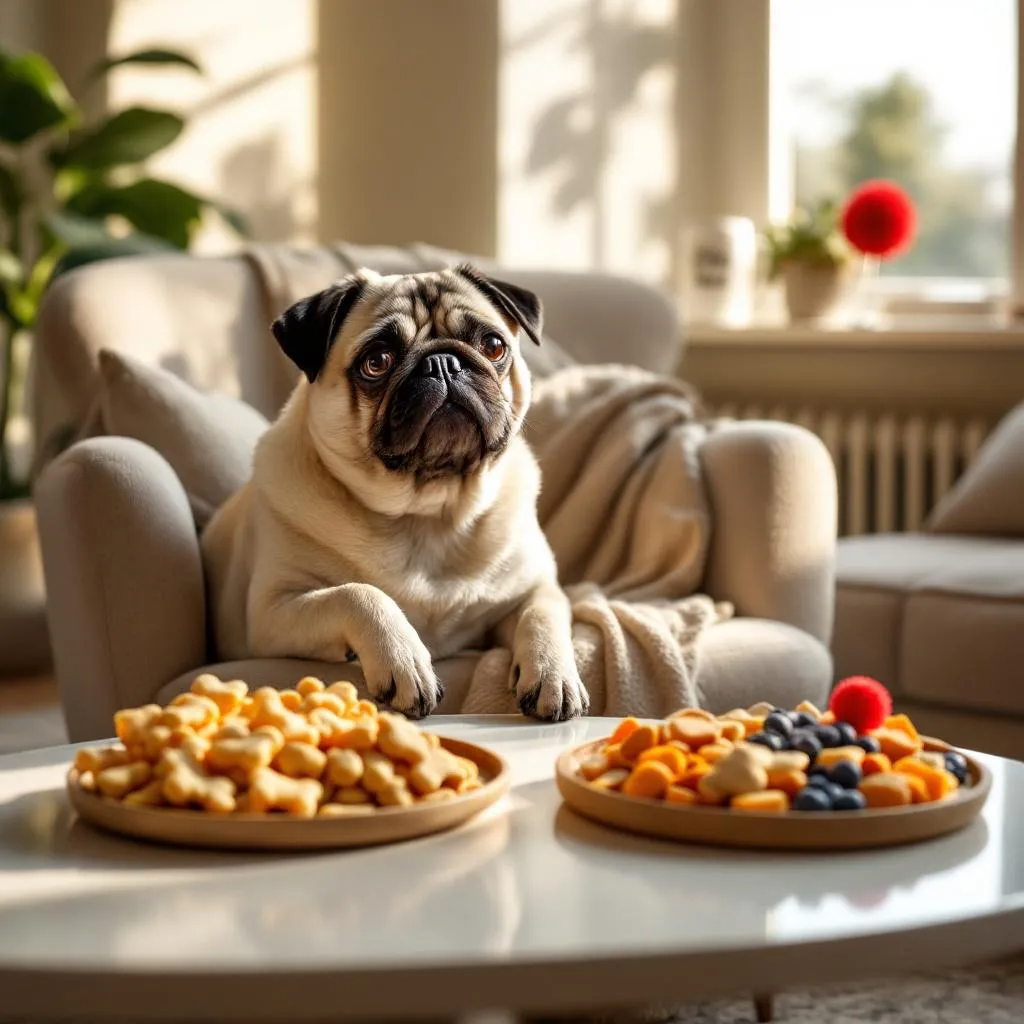
Pug Treats: Let’s just say what needs to be said.
Your pug, who follows you around like a squishy shadow, is more than just a dog. He is a snorty, wall-eyed loaf. They manage the entire house despite never paying rent; they’re a combination of a therapist, clown, and roommate.
So why are we still giving them strange, chalky rectangles that resemble fake bones in the name of everything holy? We would never give our grandmother anything that contained mystery meat and red dye. Nevertheless, we throw these to our tiny gremlin angels and refer to it as “treating them.”
Nah. Not anymore.
Disguised as a guide, this post is actually a love letter to improving. Because any snack isn’t enough for your pug. They deserve the best bite in the bag.
You walk into the treat aisle at the pet store, and suddenly you’re 10 years old again, staring at a wall of cereal boxes. It’s all bright colors and big promises. “Natural!” “Wholesome!” But what happens when you turn the bag over? “With Real Chicken!” It’s just chemicals in disguise.
The pet business can be a little shady, let’s face it, boss. And pugs? They’re sensitive little creatures. They have a lot of “fine print,” including weight issues, breathing disorders, allergies, and digestive systems that can blow up with just one harmful snack.
If the treat reads like a science experiment or sounds like it was cooked up in a villain’s lab? It doesn’t belong in your pug’s mouth.
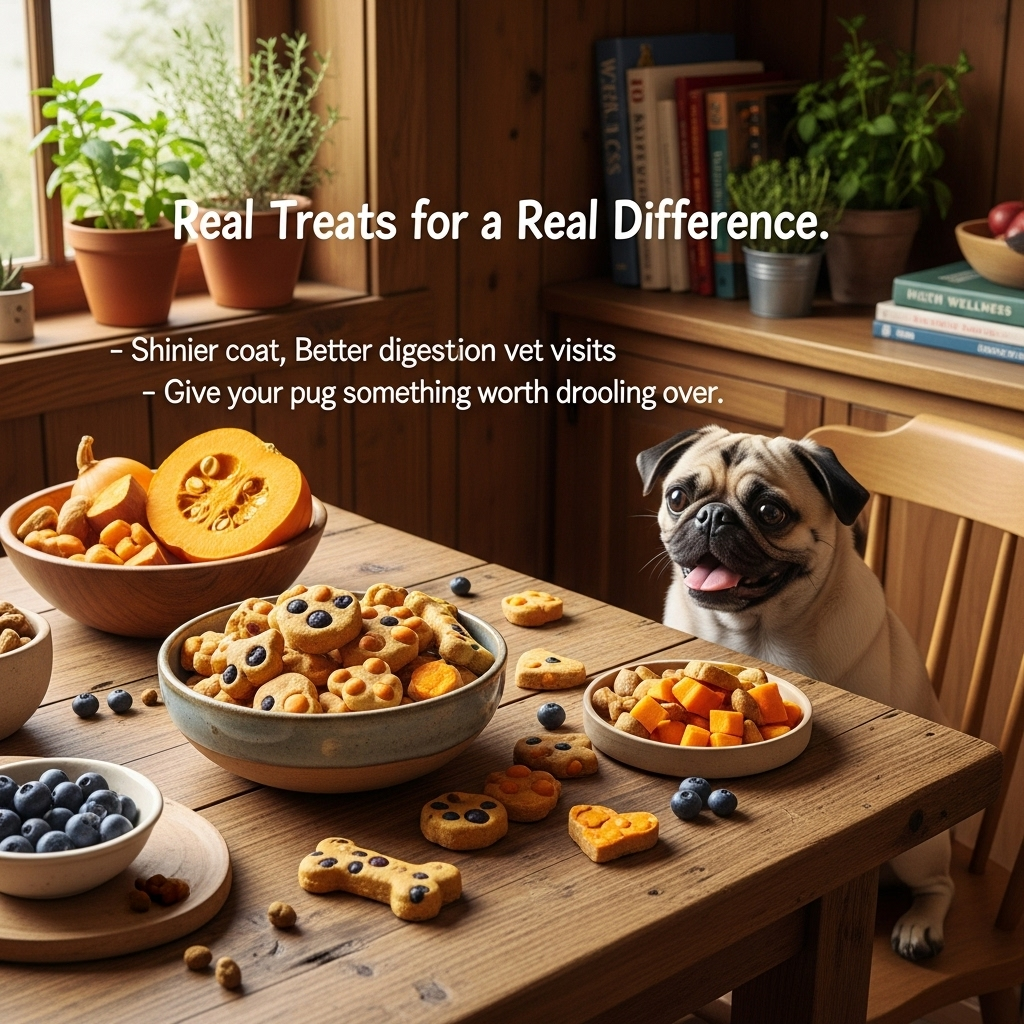
Okay, let’s shift the energy. Instead of focusing on the bad, let’s talk about the good stuff. the items you do desire.
Consider giving your pug food that will improve their health, such as a shiny coat, easier digestion, or fewer trips to the vet. That’s not just feasible; it’s the purpose of genuine treats.
Is it possible to envision it developing or cooking in a typical kitchen? In moderation, it’s probably safe for pugs.
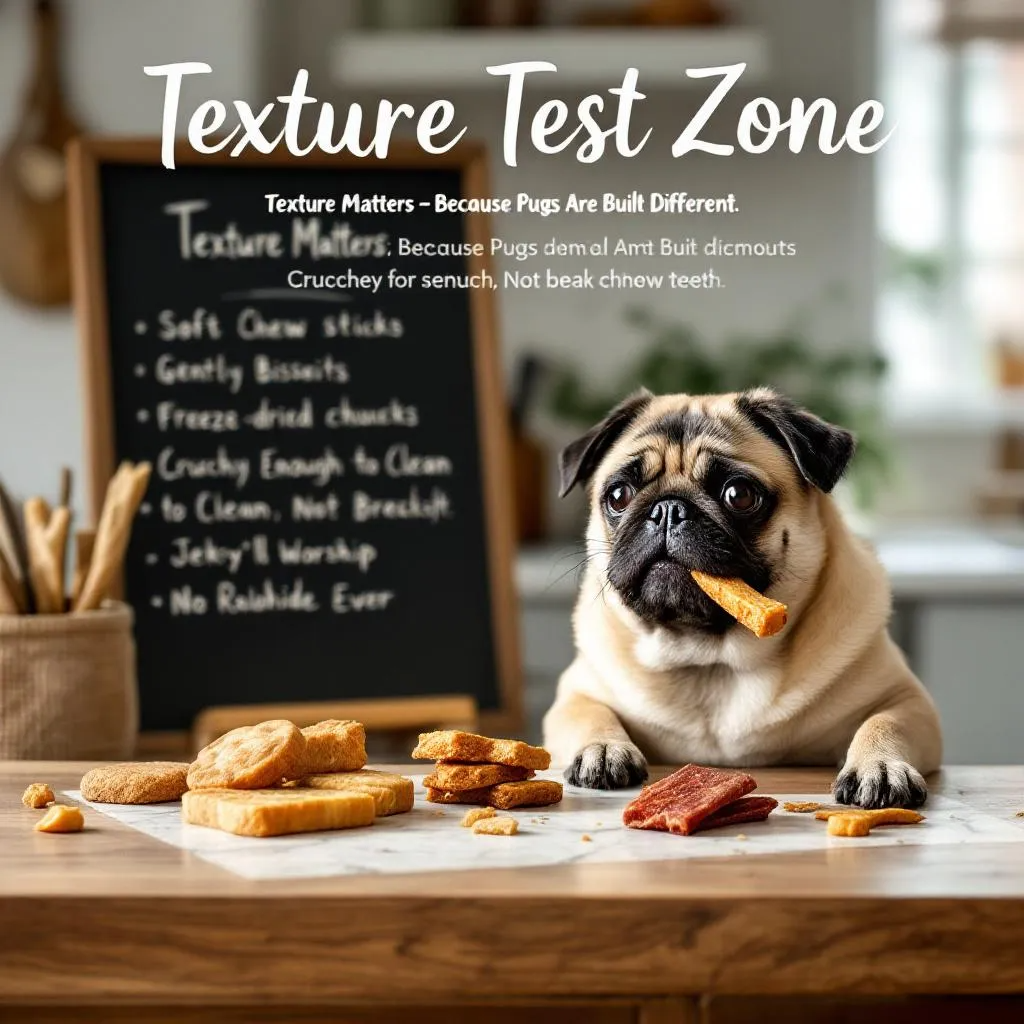
Pugs aren’t known for their dental grace. Let’s be real. They swallow it whole like a possessed vacuum half the time and chew sideways like a cartoon horse the other half.
For this reason, a treat’s texture is more than just a cutesy feature. It’s everything.
Every pug is different. Some are chewers, some are inhalers, and some like to carry their treat around for an hour like it’s a sacred relic. Know your pug’s style, and choose accordingly.
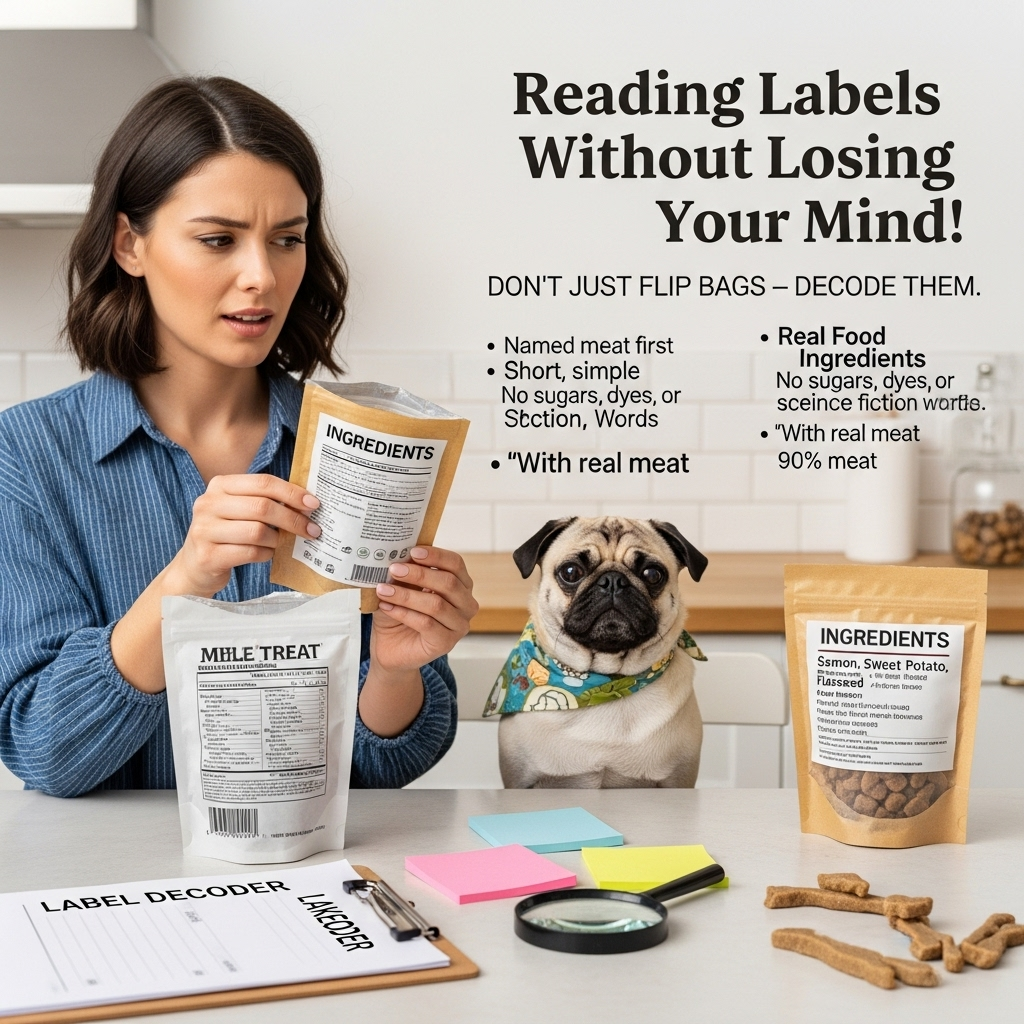
Have you ever picked up a bag of treats, flipped it over, and suddenly found yourself reading like you’re in a chemistry class?
That’s on purpose. Companies want you to just trust the front of the package and ignore the back. But not you, Boss. You’re smarter than that.
Named protein (chicken, salmon, or turkey) is the first ingredient.
Ingredient list = short, sweet, and readable.
No sugar, dyes, or unpronounceables unless it’s a vitamin.
“With real meat” ≠ 90% meat. It might be 4%.
You deserve transparency. Your pug deserves food that honors their body. Don’t settle.
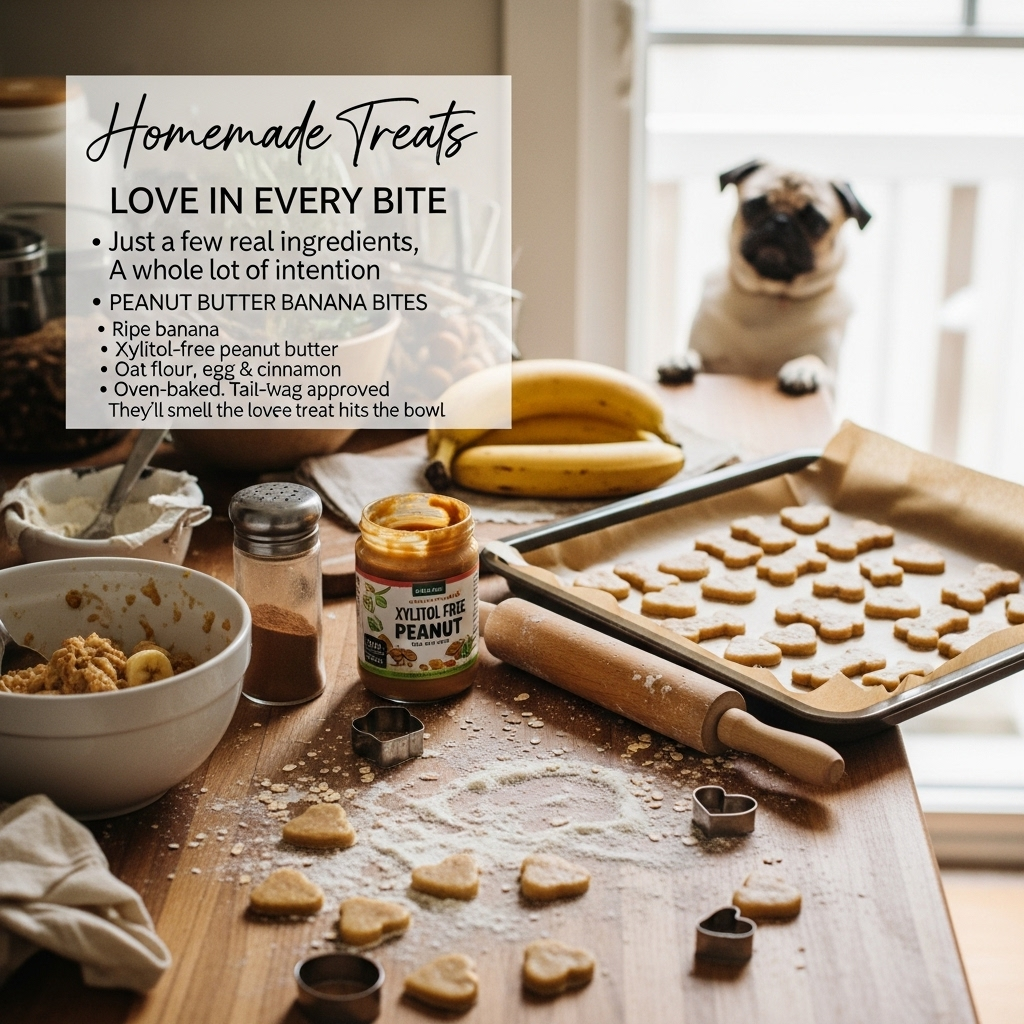
Okay, here’s where it gets real.
There’s something sacred about making treats from scratch for your dog. It’s intention, not just food. You cut those goofy heart shapes, mash that banana, stir that peanut butter, and your pug? That’s what they sense. even if they consume it in a fleeting moment.
Ingredients:
Instructions:
That’s it. Your kitchen smells amazing, your pug is vibing in the doorway, and you just became their favorite human again.
It’s acceptable that not everyone has the time to bake. But if you’re buying treats, buy smart.
Don’t fall for trends. Look for simplicity. Look for purpose. Keep an eye out for anything that says, “Hey, I thought about your dog’s future.”
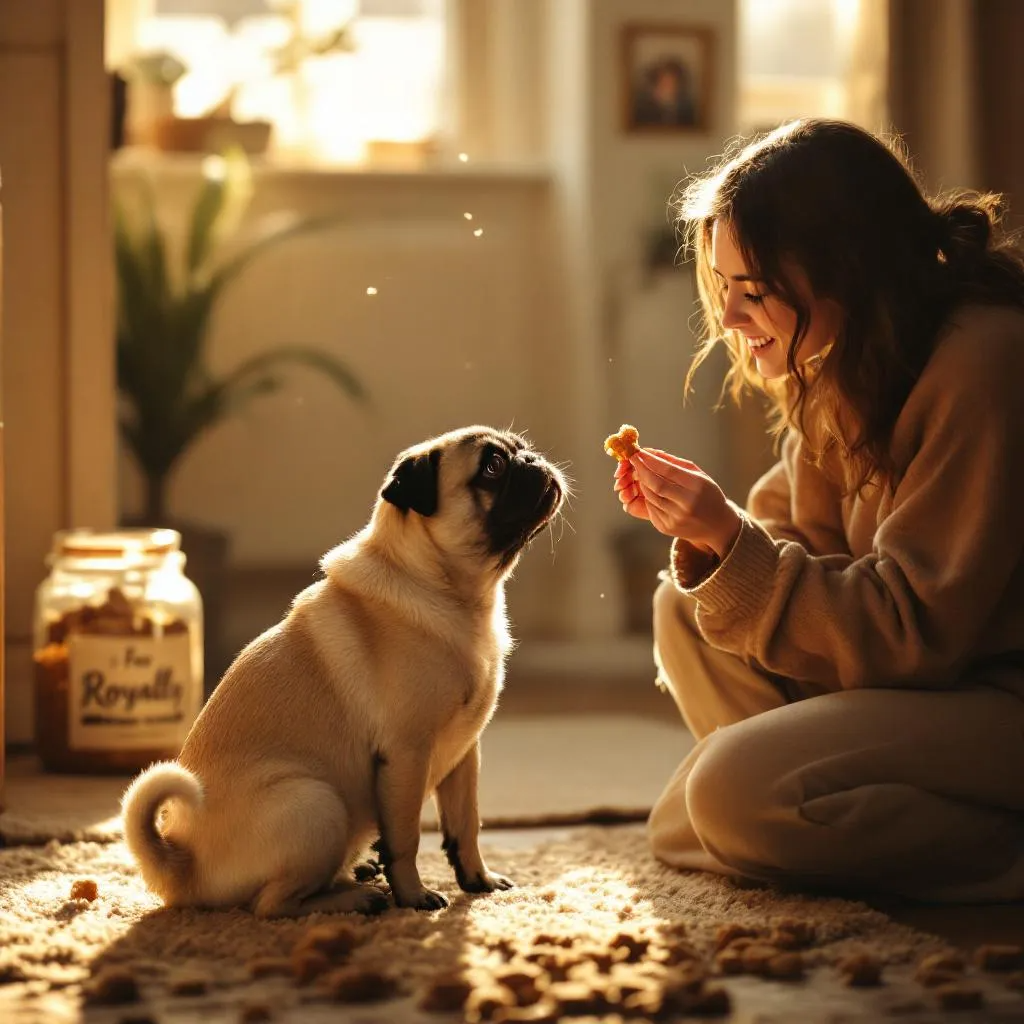
This is where the poetry comes in, Boss.
Treats aren’t just food. They’re moments. A little mutual secret. A tiny bit of joy for your dog and you both.
Whether you’re rewarding a new trick, apologizing after a trip to the vet, or just glancing at each other in the kitchen and saying, “You want a little snacky?” that treat becomes more than just a bite.
It’s love, wrapped in peanut butter.
Consider your dog to be a member of the royal family. You should say “I see you” to them. I am aware that you feel gratitude even though you are unable to express it.
since they do. Every wag, tail-thump, and tiny snort is heard by them.
Knowing when something is wrong doesn’t require a marketing degree or a shelf full of buzzwords. Trust your gut and let it go if the ingredient list seems strange, the label reads like a puzzle, or the smell causes you to pause even for a moment. Your instincts are important because they are typically correct. Being overly cautious or dramatic is not the point here. It is about being responsible.
It’s more than just feeding a dog. You are taking care of your odd little soulmate. The person who snores like it’s an Olympic sport, snatches your lap without asking, and barks vehemently at anyone who ventures to the front door. The person who, for some reason, knows when you’ve had a rough day and quietly remains near you, providing consolation without saying anything. That kind of presence is worthy of more than clever packaging and unidentified ingredients.
So feed them with love. Give them actual ingredients that you can pronounce and identify. Knowing that every decision you make affects how they feel, behave, and spend time with you, feed them with purpose and consideration. Food becomes a form of communication. “I care enough to pay attention,” it says.
Because your pug wouldn’t hesitate if the roles were reversed. They would be there for you with the same steadfast devotion, the same protective instincts, and the same daily devotion. Labels are not necessary. No inquiries were made.
Even though they might not be very good bakers, what matters most is that the effort would have a flawless heart.
Are you searching for more recipes, advice, or just cute ways to spoil your loaf-shaped hero? Send me a message or leave a comment. One tail-wag at a time, let’s make improvements. Numerous recipes for your dog.
Ten percent or less of your pug’s daily caloric intake should come from treats. Smaller portions and fewer treats are always preferable because pugs are prone to gaining weight.
While not all store-bought sweets are harmful, a lot of them have added fat, artificial flavors, or fillers. When selecting commercial treats, it is crucial to carefully read ingredient labels.
Simple, minimally processed treats are the healthiest. Simple cooked meats, tiny bits of vegetables like green beans or carrots, and simple, homemade desserts are excellent choices.
As long as portions are managed and the treats are suitable in terms of nutrition, pugs can enjoy treats on a daily basis. Rather than taking the place of meals, treats should enhance them.
Treats with chocolate, xylitol, onions, garlic, grapes, raisins, too much salt, or artificial sweeteners should never be given to pugs. These can be toxic or harmful.
Small amounts of certain foods are safe for humans, but many are not. Before giving human food as a treat, always do some research or speak with a veterinarian.
Yes. When treats are used appropriately, they can reinforce positive behavior and training, but overindulging can lead to begging and weight gain.
Not necessarily. Only if your pug has been diagnosed with grain sensitivity will grain-free treats be beneficial. When used properly, whole grains can be beneficial to health.
Indeed. Preservatives, artificial additives, and specific proteins are common allergens. If you notice itching or digestive upset, eliminate treats one at a time and consult your vet.
Treats should be bite-sized, tiny, and simple to chew. Large treats are not necessary for pugs to feel rewarded.
Treats made at home give you complete control over the ingredients and are frequently healthier, but they still require proper portioning and balance.
No. Treats should never replace complete meals. They are meant to supplement your pug’s diet rather than serve as its primary source.
A good treat promotes health, satisfies your pug’s nutritional requirements, and makes them happy without causing weight or digestive problems.