❝A dog has one aim in life… to bestow his heart.” ― J. R. Ackerley❞
❝A dog has one aim in life… to bestow his heart.” ― J. R. Ackerley❞
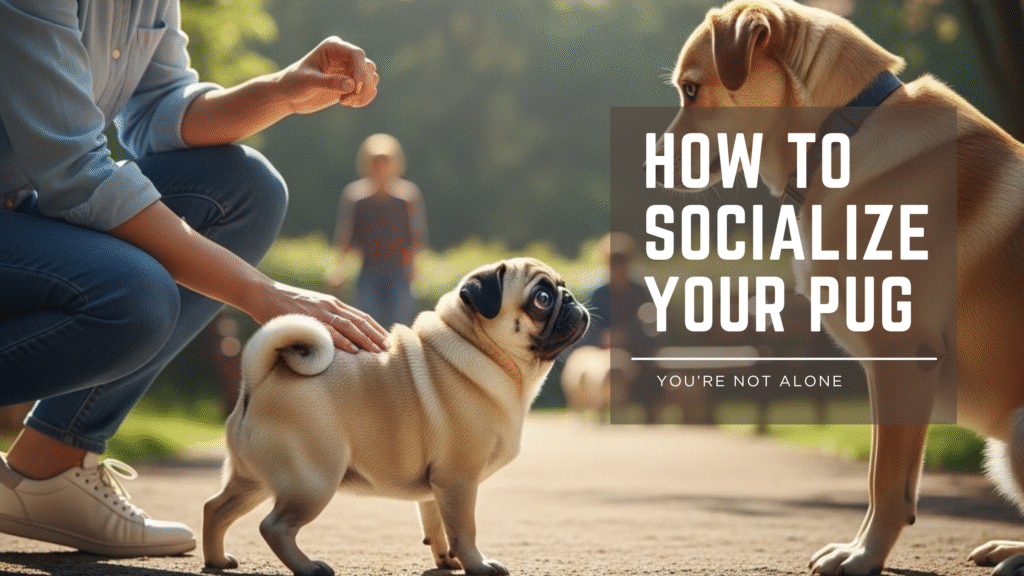
When your pug hesitantly makes a new friend for the first time, it’s an incredibly lovely moment. The tentative sniff, the slow wag of a tail, and the cautious tilt of that adorable, squishy face are all like witnessing a young explorer venture into an entirely new world. But let’s face it, interacting with a pug is not an easy task. These tiny charmers may be timid, unyielding, or intimidated by unfamiliar people, sounds, and locations. You’re not alone if you’ve ever experienced a little heartbreak when your dog hides under the couch or shrinks back during a boisterous gathering.
Socializing pugs is more than just a to-do list. It is the cornerstone of your pug’s happiness, self-assurance, and emotional health. Giving them the gift of trust in yourself, the world, and other people is what it’s all about. Because in a sea of unknowns, you are their home base, their anchor, and their safe haven.
Therefore, if you want your pug to live their life with their head held high, tail wagging proudly, and eyes shining with curiosity, you must start socializing them with purpose, patience, and a ton of love. Are you prepared to go deep? Let’s explore how to make pug socialization not only successful but also a memorable emotional experience for you both.
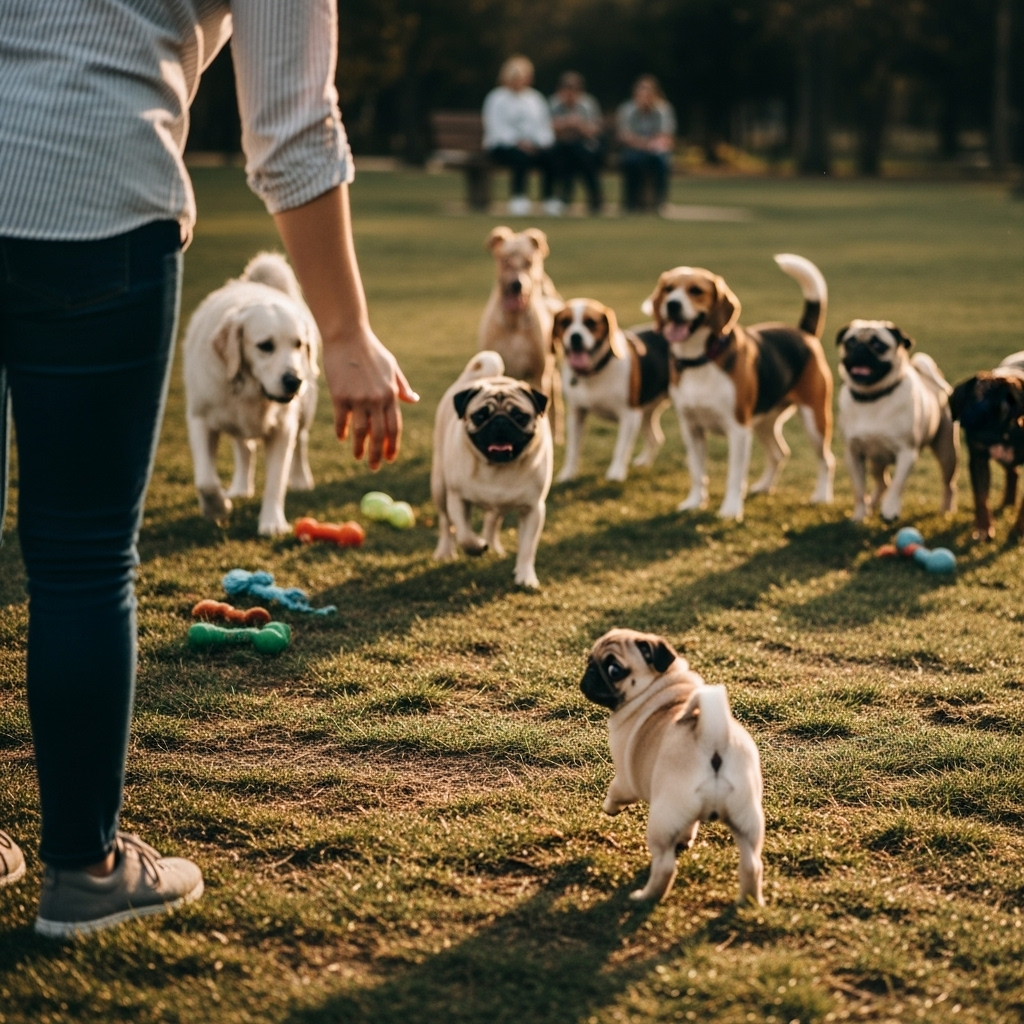
Pug social skills, Look, I’m not here to sugarcoat it. Socializing a pug can be tough. It takes time, effort, and a willingness to face your own fears because, believe me, your pug will act as a tiny emotional sponge, reflecting your feelings. But here’s the truth: pug socialization serves as the foundation for everything else. Without it, your pug may become scared, nervous, or even aggressive—not because they are “bad dogs,” but because they are unable to comprehend their surroundings.
But pug socialization isn’t just about preventing problems. It’s about unlocking joy, freedom, and connection. A well-socialized pug is not just one that “behaves,” but one that embraces life to the fullest. They meet new friends with excitement instead of fear. They handle noisy crowds with calm instead of panic. They experience life’s richness without shrinking away.
Pug behavior training, By properly socializing your pug, you’re not only teaching them manners; you’re also fostering a spirit that is prepared to take on all of life’s challenges, no matter how small.
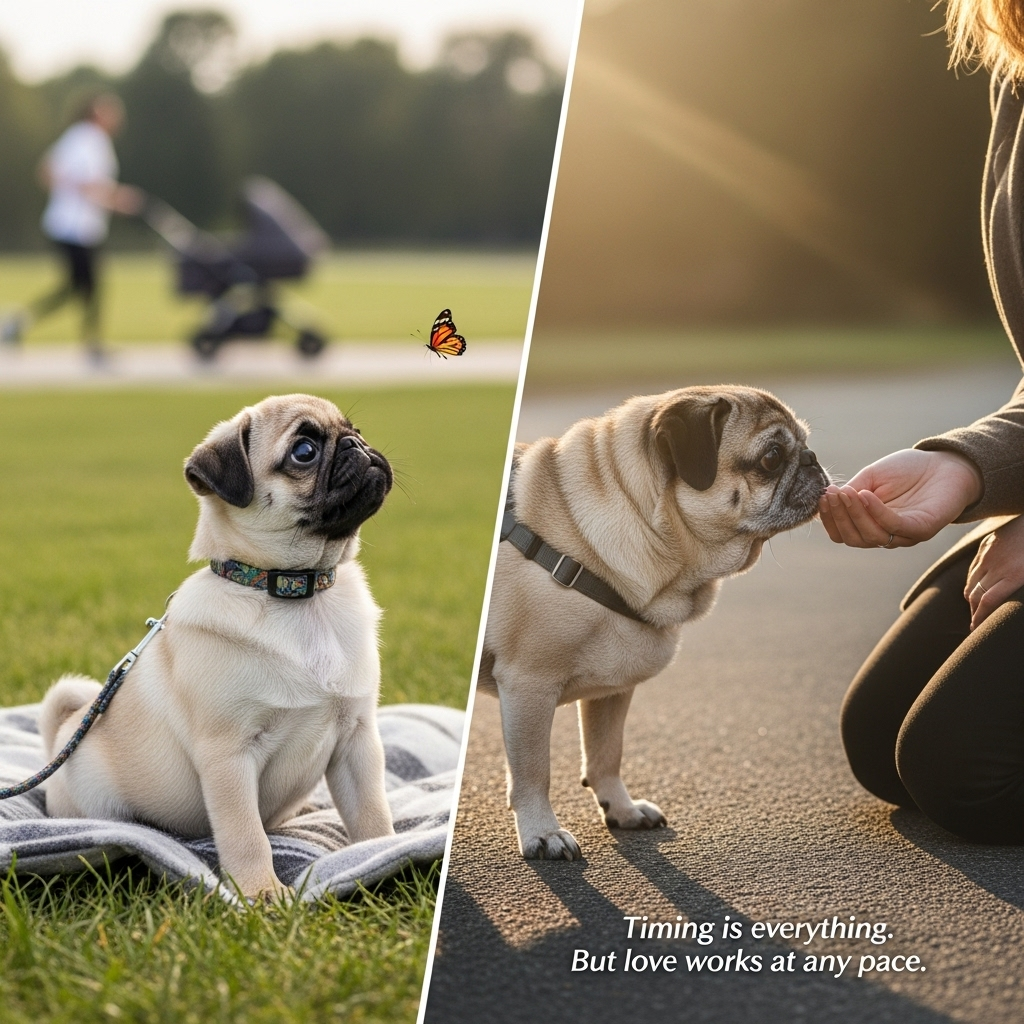
Socializing a pug puppy here’s the thing: the earlier, the better. Your pug’s brain is like a sponge, absorbing new experiences during the puppy months, which are roughly between 8 and 16 weeks. Now is the ideal moment to gradually introduce them to the sights, sounds, smells, and faces of the world.
However, not all pugs receive this early boost, and life isn’t always ideal. If your pug is older, don’t throw in the towel. Pug socialization can happen at any age. It just might take a little more patience, a little more creativity, and a whole lot of love.
The real magic comes from consistency and kindness. Push too hard, and you risk building fear. Move too slow, and your pug may never build the confidence they deserve. A safe, consistent exposure schedule that makes your pug feel brave and supported is the sweet spot.
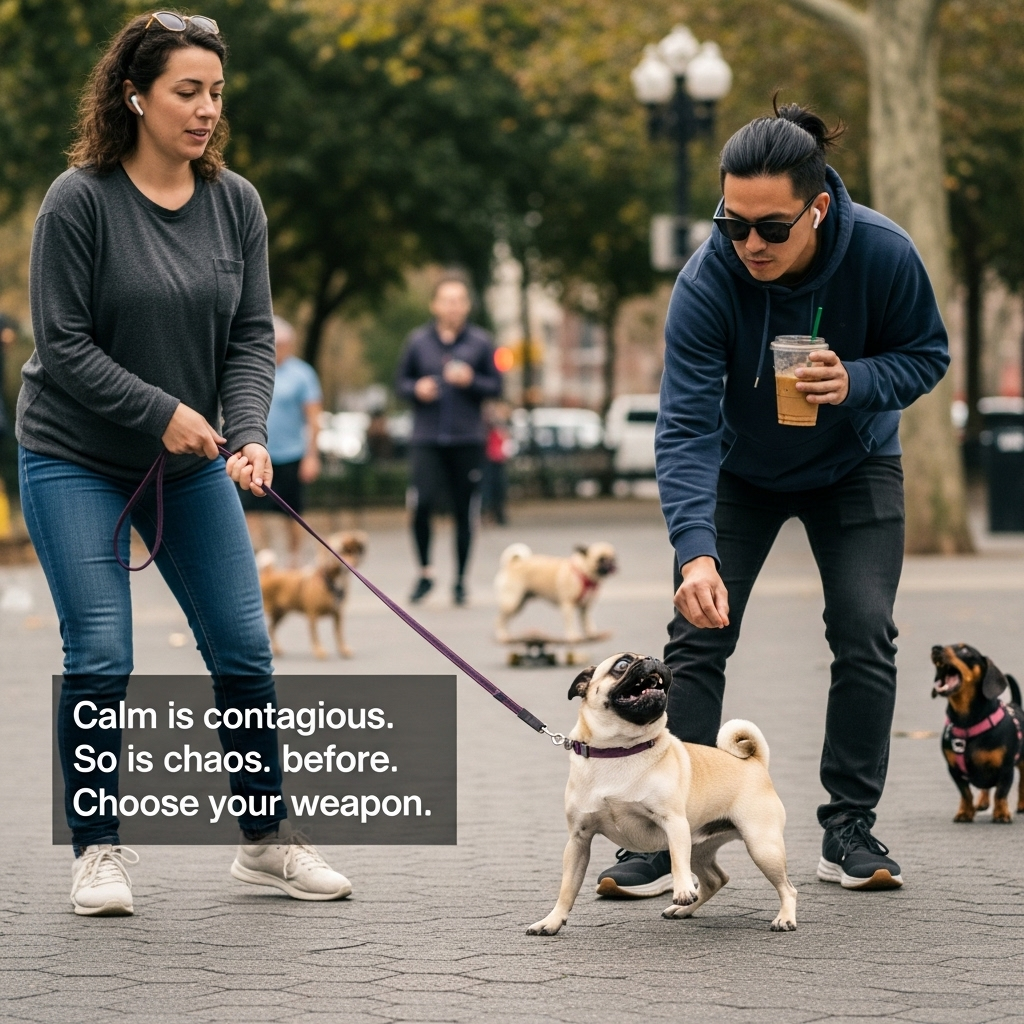
Dog socialization tips: Socializing your pug can feel like juggling flaming torches while riding a unicycle. Both of you are experiencing sensory overload from unfamiliar people, loud noises, and new dogs. However, you have this, and here’s how to make it doable:
Start Small and Build Slowly
Don’t throw your pug into the deep end at the busiest dog park on day one. Begin with quiet, controlled introductions. Maybe a calm neighbor’s dog or a small, familiar group. Celebrate tiny wins like a nose sniff or a tail wag.
Use Rewards Like They’re Magic
Your pug is a sponge for your energy and a total foodie at heart. Use treats, toys, and praise as powerful motivators. Every positive experience reinforces their courage and desire to explore more.
Be Their Calm in the Storm
Pugs pick up on your emotions like a radio antenna. If you’re tense or worried, they will be too. Breathe deeply, stay chill, and show them the world is nothing to fear.
Expose Them to Different Situations
Variety is key when it comes to new places, people, sounds, and dogs. It helps your pug learn that the world is a safe and fascinating place by fostering resilience and flexibility.
Know When to Pause
When your pug is stressed, they may hide, cry, or freeze to let you know. Respect those signals. Take a break, go home, and try again tomorrow. Progress is progress, no matter how small.
Meeting other dogs is important, of course, but your pug lives in a very human world. People move quickly, doors slam, elevators hum, and strangers suddenly reach out. All of this is new and occasionally a little confusing to your pug. It’s just as important to learn how to greet another dog as it is to learn how to live in harmony with people.
Consider every excursion as a tiny lesson in life. The pet store has an odd yet intriguing scent. The sound of passing feet, clinking cups, and laughter fills the café patio. Bicycles glide by while strolling through the neighborhood, and cars sigh at stoplights. Your pug is assimilating everything, figuring out what the world is and how they fit into it.
On certain days, they will march confidently and boldly. On other days, they might be hesitant and decide to just sit next to you and observe. Both responses are okay. Bravery is not always a sign of growth. Occasionally, it appears as silent observation, gaining knowledge from the security of your presence.
The most important thing is that your dog never feels isolated during these times. You are communicating to them nonverbally that, despite the size of the world, they are safe when you slow down, speak quietly, and let them set the pace. Those little assurances add up over time. They become resilient.
Eventually, your pug learns something beautiful. New does not mean dangerous. Loud does not mean scary. You are also present when something seems uncertain. The true purpose of socialization is to build trust.
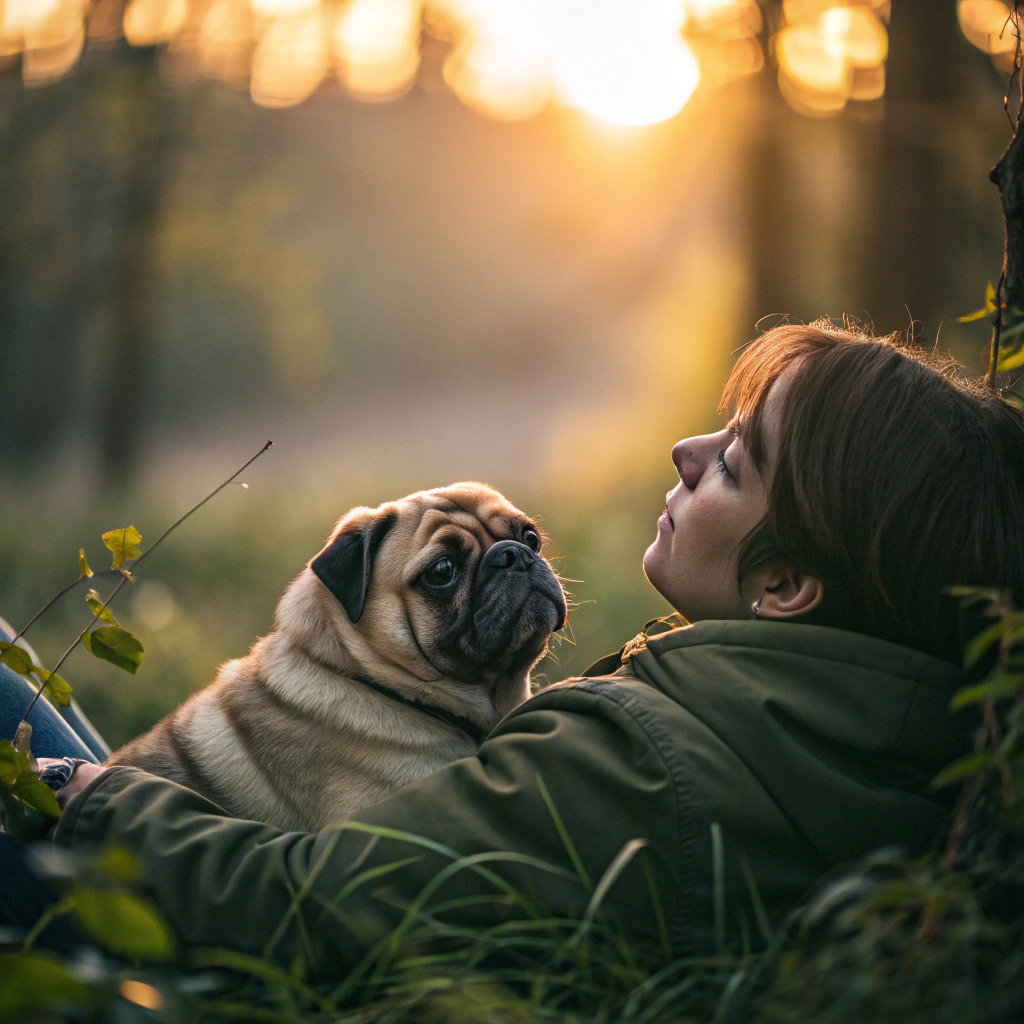
Pug socialization is fundamentally an act of love. It’s one of the most obvious ways to say, “I see you,” to your dog without using words. I will protect you. Together, we will resolve this. You are reiterating that promise each time you help your pug learn something new by being patient rather than applying pressure.
Every new sound your pug learns to put up with, every surface they walk on, and every peaceful moment they spend with a stranger or another dog is a silent victory. victory. For your dog, these are not insignificant things. They are evidence that development is possible without fear. And each of those victories makes your bond stronger.
Your pug learns to trust the outside world through socialization, but more significantly, they learn to trust you. They discover that their person will maintain composure in the face of overwhelming circumstances. It will be encouragement rather than coercion. When they hesitate or require more time, that love does not fade.
This trust gradually alters your pug’s life trajectory. They become more willing to try. more able to withstand shocks. More inquisitive than wary. More resilient to shocks, they check in with you. but because they are aware of your safety.
You can’t rush this kind of bond. It is developed gradually via kindness and consistency. The way your pug looks at you before moving forward is a sign of it. in the speed at which they recover from a shock and the ease and assurance with which they settle beside you.
This relationship transcends training objectives and compliance. It is emotional safety. It is a partnership. It is the profound realization that they are not alone in facing whatever the world throws at them.
That is not just socialization.
That is love, practiced daily.
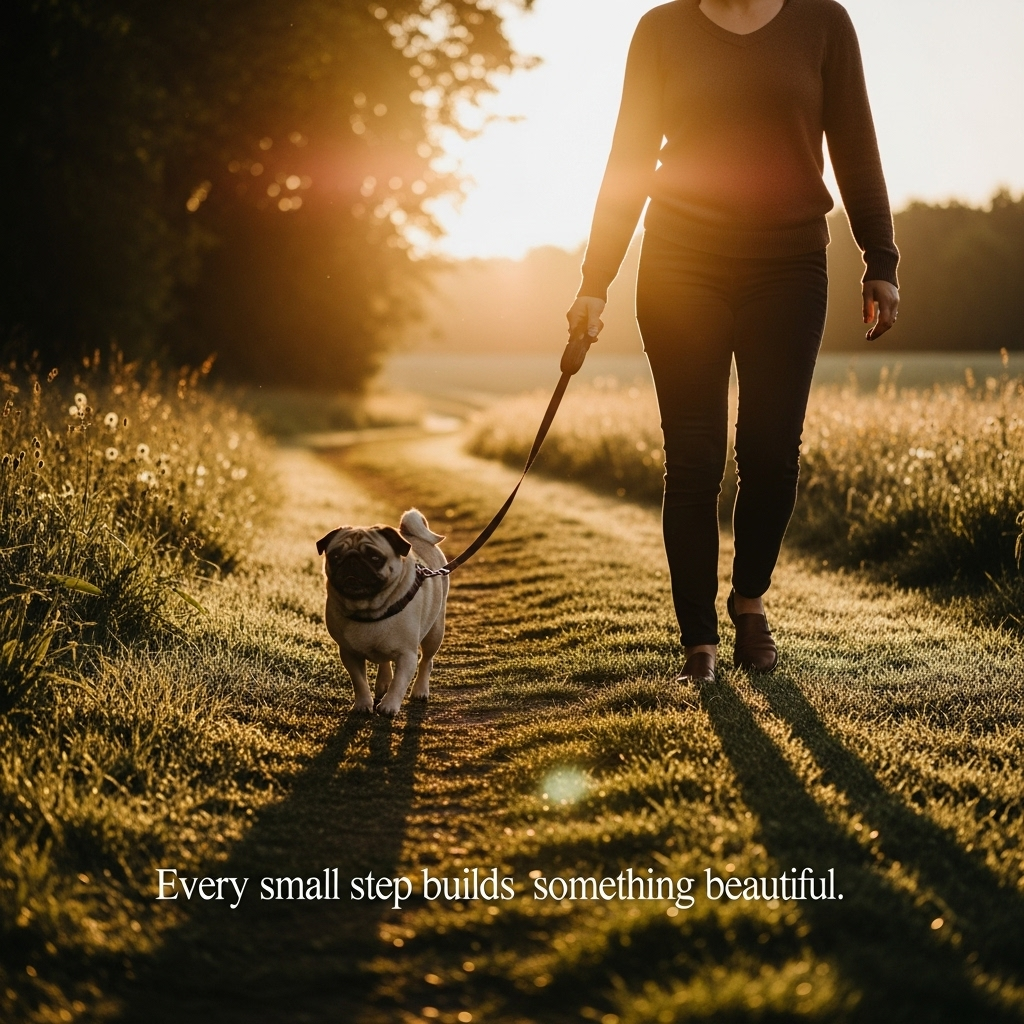
It’s a journey, not a race, to socialize your pug. It develops gradually through repeated acts of compassion, tolerance, and quiet bravery. Along the way, you might encounter your own anxieties in addition to your pug’s. That is part of the process. Growth frequently starts just outside of your comfort zone for both of you.
The rewards, however, are deeply meaningful. Instead of hesitating to greet friends at the park, picture your pug doing so with calm curiosity. Imagine them sitting calmly next to you at a café or entering unfamiliar situations with assurance rather than anxiety. These are not unattainable or exclusive to “easy” dogs. These are attainable results that are developed via regular, gentle socialization.
Hasty or coercive interactions do not lead to progress. It results from taking it slow at first, respecting your pug’s pace, and acknowledging small victories. Every good encounter gives you more self-assurance. Each respectful pause reinforces trust. With time, your pug comes to understand that the world is something to explore with you by their side rather than something to be afraid of.
Enjoy the process. Notice the small changes. One pawstep at a time, observe how your pug’s world grows.
Socialization ultimately comes down to life quality. A pug that has been well-socialized feels safe, flexible, and satisfied. Additionally, a contented pug adds a special kind of happiness and serenity to your everyday existence.
Find out more about pug obedience training, and with careful supervision, continue to help your pug grow into a confident, outgoing friend.
Your pug will feel more secure and self-assured around people, other dogs, their surroundings, and daily situations if they are socialized. Fear, anxiety, and stress-related behaviors are lessened by appropriate socialization.
It is never too late to begin socialization, but it should begin as early as possible. Adult and senior pugs can still gain confidence with patient, constructive exposure, but puppies pick things up more quickly.
Start small. Make use of quiet spaces, permit distant observation, and give praise for composed conduct. Never force interaction. When your pug feels secure and in charge, confidence increases.
Short, frequent sessions are best. Long or intense exposure sessions are less effective than a few minutes several times a week.
Only if your pug is comfortable. Refuse politely if your pug freezes, hesitates, or turns away. Respecting boundaries builds trust and confidence.
Lip licking, yawning, freezing, pacing, turning away, hiding, or refusing treats are all indicators of stress. These cues indicate that your pug needs a break or some space.
Yes. It’s not necessary for your pug to like every dog in order to socialize. A well-socialized pug doesn’t require interaction to stay composed and impartial.
Yes. By altering your pug’s emotional reaction to novel circumstances, gradual, constructive socialization can lessen fear-based barking and reactivity.
Yes. High-value treats help create positive associations. Instead of rewarding excitement, reward calm behavior, curiosity, and relaxed body language.
Introduce busier settings gradually after starting with calm, comfortable places. Increase difficulty gradually and move at your pug’s pace.
While some pugs make progress in a matter of weeks, others require months. Consistency, patience, and your pug’s unique temperament all play a part in improvement.
hastening the procedure. Your pug may become more fearful and make less progress if you force interactions or expose them to stressful situations too soon.
Yes. Even if they were not exposed at a young age, adult pugs can learn to feel secure and self-assured through organized, constructive socialization.
Yes. In order to prevent fear and anxiety, indoor dogs still benefit from being exposed to new sounds, people, surfaces, and environments.
See a licensed dog trainer or behavior specialist who employs positive, non-forceful techniques if your pug exhibits extreme fear, aggression, or panic that does not go away.