15 Uplifting Pug Rescue Stories That Prove Second Chances Matter | Inspiring Adopted Pugs and Dog Shelter Heroes
1. The Emotional Heart of Pug Rescue
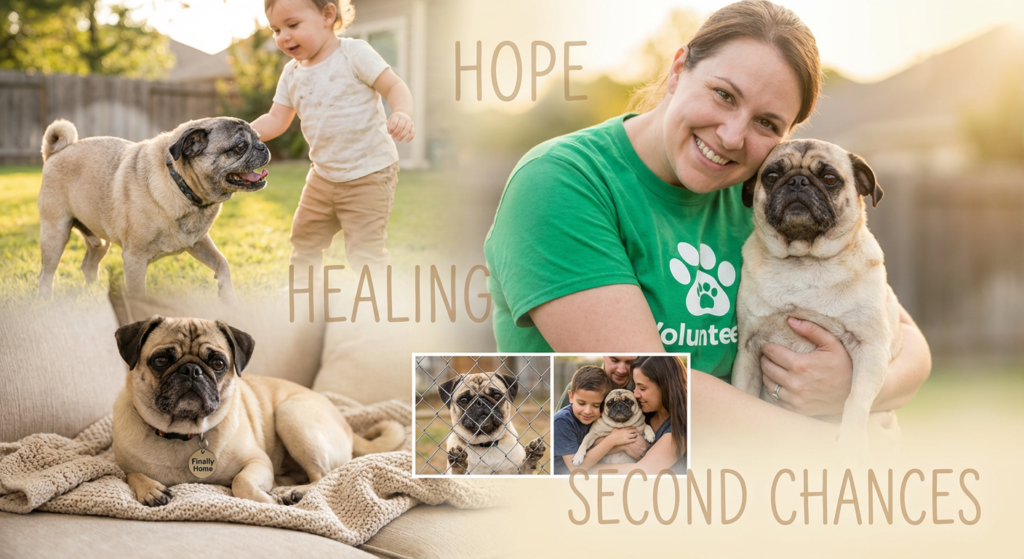
Pug rescue is much more than a compassionate service. It is a deeply emotional movement focused on restoring hope, rebuilding trust, and protecting some of the most vulnerable companion animals in our communities. These gentle, expressive dogs often arrive at dog shelters frightened, unhealthy, and unsure of what the future holds. Yet with patience, specialized veterinary care, and devoted volunteers, pugs that once struggled to survive begin to flourish again. Their soft faces, round eyes, and affectionate personalities make them unforgettable companions, especially when we learn the difficult journeys they overcame.
Every rescued pug has a story shaped by personal hardship. Some are surrendered because families cannot afford medical needs. Others come from neglectful homes or emergency situations where immediate intervention is required. In each case, rescue organizations step in with kindness, professional medical insight, and a sincere desire to bring comfort and healing. The result is nothing short of inspiring. These are not just dogs recovering from hardship. They are individuals rediscovering happiness.
Within the broader network of dog shelter rescue stories, breed-specific rescue organizations such as Pug Nation Rescue of Los Angeles, Mid Atlantic Pug Rescue, and Pug Rescue of America are essential. They are aware of the particular medical difficulties that Pugs encounter. Many need physical therapy, dental correction, heart medication, airway support, or eye surgeries. Too many people would suffer untreated in the absence of rescue assistance. Volunteers collaborate with veterinarians, foster families, and generous donors who believe every pug deserves a fair chance at well-being.
The recovery process is emotional. A timid dog who once hid in the corner of a shelter might eventually curl up comfortably beside their foster parent, trusting again with quiet courage. A pug who arrived underweight may joyfully wag their curly tail once they feel safe and healthy. These transformations are powerful proof that second chances matter deeply.
At the heart of this movement is a profound expression of empathy. Pug rescue is about recognizing the emotional lives of animals and responding with compassion. It teaches families, children, and communities that kindness creates real change. When a pug is successfully placed in a loving home, it inspires others to adopt rather than purchase from careless breeders. Each story inspires another person to volunteer, donate, foster, or advocate for ethical rescue practices.
Throughout this article, you will discover fifteen uplifting adoption stories that demonstrate how strong and resilient Pugs truly are. You will meet real organizations doing extraordinary work and learn actionable ways to support them. By the end, I hope you feel inspired to be part of this compassionate mission, whether through adoption, promotion, or simply sharing these heart-touching stories with others.
2. Why Pugs Often Need Rescue Support More Than Other Breeds
Pug rescue efforts exist because this beloved breed faces a unique combination of medical vulnerabilities, emotional needs, and genetic challenges that frequently lead to shelter surrender or abandonment. Many adopters are surprised to learn that Pugs often require heightened veterinary care compared to other small breeds. Their adorable facial structure is the same feature that puts them at higher risk for breathing complications, eye problems, and chronic inflammation. Dog shelters do everything they can, yet many simply do not have the financial resources or specialized medical access necessary to treat ongoing issues. When these situations arise, pug rescue organizations step forward to take responsibility and provide the appropriate support.
1. Medical conditions that lead to surrender
One of the most common reasons families surrender a pug to a shelter is medical expense. Conditions like brachycephalic airway syndrome, corneal ulcers, dry eye disease, spinal deterioration, and heart conditions can become extremely expensive without insurance or emergency funds. Some families are not prepared for long-term treatment, recurring medication, or surgical intervention. Under these circumstances, dog shelters reach out to breed-specific groups who understand the necessary care. These groups evaluate medical requirements and make sure each rescued pug receives a personalized treatment plan. This approach brings healing, stability, and comfort to animals who otherwise might face suffering or euthanasia.
2. Emotional impact on surrendered Pugs
Pugs are highly social animals who bond deeply with the humans in their lives. The emotional impact of surrendering a pug can be profound. Many dogs experience anxiety, confusion, or depression during early shelter intake. Pug rescue volunteers have learned that emotional comfort is just as important as medical care. Foster families create gentle routines, calm environments, and constant reassurance. Over time, a shy or fearful pug will begin to trust again, which becomes essential for successful adoption stories.
3. Why some shelters cannot treat them
Large breed medical emergencies, tight budgets, and stray intake frequently overwhelm traditional dog shelters. Many shelters are simply not equipped to provide ongoing respiratory treatment or ophthalmology procedures. Even basic surgery can become complicated when treating brachycephalic dogs. Rescue organizations understand breeding risks and coordinate veterinary specialists who know exactly how to handle their unique anatomy. These partnerships increase survival rates and improve postsurgery recovery outcomes.
4. How pug rescue creates life-changing outcomes
When compassionate volunteers, veterinarians, and donors combine efforts, the result is life-changing. Rescue programs focus on both rehabilitation and adoption. They prepare each dog medically, emotionally, and behaviorally for a new home. Through careful screening and adoption counseling, organizations match families with Pugs whose needs align with their lifestyle. The results are inspiring. Many adoption stories describe dogs that regained trust, happiness, and personality after months of attentive rescue care.
5. Why awareness matters
Awareness is one of the most powerful tools in the rescue community. When more people understand the specific needs of this breed, they become more cautious when purchasing from irresponsible breeders and more supportive of rescue adoption. By reading and sharing pug rescue stories, individuals help spread knowledge that can save lives, encourage responsible ownership, and inspire long-term compassion for vulnerable dogs.
3. How Dog Shelters and Rescue Groups Work Together
One of the most inspiring elements in pug rescue is the collaboration between traditional dog shelters and breed-specific organizations. Although many animal shelters do everything possible to provide basic care, their resources are often stretched thin due to constant intake numbers and emergency cases involving multiple breeds. Shelters often get in touch with rescue partners who are qualified to deal with these situations when a pug arrives with health problems or needs specialized medical care. This teamwork is essential for creating successful adoption stories and improving the quality of life for rescued Pugs.
1. Intake and evaluation
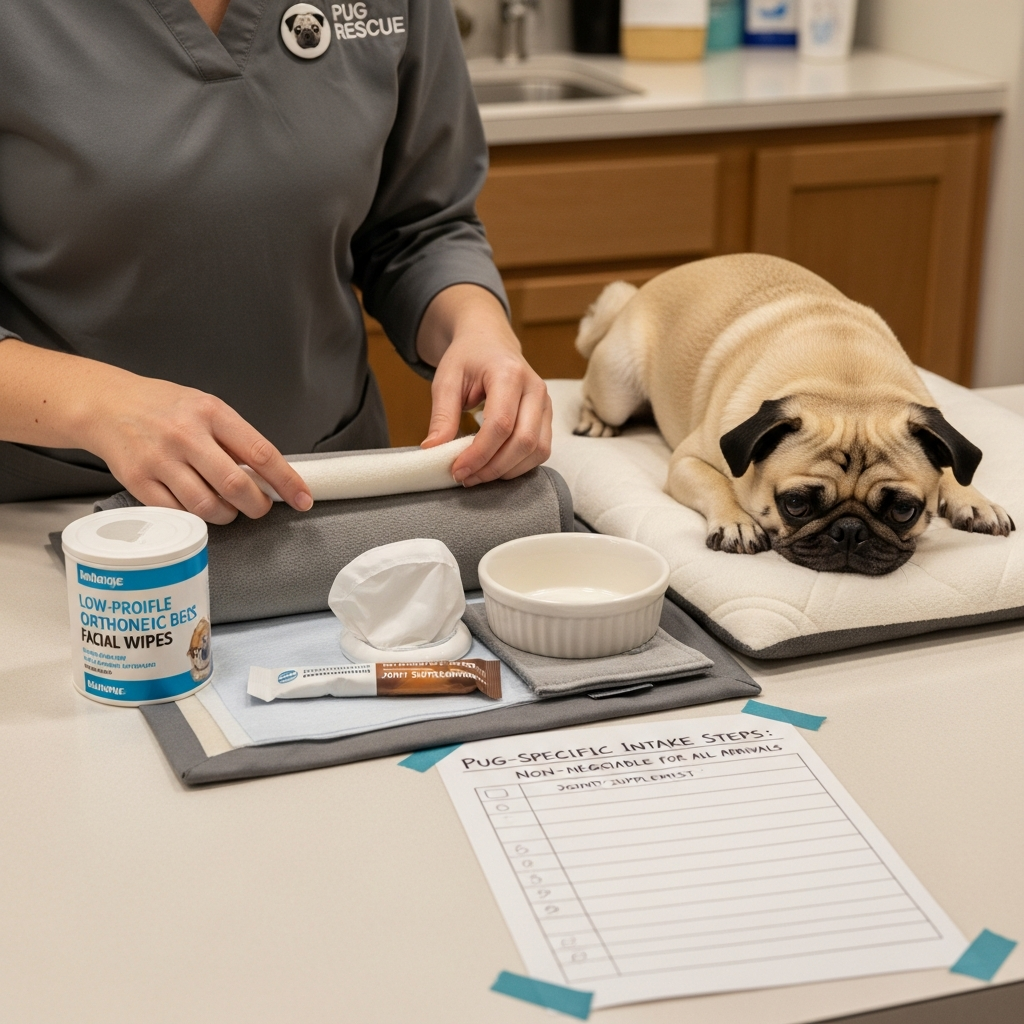
When a pug enters a shelter environment, the first step is intake evaluation. Trained staff assess visible health concerns, emotional behavior, and potential medical complications. If a shelter suspects deeper problems, they reach out to organizations that understand brachycephalic needs. Breed-specific groups then step in to evaluate which medical interventions are required. This system guarantees that a pug with respiratory problems or eye damage will be promptly linked to the appropriate care team.
2. Transportation and foster placement
Once a rescue organization agrees to assist, transportation is arranged either through volunteers or through partnership programs. Some groups have regional transport systems designed to move animals safely from crowded shelters to foster homes. Transportation volunteers are often motivated by passionate love for Pugs and a desire to support adoption stories that highlight second chances. After transport, dogs are placed in foster homes where they receive individual attention, healthcare, and emotional comfort. Fostering is one of the most meaningful contributions a person can make because it directly saves lives while preparing dogs for permanent homes.
3. Veterinary coordination
Most pug rescue organizations have established relationships with veterinary clinics that specialize in ophthalmology, respiratory treatment, dental surgery, and chronic care management. This level of expertise is essential because many rescued Pugs arrive with advanced medical conditions. Some require emergency surgery. Others require continuous respiratory assistance or eye medication. Rescue organizations develop medically informed adoption plans that enhance long-term health outcomes by working with veterinary specialists. It guarantees that every adoption narrative demonstrates responsible and caring care.
4. Donation and funding systems
Due to the high costs of medical care, transportation, and foster supplies, rescue organizations rely largely on donations. Fundraisers allow groups to handle emergency cases, senior dog care, and lifelong treatment plans. Many organizations publish heartfelt adoption stories on their websites or social media pages because storytelling encourages supporters to contribute. When donors witness successful transformations, they feel emotionally connected to the mission and become long-term advocates for pug rescue.
5. Adoption counseling and education
Successful adoption requires more than paperwork. Rescue volunteers educate families about breed needs, medical maintenance, training routines, and lifestyle expectations. They help adopters understand the responsibilities involved in caring for a pug with chronic conditions. This guidance increases adoption success and significantly reduces the risk of returned dogs. When new owners feel prepared and supported, rescued Pugs settle into their forever homes with confidence and comfort.
6. Why partnership saves lives
Without cooperation between shelters and rescue groups, many Pugs with medical needs would face uncertain futures. Collaboration allows organizations to share resources, expand outreach, and build networks of compassionate individuals. Together, they transform abandoned animals into beloved family members who enjoy comfort, affection, and safety. One of animal rescue’s greatest assets is this degree of cooperation, which continues to motivate new volunteers nationwide.
4. Understanding the Medical Challenges That Rescued Pugs Face
Medical vulnerability is one of the primary reasons pug rescue exists and why dog shelters often need additional help supporting this lovable breed. Pugs are loved for their expressive faces, small stature, and loving dispositions, but their physical makeup raises special health issues that need to be carefully considered. Comprehending these obstacles enables adopters to get ready for possible treatment requirements, resulting in more compassionate and successful adoption narratives.
1. Brachycephalic airway concerns
Pugs belong to a group of dogs described as brachycephalic, meaning they have shortened skulls and compact nasal passages. This adorable appearance also limits oxygen flow and creates breathing challenges. Some rescued Pugs require surgical correction to improve airflow and reduce chronic discomfort. Rescue organizations that specialize in Pugs often work with veterinary surgeons who understand these procedures. Without proper care, many dogs experience exhaustion, overheating, or respiratory distress. That is why pug rescue groups emphasize early medical intervention.
2. Eye conditions and vision loss
Pugs are also known for large and expressive eyes. Unfortunately, those eyes are more vulnerable to scratches, corneal ulcers, and chronic irritation. Some rescued Pugs arrive with untreated infections that have become serious over time. Others may have lost partial vision due to neglect or accidental injury. Pug rescue groups arrange ophthalmology exams to evaluate treatment options. Many Pugs recover vision through surgery or medication. Even dogs with permanent loss adapt with surprising confidence once they feel secure and loved.
3. Dental issues
Dental health is another common concern. Small jaw structure combined with tight tooth spacing can lead to decay, gum disease, and chronic pain. Many dogs surrendered to shelters have never received dental cleaning or proper oral hygiene. Rescue veterinarians determine if oral surgery or extraction is necessary. Although the idea of dental procedures may sound overwhelming, the emotional transformation after pain relief can be dramatic. A rescued pug that once avoided food may suddenly enjoy mealtime with renewed enthusiasm.
4. Joint concerns and mobility challenges
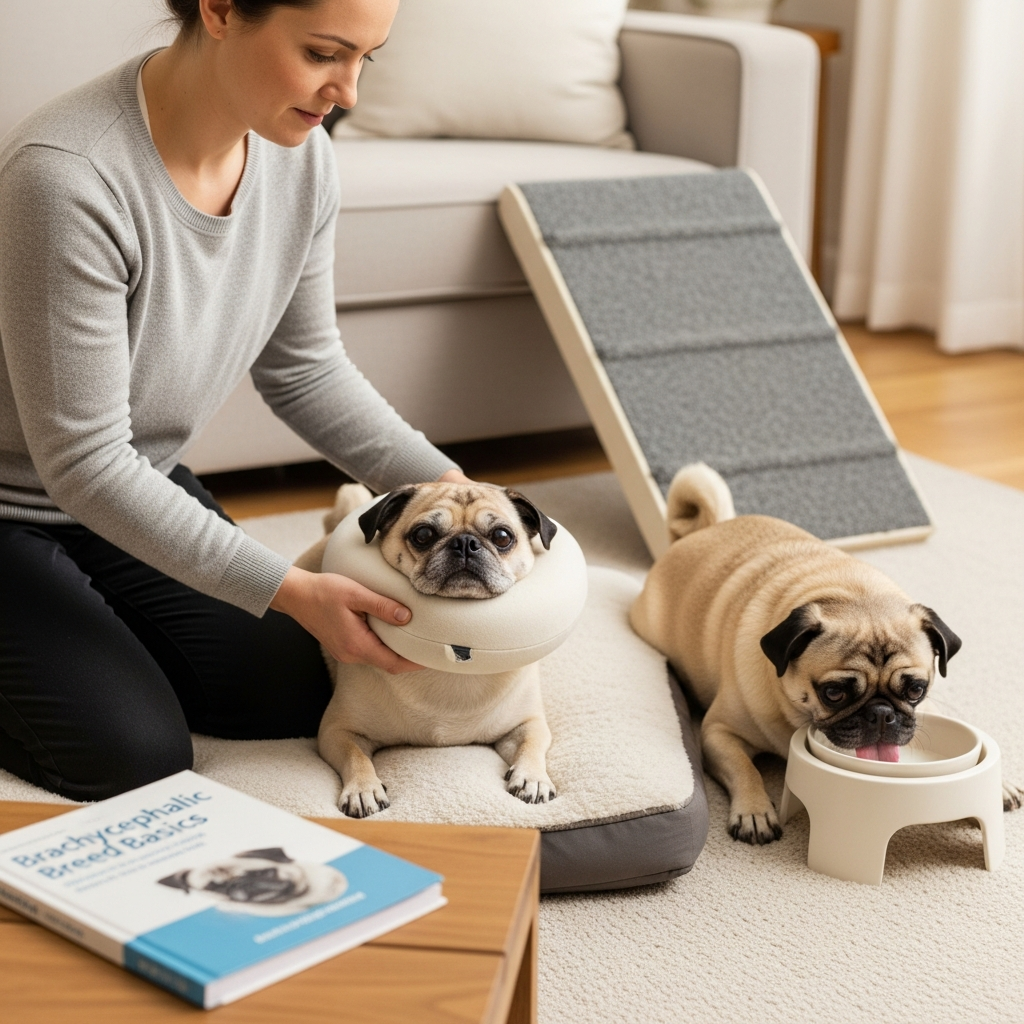
Like many small breeds, Pugs sometimes develop joint issues such as hip dysplasia or patellar luxation. Senior Pugs often struggle with arthritis, stiffness, and decreased mobility. Rescue organizations provide medication, supplements, physical therapy, and supportive bedding to improve comfort. Even dogs with mobility concerns can enjoy long and joyful lives when surrounded by compassionate families who provide gentle exercise and warm affection.
5. Emotional healing matters too
Medical recovery is only one aspect of rescue. Emotional healing often takes equal effort. Many surrendered dogs feel uncertain or anxious when entering foster homes. Volunteers use gentle routines, patient bonding practices, and consistent reassurance to help dogs rebuild trust. Over time, Pugs begin to respond with affection and confidence. Their ability to forgive and love again is one of the most inspiring elements in rescue work. Each adoption story becomes proof that second chances create life-changing emotional growth.
6. Why understanding medical needs inspires compassionate adoption
When adopters learn about potential medical needs, they become more prepared to support lifelong care. This awareness encourages responsible adoption and reduces the likelihood of future surrender. Pug rescue groups provide detailed guidance so families know exactly what to expect. Many adopters say that helping a rescued pug feel safe and comfortable is one of the most rewarding experiences of their lives.
5. The Role of Foster Families in Successful Pug Rescue
Many people believe that animal rescue primarily takes place in dog shelters, but seasoned volunteers are aware that foster families are the real lifeblood of pug rescue. A crowded shelter cannot match the safe environments, emotional recovery, and personalized attention that foster homes provide. Every adoption tale that culminates in a contented and self-assured pug typically started with a loving foster family that welcomed a needy dog into their home.
1. A safe transition space
When a pug leaves a shelter or neglectful situation, the transition into foster care becomes an essential stage of recovery. Foster families supply gentle routines, warm bedding, and a peaceful atmosphere where dogs can decompress. This calmer space helps reduce fear and anxiety. Some dogs have never experienced consistent affection, so learning simple routines like mealtime, rest time, and outdoor breaks becomes part of emotional rehabilitation.
2. Medical monitoring and treatment support
Because so many rescued Pugs have health concerns, foster homes serve as temporary medical support locations. Volunteers often learn how to administer eye drops, medications, and post-surgery care under veterinarian instruction. Foster families communicate closely with rescue coordinators and document symptoms or improvements. This information allows veterinarians to adjust treatment plans and ensures every rescued pug receives attentive monitoring throughout recovery.
3. Building trust through gentle care
Building trust is one of the most beautiful aspects of fostering. Some dogs arrive withdrawn or fearful, unsure if they are safe. Foster parents use patience, kindness, and consistent reassurance to show them what a loving home feels like. When fear fades and affection grows, foster parents witness remarkable transformations. Many families describe the first tail wag or the first cuddling moment as one of the most rewarding experiences they have ever had with animals.
4. Preparing for adoption
Foster homes also help determine which type of permanent placement will be the best match. Foster families offer valuable insights into the type of family each pug requires by observing behavior, personality, and energy level. Dogs who prefer quiet spaces will thrive with calm households, while playful personalities may enjoy families with children. These observations improve adoption results and lower the likelihood of returned dogs.
5. Emotional attachment and letting go
Many fosters become deeply attached to the Pugs they help. Saying goodbye can be emotional, yet most volunteers find comfort knowing their foster dog is moving on to a forever home where love will continue. Some foster families eventually adopt their rescued dog, a joyful event known within rescue communities as a foster failure. This happy outcome demonstrates how powerful the human-animal bond can become during recovery.
6. Why fostering matters
Fostering directly saves lives. Every foster space opens a spot in a shelter for another dog who urgently needs assistance. Many distressed Pugs would be left waiting in shelters without access to medical care if foster care weren’t provided. Volunteers often say that fostering is the most fulfilling contribution they have ever made. Each successful adoption becomes proof that compassion can change the entire course of a dog’s life.
6. How Adoption Stories Inspire Lifelong Compassion
There are many poignant moments in the world of pug rescue that leave adopters, volunteers, and supporters with enduring memories. One of the most powerful elements in any adoption story is the transformational journey from uncertainty to security. Many families say their rescued pug teaches them more about patience, empathy, and unconditional love than they ever expected. These stories inspire lifelong compassion because they demonstrate how ordinary individuals can create incredible change simply by choosing adoption.
1. A new beginning for frightened dogs
When a frightened or neglected pug arrives in a loving home, the change can be dramatic. Dogs that once trembled from fear sometimes learn to relax within weeks. Soft beds, gentle voices, and calm environments help rebuild confidence. Many adopters describe the first time their rescued pug feels comfortable enough to sleep peacefully as a moment filled with emotional significance. That peaceful rest is the result of multiple caring steps taken by dog shelters, rescue groups, and foster families along the way.
2. Teaching responsibility and empathy
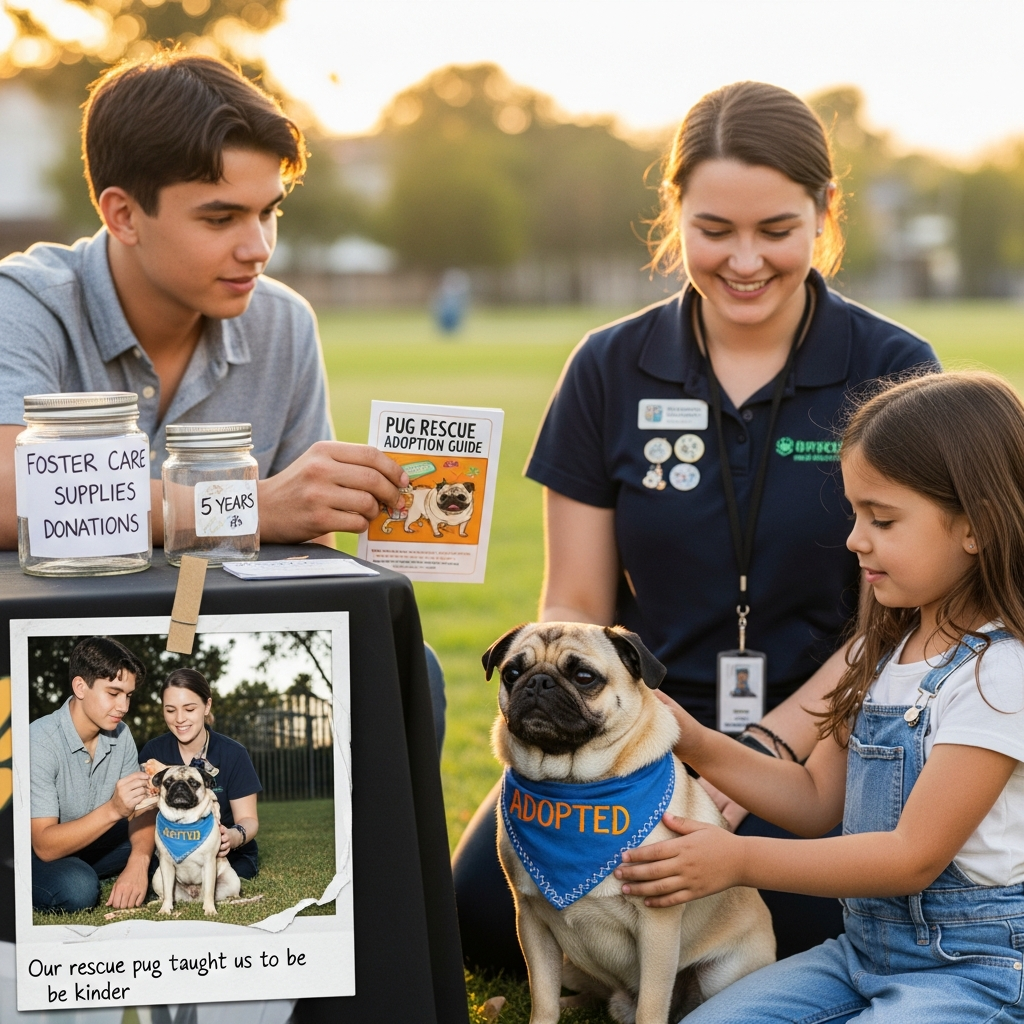
Rescued dogs often teach valuable lessons that extend far beyond the home. Children who grow up with adopted pets develop empathy and an understanding of compassion that influences them for life. Families learn the importance of responsible care, routine veterinary visits, and the significance of adopting instead of purchasing puppies from irresponsible breeders. These lessons ripple outward, encouraging neighbors and friends to consider rescue as well.
3. Why storytelling matters
Sharing adoption stories helps spread positive awareness about pug rescue. When published on websites, social media, or rescue newsletters, these stories reach individuals who may not have realized how desperate the need is. Emotional storytelling encourages donations, volunteer sign-ups, and additional adoptions. A single touching story that motivates people to take action is often the first source of information about breed-specific rescue.
4. Public support for rescue organizations
Adoption stories also strengthen public support for rescue organizations. When communities witness the life-changing work performed by volunteers and veterinarians, they become more dedicated to helping these missions thrive. More funding, better rescue efforts, and more medical resources result from this raised awareness. Dog shelters benefit from this support because it eases the burden of caring for animals with complex needs.
5. Creating lasting legacies
Long after the adoption is complete, a lot of adopters still support pug rescue. Some become volunteers, donors, or foster families. Others create fundraising campaigns or awareness events to help other Pugs in need. Adoption often ignites a lifelong commitment to animal welfare. People who were once unaware of the issues surrounding brachycephalic breeds become active advocates for responsible ownership and ethical rescue practices.
6. The emotional payoff
The emotional connection formed between a rescued pug and its adopter is powerful and meaningful. These dogs often show incredible gratitude and affection. Their playful personalities return, their health improves, and their trust deepens every day. Watching this transformation reminds families that second chances truly matter. Adoption does not just save a life. It restores happiness and brings love into the world in a way that is uniquely joyful and inspiring.
7. How Rescue Organizations Choose the Right Homes
Adoption may seem straightforward on the surface, but expert pug rescue organizations adhere to strict protocols to guarantee that each dog is placed in a caring and suitable setting. These considerate actions guarantee that every rescued pug gets the long-term home they deserve and help prevent future surrender. Responsible placement is one of the most important reasons why rescue adoption stories end in long-term success.
1. Application review
The majority of pug rescue organizations start with an application procedure meant to learn about the adopter’s expectations, time constraints, and way of life. They look at home environments, family routines, and financial readiness for veterinary care. Organizations want to make sure adopters can give consistent care because many rescued Pugs need ongoing assistance. This helps families prepare for the commitment of caring for a dog who may need long-term medical attention.
2. Interview and consultation
After reviewing applications, rescue volunteers conduct interviews. These discussions shed more light on lifestyle compatibility, emotional preparedness, and personality fit. Volunteers explain the breed’s medical needs, exercise limitations, and grooming requirements. They also discuss the dog’s history and temperament to ensure the adopters fully understand what to expect. Open communication prevents misunderstandings and builds trust between rescue organizations and families.
3. Home checks
Home checks are a vital part of rescue adoption. Volunteers visit the adopter’s home to assess safety, comfort, and accessibility. They look for hazards, available space, and proper containment areas. This step is not about judgment. It is about ensuring each dog is placed in a secure and supportive setting. Home checks prevent accidents, improve well-being, and reassure adopters that their new dog will enjoy a safe environment from day one.
4. Matching personalities
Matching the right dog with the right family is an art based on observation, experience, and intuition. Rescue volunteers take note of each pug’s behavior, confidence level, and social preferences. Some dogs love busy homes filled with energy. Others prefer calm environments with minimal noise. Responsible matching reduces stress, encourages bonding, and leads to more joyful adoption stories.
5. Trial periods
Some pug rescue programs include trial adoption periods that allow families to adjust before finalizing the decision. During this time, adopters observe behavior, evaluate energy levels, and ask questions about care. This approach gives dogs and families a chance to settle into routines that feel natural and comfortable. Trial periods reduce the risk of mismatched adoption and help create long-term success for both the pug and the family.
6. Lifelong rescue support
Rescue organizations stay connected with adopters long after adoption is complete. They offer guidance on training, behavior, and medical issues. If challenges arise, adopters know they have a network of knowledgeable people who can help. This ongoing support decreases the likelihood of future surrender and reinforces lifelong commitment.
8. Why Some Pugs Struggle to Find Homes Quickly
Not every pug that is rescued immediately finds a forever home. Before they are ready for adoption, some dogs need more time to heal, specialized medical attention, or extra emotional support. Readers can better appreciate the commitment of pug rescue groups and the caring work of volunteers and dog shelters by being aware of these difficulties.
1. Senior Pugs
Senior Pugs are often overlooked because prospective adopters worry about medical costs or shorter lifespans. Nonetheless, many elderly dogs still have a number of happy years ahead of them and do well in loving homes. Rescue organizations emphasize the joy of adopting older dogs because these animals often form deep bonds with their families. Adoption stories involving senior Pugs are among the most emotional and inspiring, proving that age should never diminish a dog’s value.
2. Medical needs
Pugs with ongoing medical requirements may take longer to place. Some need surgery, daily medication, or lifelong treatment. These needs can seem intimidating to potential adopters. Rescue teams carefully explain the responsibilities and often provide support and guidance. Many families discover that helping a dog recover becomes a meaningful and rewarding experience.
3. Behavioral challenges
Due to lack of socialization, fear, or neglect, some rescued Pugs have behavioral issues when they first arrive. Foster parents and rescue groups patiently reestablish trust by providing positive reinforcement. consistent routines, and gentle handling. Many dogs that were once terrified eventually develop into loving friends. Their adoption tales demonstrate that compassion and perseverance can triumph over challenging beginnings.
4. Uncertain history
Dogs with unknown backgrounds often come with unanswered questions. Rescue groups evaluate as much as possible through medical tests, behavioral observation, and comprehensive foster reporting. Over time, these observations help determine whether a pug will be most comfortable with quiet households, active families, or homes without other pets. Matching each dog to the right environment ensures successful adoption.
5. The beauty of second chances
Dogs that were neglected for months or even years are frequently featured in the most inspirational adoption stories. When these Pugs finally find the right family, the emotional reward is profound. Many adopters claim that they are unable to imagine their lives without their rescued dog. These happy changes serve as a reminder that all pugs are worthy of tolerance, compassion, and unwavering love.
6. Why understanding challenges helps readers choose adoption
Education empowers compassionate decision-making. Potential adopters are more receptive to adopting elderly dogs, dogs with medical needs, or dogs recovering from fear when they understand why some Pugs stay in rescue for longer. This awareness lowers the number of dogs waiting in rescue and increases adoption opportunities.
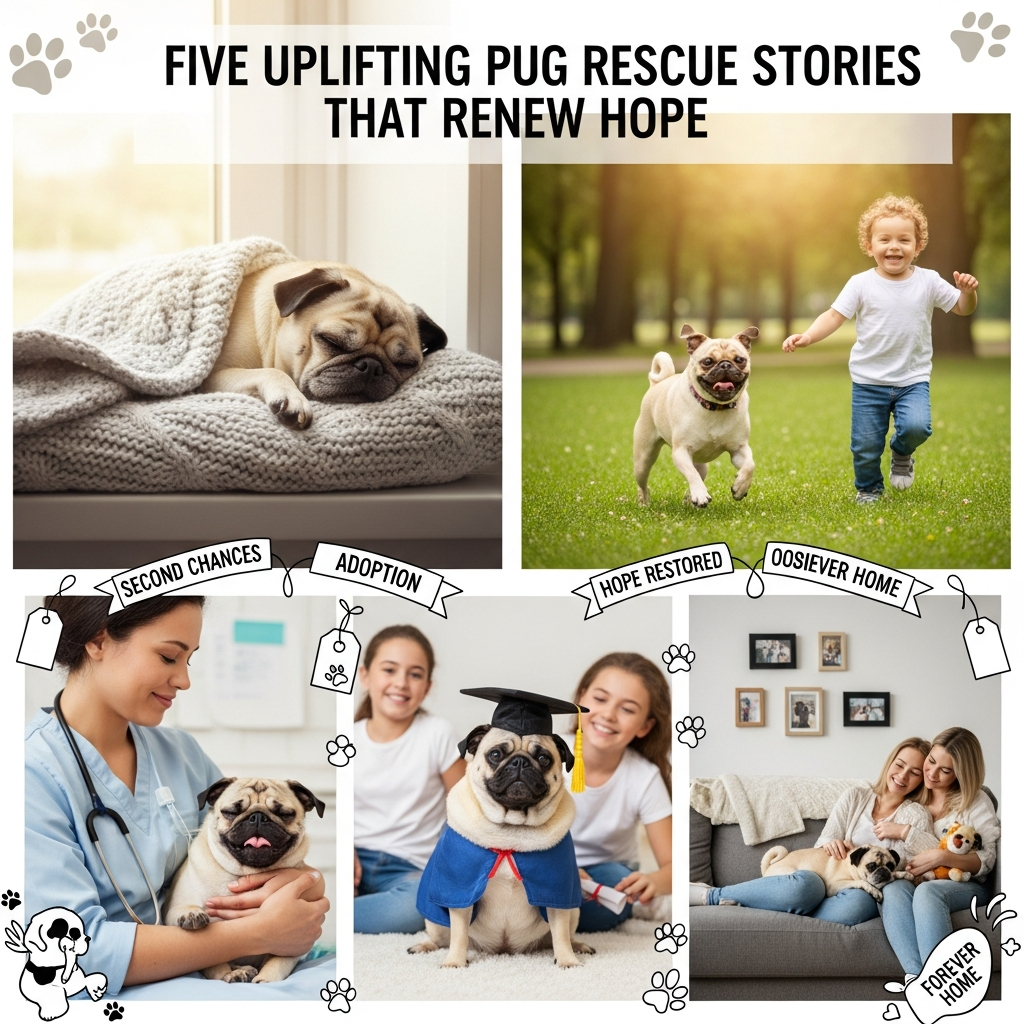
9. Five Uplifting Pug Rescue Stories That Renew Hope
Each adoption story reflects a journey filled with challenges, compassion, and emotional transformation. These uplifting examples come from real pug rescue organizations that have changed thousands of lives.
Story 1. Bella’s journey to safety
Bella was turned in with untreated eye infections and ended up at Pug Nation Rescue of Los Angeles. Volunteers arranged immediate ophthalmology care that saved her vision. Bella’s foster family patiently administered medication and helped her regain comfort. When a compassionate adopter learned about her story, they opened their home and hearts. Bella now enjoys peaceful naps and gentle cuddles, proving that proper medical intervention and loving attention can completely transform a frightened dog’s life.
Story 2. Max and the power of companionship
Max was discovered wandering without identification and brought to a local dog shelter. Due to respiratory concerns, volunteers contacted a pug rescue group for specialized support. Max struggled to breathe comfortably, but with surgery and attentive foster care, his health improved dramatically. Today, he lives with a retired couple who cherish his affectionate personality. Max’s adoption story demonstrates how dedicated rescue care can improve a dog’s future that many shelters might not have been able to handle.
Story 3. Daisy’s emotional recovery
Daisy came from a difficult background and arrived scared and withdrawn. Foster families recognized her need for calm support and provided gentle reassurance every day. Slowly, Daisy began to trust again. She discovered comfort in soft blankets and started bonding with her foster parent. When she finally joined her permanent family, Daisy continued to build confidence. Her emotional journey demonstrates the healing power of patience, empathy, and dedicated foster care.
Story 4. Oliver’s transformation after surgery
Oliver entered rescue with severe dental issues causing chronic pain. Volunteers coordinated dental procedures and post-surgery treatment that improved his comfort and ability to eat. Once Oliver recovered, his playful side emerged. He rediscovered toys and enjoyed exploring his new home. His adoption story emphasizes the importance of medical treatment and the joy that comes when a rescued pug is finally free from pain.
Story 5. Rosie’s second chance at happiness
Rosie spent several months waiting for adoption because prospective families were hesitant about her age. However, a compassionate adopter saw beyond the number and recognized the value of giving a senior Pug a loving home. Rosie now spends her days enjoying peaceful walks, content snuggles, and plenty of affection. Her story proves that senior dogs have an incredible capacity for love and deserve the same compassion as younger animals.
10. Ten More Uplifting Stories That Prove Second Chances Matter
Pug adoption stories:
Story 6. Milo finds comfort again
Milo was tired and had trouble breathing. After surgery and foster care, he slowly regained strength. His adopters say his gentle snoring is the sweetest sound they hear each night.
Story 7. Penny’s joy returns
Penny arrived underweight and anxious. With healthy meals and steady reassurance, she gained confidence and discovered playtime again. Penny now enjoys afternoons cuddling beside her family.
Story 8. Bruno discovers love through patience
Bruno struggled with fear at first, but his foster family offered consistent affection. Gradually, he trusted again and now shares a peaceful home where he feels truly secure.
Story 9. Lucy’s sight restored
Lucy faced vision loss due to untreated eye issues. She partially recovered her vision following successful treatment and rescue intervention. Observing her safely explore is invaluable, according to her adopter.
Story 10. Charlie’s playful spirit returns
Charlie endured dental pain for years. After dental procedures, his energetic personality emerged. His forever family says he now smiles every day.
Story 11. Ruby’s golden years
Many applicants overlooked Ruby, a senior pug. She was immediately welcomed by a kind adopter. Ruby loves endless affection, cozy blankets, and leisurely walks.
Story 12. Winston’s long recovery
Winston required several surgeries, but the rescue workers remained dedicated. Following several months of recovery, he became a member of a family that values his serene disposition.
Story 13. Sadie’s new beginning
Sadie arrived timid and uncertain. Foster parents provided patient care. Today, Sadie enjoys a quiet home where she naps peacefully and feels completely safe.
Story 14. Cooper learns to trust
Cooper struggled with anxiety caused by early neglect. Positive reinforcement helped him find solace once more. His adopter claims that his quiet contentment makes the house peaceful.
Story 15. Hazel’s happy ending
Before receiving medical attention, Hazel endured persistent discomfort. Her happy adoption narrative demonstrates how loving rescue care can result in lovely new beginnings.
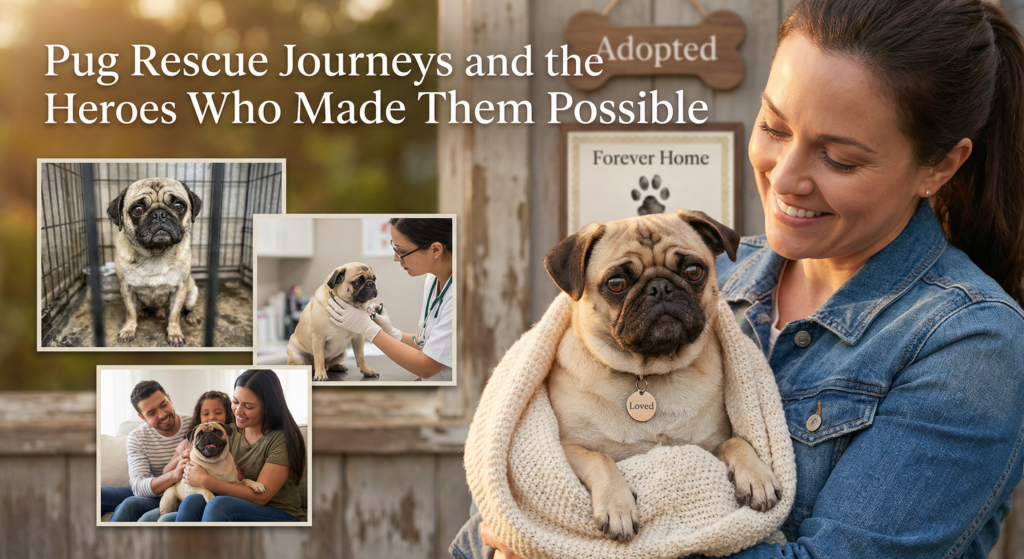
Read These Pug Rescue Journeys and the Heroes Who Made Them Possible
1. Oscar’s Adoption Journey: Pug Rescue of Korea (South Korea / USA)
Oscar’s story demonstrates how committed organizations can change a dog’s life across continents and the global reach of pug rescue initiatives. Oscar, formerly known as Zion, was discovered as a stray in the rural agricultural area of Naju, South Korea, and was taken in by Pug Rescue of Korea (PRoK) following his abandonment by unidentified individuals in the summer of 2024. Oscar was flown to New York City in December 2024 for adoption after receiving initial care from PRoK, which included treatment for a knee ailment and canine coronavirus. His future family, who had previously worked with rescue Pugs, offered to accompany him on the flight and bonded with him right away. In January 2025, nine days after his arrival, Oscar was formally adopted into his forever home, where he now has security, affection, and play with his new family. Pug Rescue of Korea
Organization: Pug Rescue of Korea
Location: Naju, South Korea → New York City, United States
Date: Stray in Aug 2024, adopted Jan 17, 2025
Outcome: Fully adopted into a loving NYC family
2. Hazel’s Successful Adoption Instagram Story (USA)
One of the real rescue stories that are shared with the public concerns a pug named Hazel. Highlights of her adoption and rescue are shared on social media. Hazel, a 7-year-old pug with a history of delayed adoption, was saved on February 8, 2022, and on April 18, 2022, she was placed in a permanent home after proving to be resilient and adaptive during her recuperation and socialization period. This case illustrates real-world adoption dynamics where older dogs, once given care and a stable environment, are welcomed into families despite initial placement challenges, even though it is not linked to any specific organization in the public post. instagram.com
Organization: (Social media rescue narrative / likely affiliated rescue)
Location: United States
Date: Rescued Feb 8, 2022 Adopted Apr 18, 2022
Outcome: Adopted after shelter/foster care into a loving home
3. Snort Stories San Diego Pug Rescue (USA)
San Diego Pug Rescue, affiliated with the larger nonprofit SNORT (San Diego Obliterates Race Temperament), offers several real rescue stories as part of their Snort Stories program. According to one such tale, a four-year-old pug arrived with a crooked spine and abnormal gait. The dog significantly improved and went on to lead a stable, healthy life after adoption thanks to the rescue group’s foster and veterinary partners’ committed medical support and rehabilitation. These narratives exemplify how breed-specific rescue organizations work with dog shelters, veterinarians, and foster networks to address medical and behavioral challenges unique to Pugs. pugsandiego.com
Organization: San Diego Pug Rescue (SNORT)
Location: San Diego, California, USA
Outcome: Rescued, treated, and adopted after recovery
4. Buster’s Rehabilitation from Pacific Pug Rescue in Portland, Oregon
In early March 2023, Buster, a ten-year-old senior pug, was placed in the care of Pacific Pug Rescue in Portland, Oregon, after his previous owner was unable to provide for his medical needs. Rescue volunteers learned that Buster had chronic dry eye, arthritis, and advanced dental disease during intake. The organization put him in a medical foster home where he received regular care and daily supervision, scheduled dental surgery, and developed a long-term pain management plan.
Buster steadily improved over the course of the following three months, regaining emotional stability, comfort, and mobility. He was adopted in June 2023 by a retired couple with prior senior dog care experience. He now appreciates comfortable bedding, quick daily walks, and a calm home that meets his age-related needs.
This tale highlights the significance of senior Pug rescue as well as the transformative power of committed foster families and healthcare.
Organization: Pacific Pug Rescue
Location: Portland, Oregon
Date: Intake March 2023 and adoption June 2023
Outcome: Successful rehabilitation and adoption
5. Finn’s Emergency Rescue from Pug Rescue of Florida
Finn, a two-year-old fawn pug, was found as an injured stray in September 2021 and given to Pug Rescue of Florida in Tampa. It appeared from his injuries that he might have been hit by a car. Immediate veterinary care, including imaging, wound care, and neurological assessment, was approved by the rescue. After stabilizing, Finn was placed in foster care, where he started physical therapy to improve his balance and strengthen his legs.
Both the rescue team and his foster family were impressed by his progress. Finn was well enough by December 2021 to start the adoption procedure. He was paired with a motivated family who pledged to support his ongoing recovery. Without prompt emergency assistance and caring foster care, Finn would not have been able to lead a healthy and active life today.
Organization: Pug Rescue of Florida
Location: Tampa, Florida
Date: Rescued September 2021 and adopted December 2021
Outcome: Full medical recovery and adoption
A Heartfelt Message to Every Reader
These fifteen adoption journeys teach us that rescue is not only about helping a dog in need. It’s also about realizing the potential power of unrestricted compassion. Each pug featured in these stories faced challenges that could have limited their happiness forever. Instead, dedicated rescue volunteers, medical professionals, and loving families stepped forward to create comforting new beginnings. Their dedication demonstrates what is achievable when responsible care and human kindness coexist.
The emotional strength demonstrated by these rescued Pugs reminds us that animals feel fear, hope, and joy just as we do. When frightened dogs learn to trust again, or seniors find comfort and peace in a gentle home, their resilience becomes a beautiful lesson about healing. These moments prove that second chances have value far beyond what we can measure. Every adoption is a pledge to preserve and treasure a life that might otherwise go unnoticed.
This message also honors the tireless work of rescue organizations, dog shelters, and foster families. Their daily efforts give vulnerable dogs the opportunity to recover and thrive. Without their persistence, many Pugs would continue suffering without proper support. Their work deserves recognition, encouragement, and lasting appreciation from all of us who believe in compassion.
Most importantly, these stories show that adopting a rescued pug does more than save one life. It also influences how others think about animal welfare. Every adoption inspires more kindness, more awareness, and more willingness to support rescue missions. When readers share these stories or choose adoption themselves, they help build a more humane future for countless animals.
In the end, each heart that opens to rescue becomes part of a beautiful movement that changes lives and spreads kindness throughout the world.
Frequently Asked Questions About Pug Rescue and Adoption
Why are so many pugs in need of rescue?
Pugs are often surrendered because owners are unprepared for their medical needs or experience major life changes. Vet costs, time commitments, and lack of education about the breed all contribute. Rescue organizations step in to provide care, treatment, and safe placement. Increased awareness helps reduce future surrenders.
Are rescued pugs healthy?
Many pets that have been rescued go on to lead happy, healthy lives. Some arrive with medical needs that require ongoing care. Rescue groups usually provide veterinary assessments before adoption. With proper treatment, many conditions become manageable.
Do rescued pugs have behavior problems?
Some rescued pugs need time to adjust to a new environment. Past neglect or instability can affect behavior at first. With patience, structure, and positive reinforcement, most settle in well. Pugs are naturally affectionate and eager to bond.
Is adopting a pug different from buying a puppy?
Adoption often means welcoming an adult pug with a known personality and habits. Puppies require more training and time. Both options can be rewarding. Adoption offers a second chance to a dog in need.
How long does it take for a rescued pug to adjust?
Adjustment times vary from weeks to a few months. Calm routines and consistency help build trust. Every pug adjusts at a different rate. Patience makes a significant difference.
Are senior pugs good rescue options?
Senior pugs make wonderful companions. They are often calmer and already trained. Some may need extra medical attention. Their affection and loyalty are deeply rewarding.
What role do foster homes play in rescue?
Foster homes provide temporary care while pugs recover and prepare for adoption. They help dogs adjust to home life. Foster feedback helps match pugs with the right families. Their role is essential.
How can I support pug rescues if I cannot adopt?
You can donate, volunteer, foster, or share rescue stories. Awareness helps rescues reach more people. Every contribution supports care and rehoming. Support comes in many forms.
Do rescue pugs bond with new owners?
Once trust is built, rescue pugs frequently develop close relationships. They are naturally affectionate and people-oriented. Many become deeply loyal companions. Second chances often create powerful connections.
Are rescue stories common with happy endings?
Yes, many rescue stories end beautifully. With care and patience, pugs recover and thrive. These stories reflect compassion and dedication. They inspire others to help.
Why do pug rescue stories inspire so many people?
Rescue stories highlight hope and resilience. They show how love can transform lives. Each success reflects teamwork and kindness. They encourage adoption and advocacy.
Lorem ipsum dolor sit amet, consectetur adipiscing elit, sed do eiusmod tempor incididunt ut labore et dolore magna aliqua. Ut enim ad minim veniam, quis nostrud exercitation ullamco laboris nisi ut aliquip ex ea commodo consequat. Duis aute irure dolor in reprehenderit in voluptate velit.