❝A dog has one aim in life… to bestow his heart.” ― J. R. Ackerley❞
❝A dog has one aim in life… to bestow his heart.” ― J. R. Ackerley❞

You are experiencing real emotions, so let’s stay here for a little while.
You didn’t think this would be simple, but you also didn’t think it would be so intense. You’re laughing at your pug’s antics one moment, and then you’re staring at a brand-new mishap and wondering how something so insignificant can ruin you so fast. It’s confusing, that mixture of love and frustration. Even though you know logically that this is a necessary step in the process, it causes you to doubt yourself.
Your pug isn’t attempting to outwit you or push your boundaries. The only learning strategies they are accustomed to are connection, emotion, and repetition. Yes, pugs can be stubborn, but this stubbornness is frequently just confidence disguised as sensitivity. They want to do well. They just need clarity.
Because it requires a lot of you, this journey is messy. When you’re exhausted, have patience. Be calm when you are overwhelmed. When progress seems imperceptible, maintain consistency. Even though it may not seem like it on the surface, the real work is done in those quiet moments of uncertainty, late nights, and early mornings.
Knowing that potty training is not a struggle is what makes this stage manageable and ultimately successful. It is a relationship to build. You are teaching trust each time you react with advice rather than rage. Every habit you follow, even if it seems meaningless, shapes your understanding.
One day, sooner rather than later, you’ll realize that the last accident was a long time ago. Your pug will pause, look at you, and decide where to go. Even though it will seem quiet and unremarkable, that moment will have enormous significance.
Until then, keep going. Laugh when you can. Rest when you need to. Additionally, keep in mind that being stubborn does not equate to being impossible. It translates to “strong-willed, deeply attached, and worth the effort.”
You’re doing better than you realize.
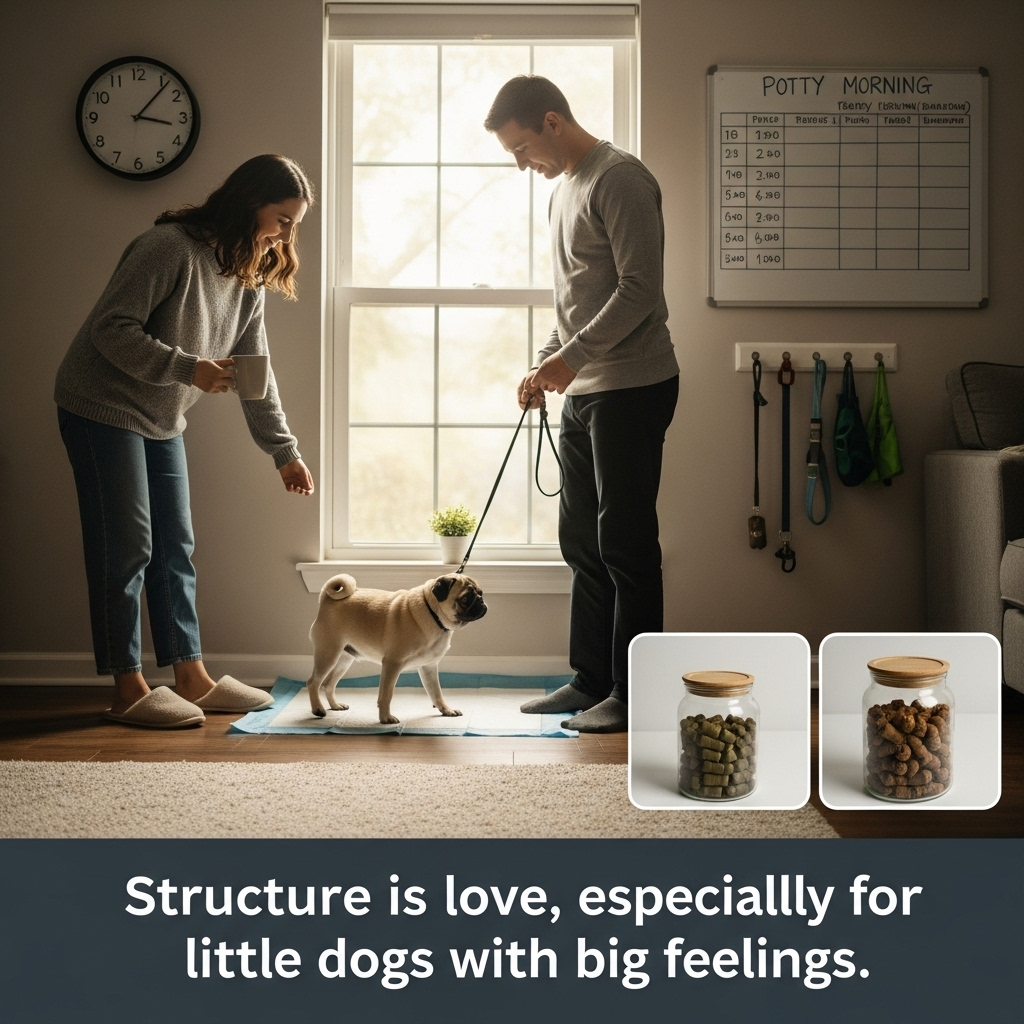
Indoor potty training for small dogs, Pugs are not very good at guessing games. They enjoy being aware of what will happen, when it will happen, and how it typically proceeds. When things feel predictable, they relax. And a relaxed pug learns faster. For this reason, routine is essential when it comes to potty training. It is the road map that makes everything work.
Make an effort to feed your dog at the same times every day. As soon as they wake up, after naps, after meals, before bed, and whenever they begin to show an excessive amount of interest in the same area of the room, take them to their potty spot. Those moments are your cues. They are subtly alerting you to their need for assistance.
You’ll notice a change as the days go by. Your dog begins to anticipate the routine. Their bodies adjust to the timing. Potty trips feel calmer and quicker. Accidents are less frequent because your pug’s life finally makes sense to them, not because they are trying harder.
This is not just about repetition. It is about trust. Your pug will learn that you are dependable if you arrive in the same manner each day. They feel safe. They know you are paying attention. More important than any command is that emotion.
For a pug, routine is neither rigid nor dull. It is comforting. It conveys to them that they are valued and understood. And learning is so much simpler from that secure location.
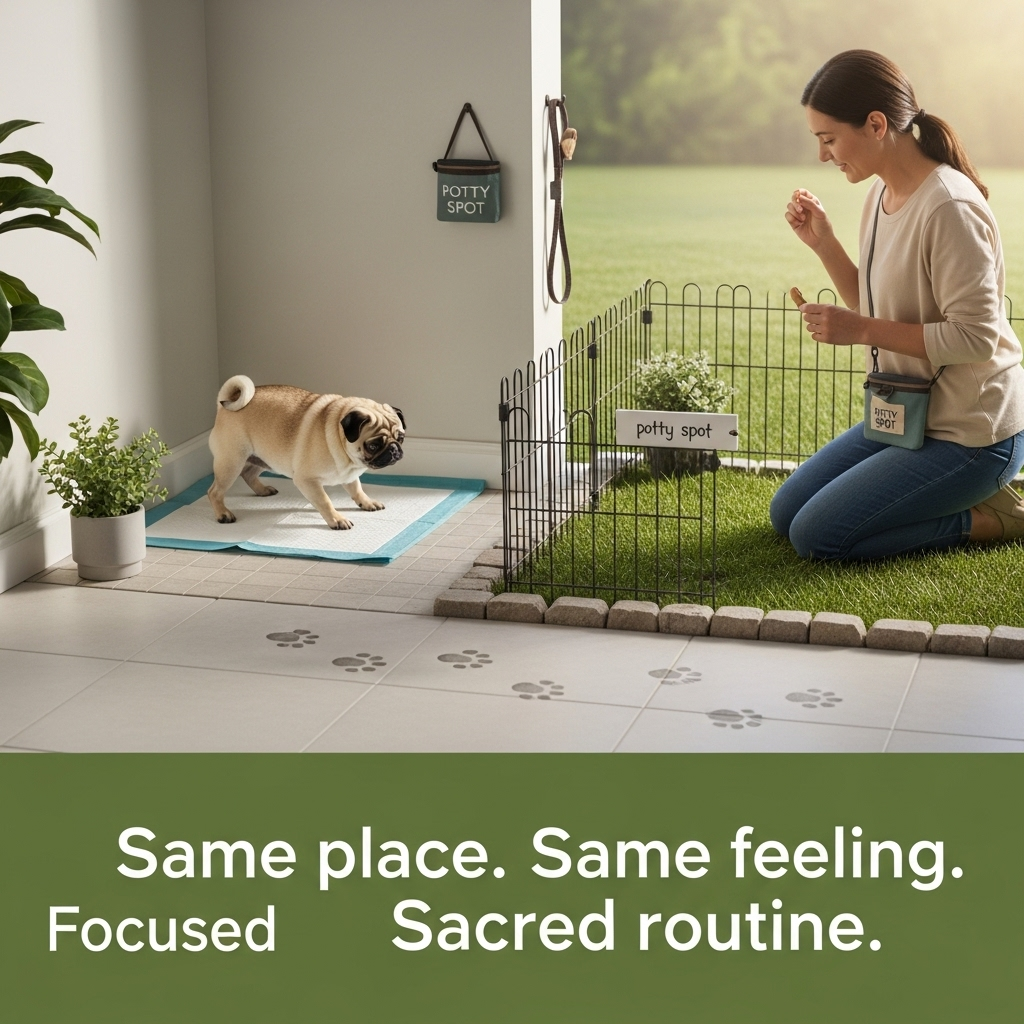
Stop your pug from peeing indoors: The location of the potty is more important than most people realize, regardless of whether your pug puppy is learning to go outside or use a pee pad indoors. The location of the potty is more important than most people realize, regardless of whether your pug puppy is learning to go outside or use a pee pad indoors. Decide on one location and don’t second-guess yourself. Learning is the primary consideration here, not practicality or aesthetics. Learning is the primary consideration here, not practicality or aesthetics. This area becomes your pug’s bathroom, and its significance comes from consistency.
Dogs use their senses to learn about the world. The texture beneath their paws, the precise location in the room or yard, and the scent they leave behind all combine to create a distinct message. Over time, your pug will learn from those cues that potty time occurs in this particular location. It becomes familiar, expected, and safe.
The message becomes ambiguous when the potty location shifts. For your pug, what seems like a minor adjustment could be a change in the rules. Accidents frequently occur because the guidance changed rather than because people forgot. Keeping the location the same removes that confusion and allows learning to settle in.
Something clicks as the routine is repeated. Your pug begins to move independently in the direction of the location. The schedule feels smoother. Potty time gets quicker and more assured.
Make it unmistakable when they do it correctly. Celebrate the success. Praise generously. Tell them that this was precisely what you desired. Your pug is excited to repeat the lesson because of that enthusiasm.
Consistency creates clarity. Clarity builds confidence. And confidence turns training into habit.
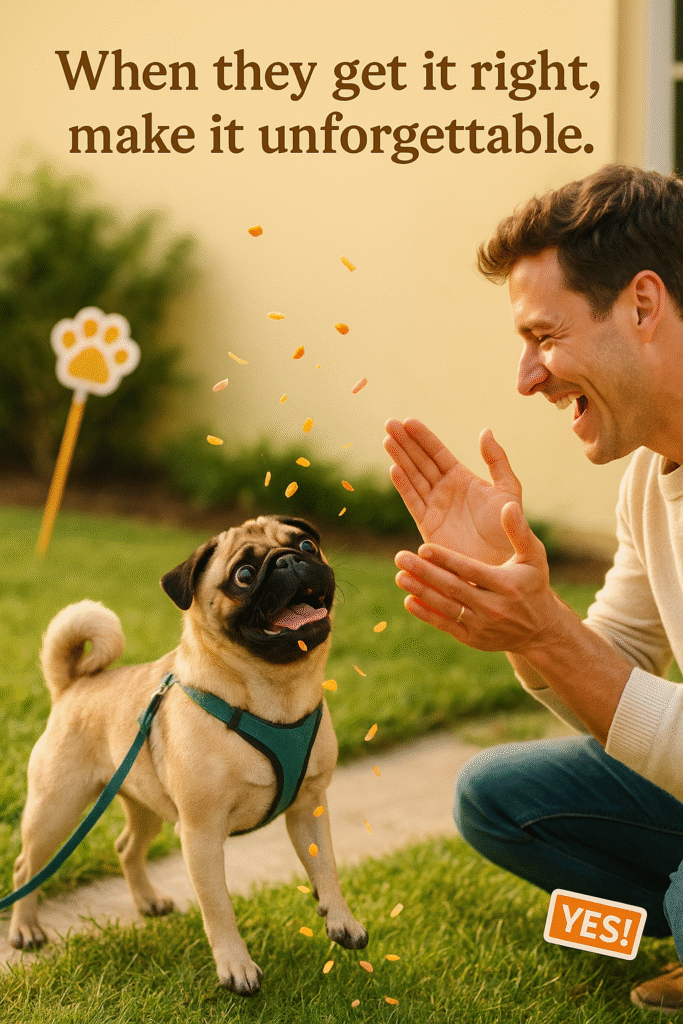
Treat the moment as if it were important when your dog does it correctly. Even a single success deserves celebration. Those little victories are how learning takes hold, particularly in the beginning. For them, something that seems insignificant to you is a breakthrough.
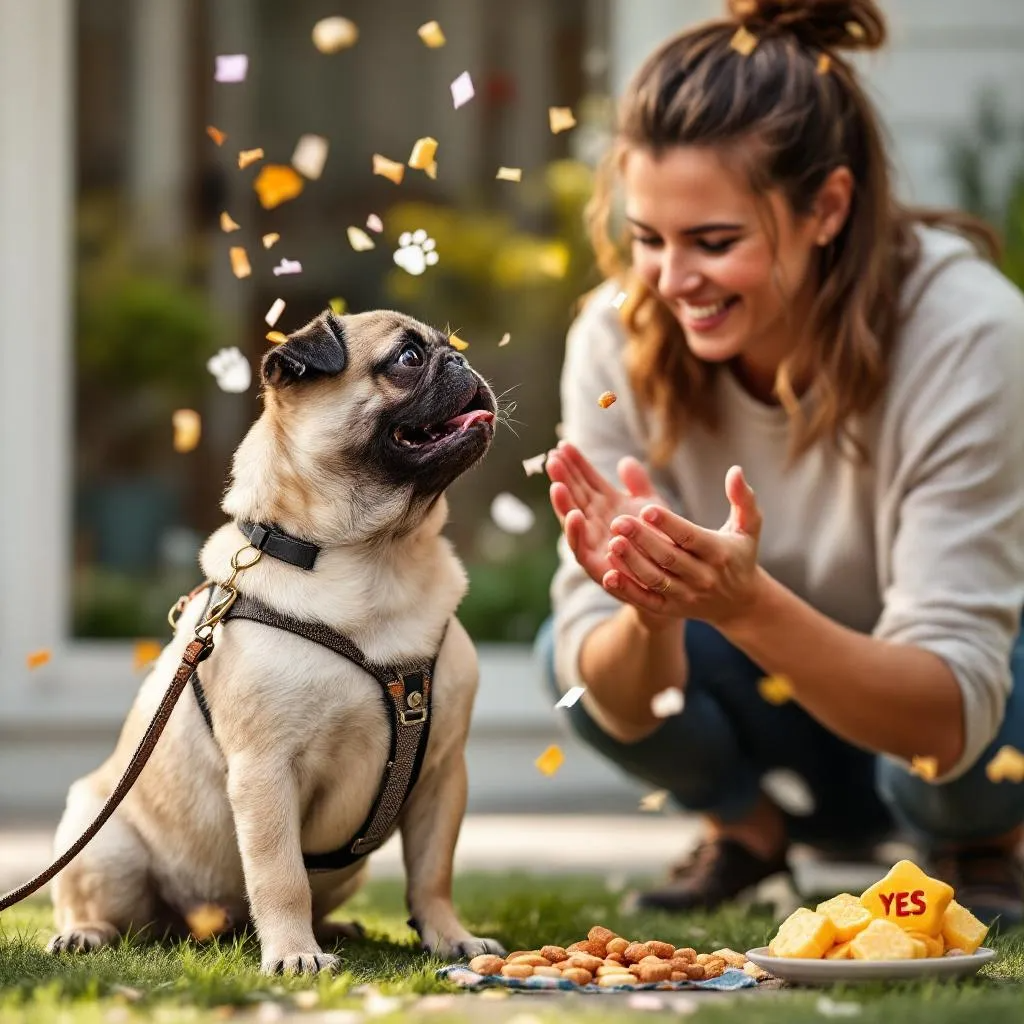
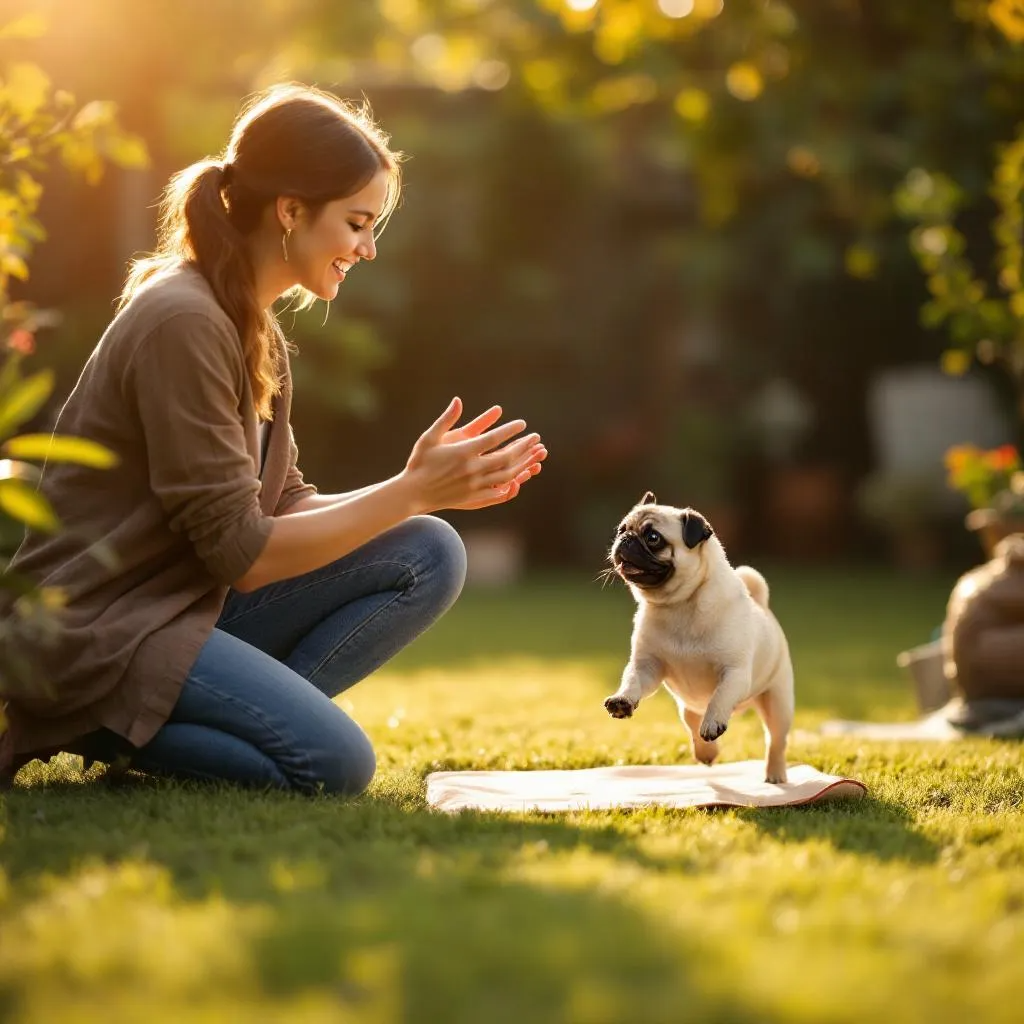
Do not hold back your praise. Turn it up. Let your voice rise. Smile big. Clap your hands. Put on that goofy, high-pitched baby voice you vowed never to use in public. Your pug does not judge you. They can read tone, energy, and emotion, and excitement indicates that they have accomplished something crucial.
Pugs are intensely people-focused. Your approval is their greatest reward. They thrive on your warmth, love, and attention. They leave a deep emotional mark when they sense your happiness. They want to pursue that emotion once more.
Praise does more than just identify good behavior. It builds confidence. It conveys to your pet that they are safe, competent, and understood. Beneath the playful sass and obstinate demeanor lies a dog that aspires to success but requires unambiguous feedback to know when they have.
Your pug will try again once they feel they have gained your approval. And again. Instead of being something they happen upon, success becomes something they actively pursue. Make those moments unmistakable. Demonstrate to them that they made the right decision in a clear and joyful manner, and allow that mutual joy to propel progress.
Pug puppy potty schedule: Although no one likes talking about accidents, they are a frequent and necessary part of potty training. At some point, your pug will urinate inside. They might even look directly at you while doing it. Such moments can make you doubt your progress, your perseverance, and your capacity to do this correctly.
Punishment or reprimands won’t help. Your pug does not learn what to do from those reactions. By undermining trust, they can impede learning and only instill fear and confusion. Your pug is not being defiant. They are still figuring things out.
The simplest answer is also the most effective. Clean it up calmly. Say nothing. Move on. Repetition of patterns, not your responses to mistakes, is where training takes place.
Accidents are information. They inform you that the schedule needs to be adjusted, the timing was off, or there was a brief lapse in supervision. That is an aspect of learning rather than a sign of failure.
You are not failing. You are learning together. Better habits and clearer communication are shaped by every mistake.
Have patience with both yourself and your pet. This is progress. It is authentic, flawed, and occasionally messy. Even when it is difficult to see at the time, progress happens when you lead with kindness and composure.
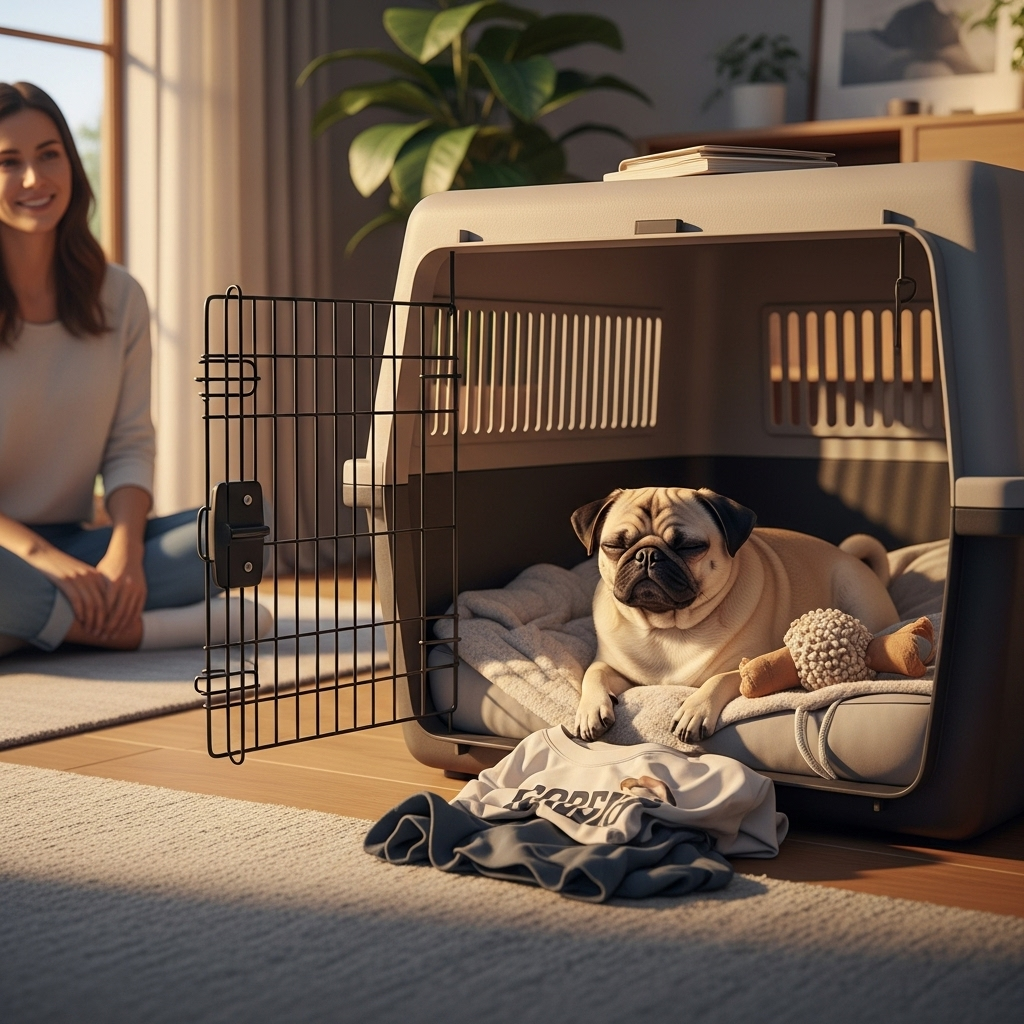
A crate becomes much more than a training aid when it is used carefully and purposefully. It turns into a sanctuary. A place where your dog can relax, feel safe, and recharge. The crate’s potty training effectiveness stems from this feeling of security. Dogs naturally avoid contaminating their sleeping quarters, and a peaceful, cozy crate allows them to develop bladder control without stress or anxiety.
Start by making the space welcoming. Use a cozy bed or blanket, add a favorite toy or chew, and add something that smells like you, like a tattered t-shirt. These little gestures let your dog know that the crate is theirs. At first, keep the door open and let natural exploration take place. Curiosity should lead, not pressure.
Initially, limit the amount of time spent in the crate and associate it with positive experiences. When the door briefly closes, give praise for settling in, offer treats for entering, and reassure them calmly. The goal is not confinement. The goal is comfort. Instead of feeling confined, your pug should feel at ease.
Never send your pug to the crate out of frustration or use it as a form of punishment. By doing this, resistance is created and trust is broken. This is not a place for discipline; it’s their bedroom. Your pug will start to see the crate as a haven when it continuously symbolizes peace and security.
You’ll see a change over time. Your pug may start entering the crate on their own You’ll eventually notice a change or get ready to unwind. They choose quiet. They choose comfort. They choose safety. It’s a powerful moment when they voluntarily enter and settle in. It indicates that they perceive the crate as a tranquil space, which promotes both emotional stability and effective potty training.
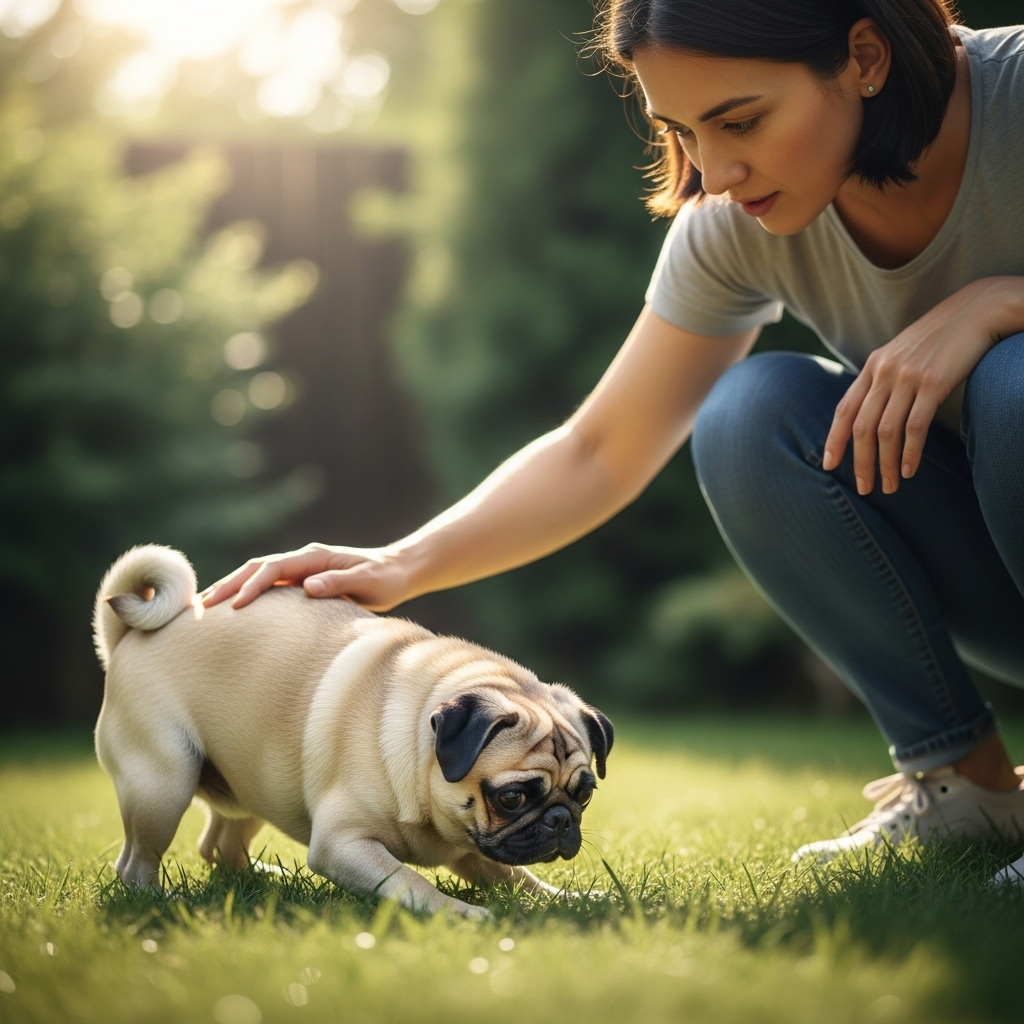
Your pug is always talking to you, even if they can’t say anything. Most pugs give silent cues that they need to leave long before an accident occurs. These signals are rarely dramatic. When life is hectic, it can be simple to ignore these modest, almost courteous attempts at communication.
Your pug may pace close to the edge of the room, walk in tight circles, pause and look around, slow down and begin sniffing purposefully, or whine softly under their breath. Some pugs freeze for a moment, while others give you that unmistakable look that is actually uncertainty rather than guilt. These are not misbehaviors. They are requests.
React as soon as you see a cue. Don’t wait to find out if they must leave. This hesitancy frequently makes the difference between an accident and success. As soon as possible, gently lead or carry them to the restroom. It matters even if they only complete a portion of the task there. You assisted them in making the best decision.
Understanding is developed more quickly by catching them before or during the act and directing them to the right location than by any correction. The notion that pottying has a place and that you will assist them in finding it is reinforced with each successful redirect.
Something significant occurs over time. Your pug starts to feel confident that their cues will be understood. The cues become clearer. The communication becomes stronger. What began as hazy restlessness develops into more deliberate actions, such as approaching the door or looking for you.
Pay attention to the whispers. Your dog is constantly communicating with you, seeking advice, security, and comfort. They learn that they don’t have to guess or hurry when you respond politely and consistently. They can trust you to listen.
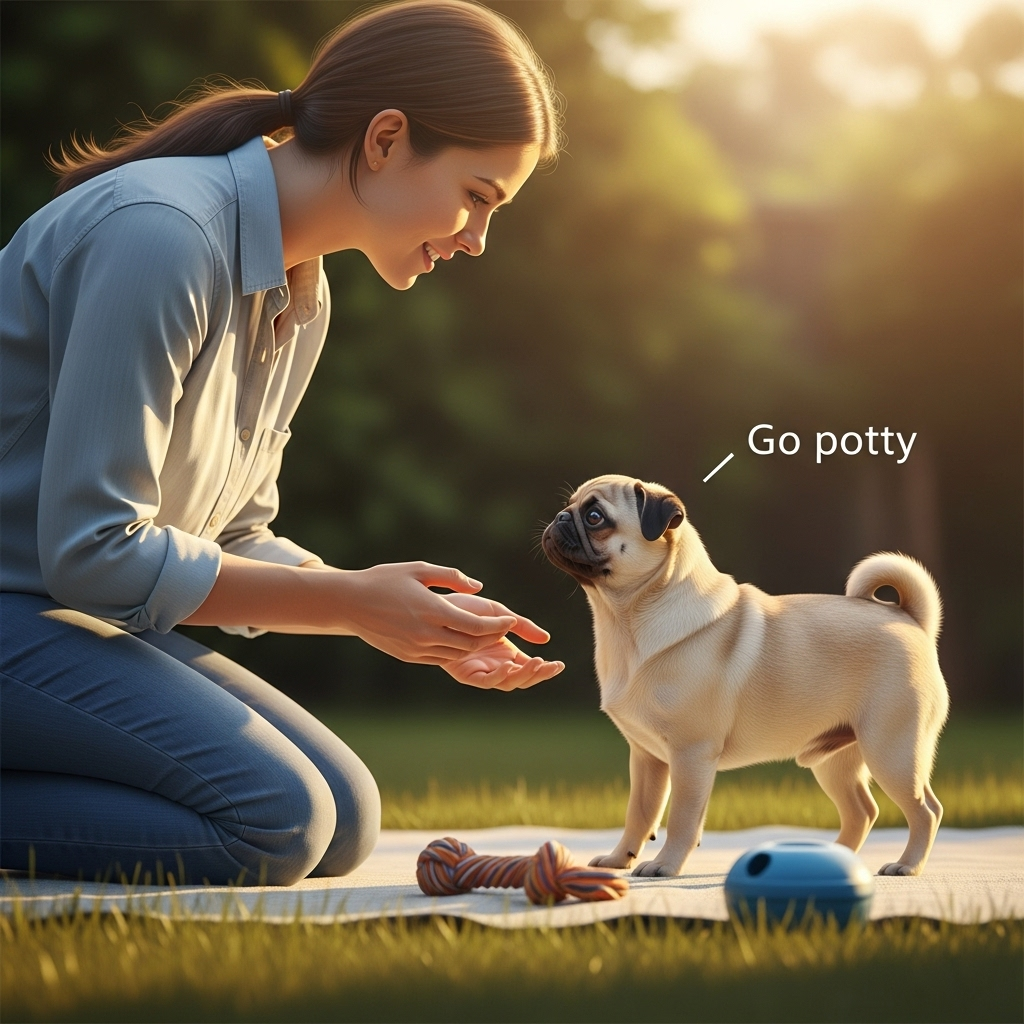
The best method for potty training a pug: Every time your dog uses the restroom, make a commitment to repeat one simple phrase. “Go potty” is a useful example, while “do your business” is more casual or could be something amusing that makes you smile. Using the same phrase consistently, in the same tone, and at the same times is far more important than the exact words.
As your pug starts to go, calmly say the phrase once. There’s no need to rush the moment or repeat it. Clarity produces understanding, whereas repetition produces background noise. The majority of the teaching will be done for you by the setting, the schedule, and the timing.
With time, your pug will start to associate that phrase with the familiar potty spot, the physical act, and the subsequent positive reaction. The words turn into a signal that they are acting morally, a cue, and a source of comfort. Potty training becomes clearer and more dependable as a result of this association, particularly in novel or unfamiliar settings.
Dogs are skilled at reading patterns, tone, and intention, but they do not comprehend language in the same way as humans. Your pug feels secure and concentrated rather than stressed or perplexed when your voice remains composed and supportive.
When words are used carefully, they have power. They become a common language among species when they are spoken consistently and kindly. That one sentence eventually turns into more than just an order. It develops into a bridge based on compassion, understanding, and trust.
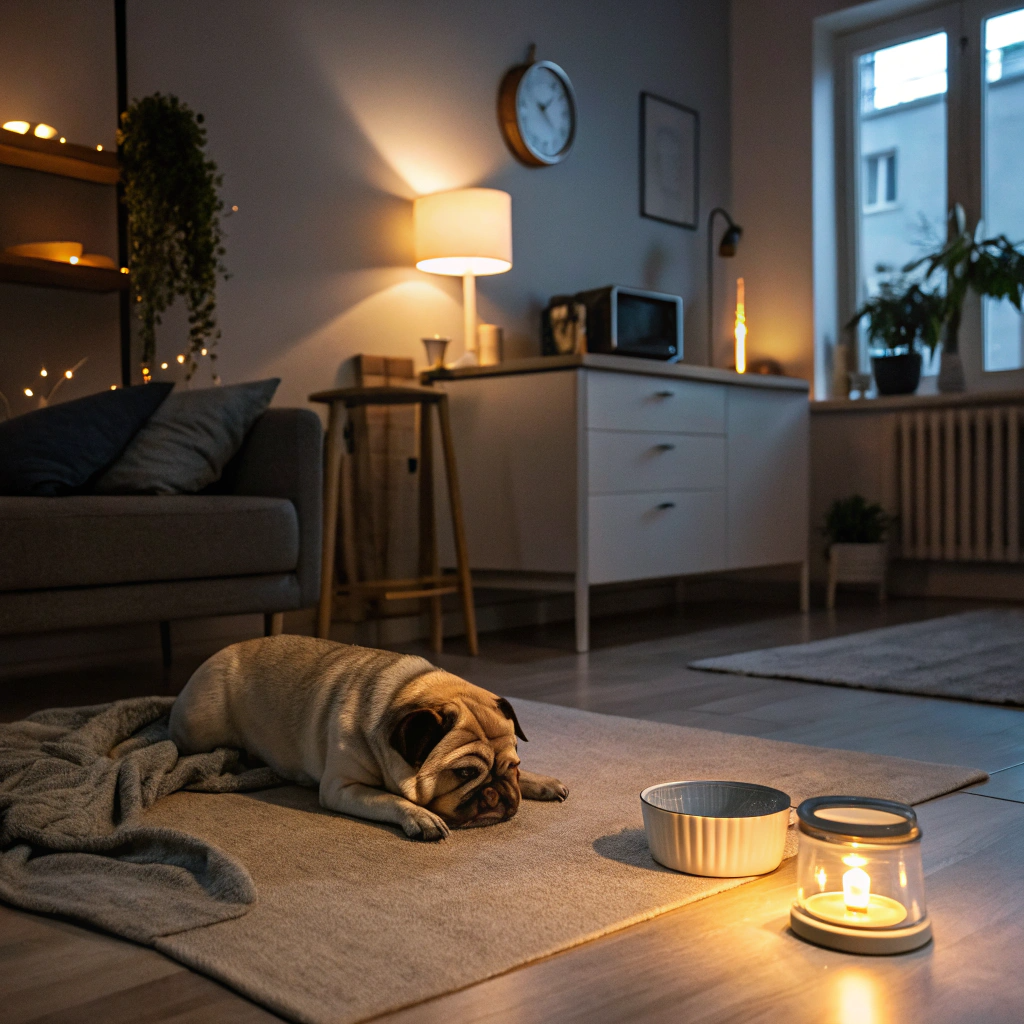
Pug house training advice, Controlling your evening water intake is one of the most responsible and successful ways to support potty training. Restricting your pug’s access to water completely is neither safe nor considerate, and it should never be the aim.
Rather, start cutting back on water use two hours before bed. This isn’t a punitive measure. It is a practical prevention strategy. Your pet will have a more comfortable night and fewer overnight mishaps if you give them less water late in the evening.
Make sure your dog has lots of chances to sip throughout the day. It’s critical for your health and wellbeing to stay hydrated while you’re awake. Instead of stopping the flow suddenly as bedtime draws near, just slow it down.
Just before turning in for the night, make one peaceful, predictable potty trip to cap off the evening. Your pug eventually picks up on this rhythm and starts to predict what will happen next.
Because it establishes consistency without stress, this strategy is effective. a mild schedule. An established tradition. It can significantly impact the success of nighttime potty training when paired with patience and praise.
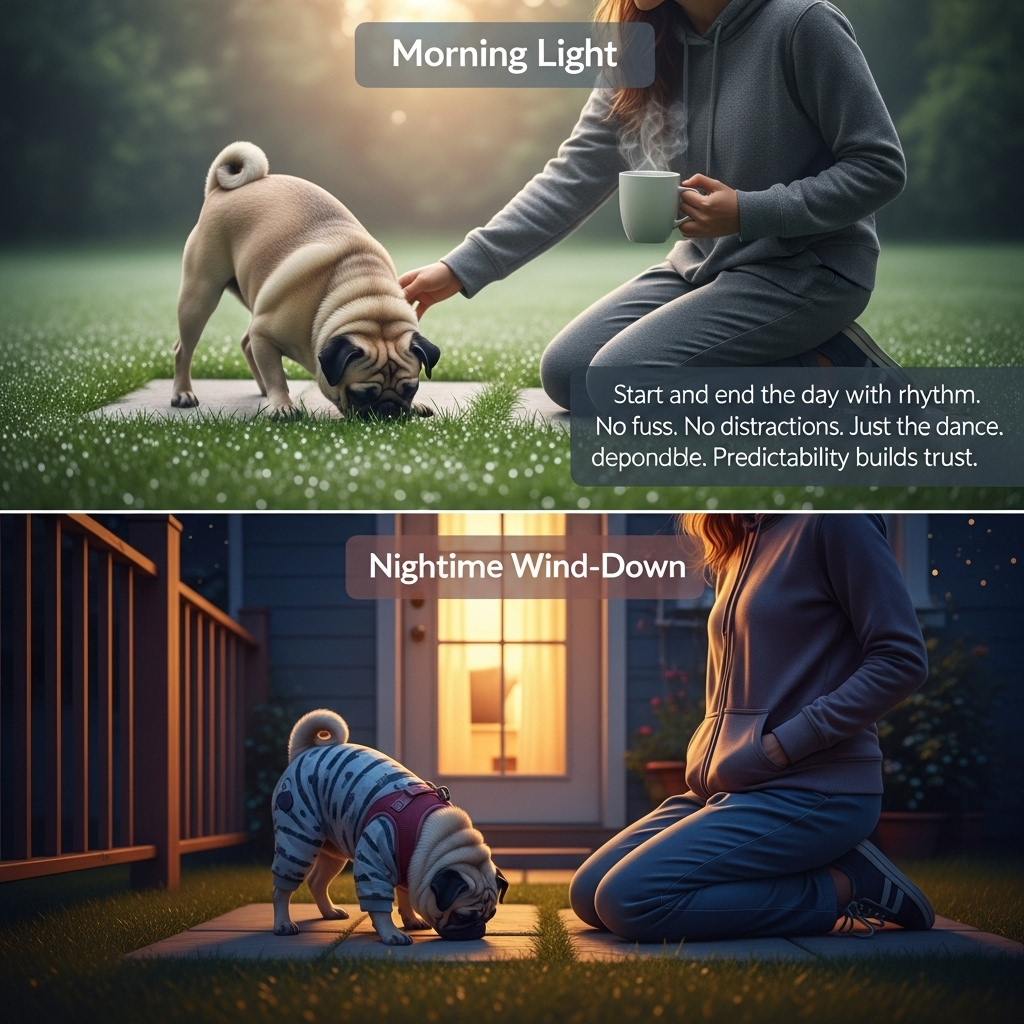
For small dogs like pugs, mornings and nights are crucial to the success of indoor potty training. Whether the day begins with an accident or goes smoothly is frequently determined during these moments.
The rule is simple. Take your pug to their assigned potty area as soon as they awaken. No distractions. No playtime. So far, no cuddles. There is only one purpose for this moment. Maintain composure, focus, and consistency to aid their success.
The same routine applies before bed. Relief comes before rest, and the day is coming to an end with one last quiet trip to the restroom. Your pug eventually learns to associate sleeping and waking with proper potty behavior.
When you incorporate this routine into your daily routine, it ceases to feel like exercise and instead feels organic. a dependable pattern that your pug is familiar with. Instead of uncertainty or urgency, it was a serene, anticipated moment.
Pugs react particularly favorably to intentional routines. They like structure and ritual. They are much more likely to agree with you and make the best decision when you provide that consistency.
Control is not the goal of indoor potty training. It is about clarity. Accidents become less common when your dog knows exactly what to do and when to do it.
Potty training tips for pugs, The truth about pug behavior training is that it involves more than just where your pug urinates. It is about fostering connections, fostering trust, and directing development. Your pug learns to comprehend you and feel secure with you through every routine you set up and every composed reaction you provide.
Training is a form of communication. By being kind, patient, and consistent, you are establishing a common language. Your pug eventually learns that you are dependable, consistent, and encouraging in addition to what is expected of them. That trust serves as the cornerstone for all subsequent actions, including courteous greetings and composed walking.
Yes, the process can be frustrating. There will be setbacks. They might even start crying, as well as you. There is rarely a straight line to progress, and some days will be more difficult than others. You are not failing because of that. It means learning is happening.
And then come the breakthroughs. There are brief, silent moments when everything makes sense. A potty trip gone well. At the door, a distinct signal. When your pug realizes they got it right, their eyes will show pride and confidence. Mistakes are not as important as those moments.
Teaching a behavior is only one aspect of pug toilet training. It is about nurturing a relationship. You are bringing up a friend who will live in your home, follow your schedule, and share your life. Through happy times, peaceful nights, and everything in between, this little dog with a big personality will be there.
Every lesson you impart has a deeper meaning than the activity itself. You are teaching your pug how to get along with you when you gently guide them. You are teaching them that mistakes don’t cost them your love, that the world is structured, and that assistance is available when they ask for it. That assurance is crucial for a small dog navigating a large space.
Your patience will be put to the test on certain days. There are days when nothing seems to stick. In those moments, keep in mind that learning is rarely visible or loud. Silently, through trust and repetition, it takes place. Every habit you maintain and every composed reaction you provide adds another level of comprehension.
Stay present. Continue to show up. After cleaning the floor as needed, let it go. Usually, progress takes a while to become apparent until you realize that weeks have passed since the last accident. That insight comes gradually, but it is filled with pride.
You’ll know the effort was worthwhile when you see confidence rather than uncertainty in your pug. You trained more than just a dog. You raised a friend.
You are capable of this.
Your pug will accompany you on every step of the journey.
It typically takes a few weeks to several months to potty train a pug. Instead of happening all at once, progress usually happens gradually. Age alone is not as important as consistency, routine, and supervision.
Although pugs are easy to train, they can be easily distracted and stubborn. Positive reinforcement and regular schedules work best for them. Learning is frequently slowed down rather than accelerated by harsh corrections.
It is recommended to regularly take pug puppies outside, including
Regular potty routines are also beneficial for adult pugs.
Persistent mishaps are typically a sign that your pug has been given too much freedom too soon or that potty breaks are spaced too far apart. Limit roaming areas, increase supervision, and modify the schedule as necessary.
Although crate training is not necessary, when used correctly, it is a very powerful tool. Pugs usually refrain from contaminating their sleeping area, which promotes regularity and bladder control.
Depending on how you live, both strategies may work. Pee pads are useful for small puppies or apartments. To prevent confusion, make a gradual transition if your objective is outdoor training.
As soon as your pug has finished pottying, give them rewards. The best combination is gentle verbal praise with small, soft treats. The right timing makes it easier for your pug to comprehend the desired behavior.
Dogs are drawn to familiar scents. Recurring behavior may be encouraged if accident areas are not cleaned with an enzyme-based cleaner. Thorough cleaning is essential.
Yes. With perseverance and consistency, adult and senior pugs can pick up new routines. Progress might take longer, and if accidents happen out of the blue, medical problems should be ruled out.
A pug is deemed consistently potty trained if they:
Changes in routine or illness can still cause occasional setbacks.
The process of potty training a pug calls for tolerance, discipline, and compassion. Most pugs develop into tidy, self-assured friends with consistent work and reasonable expectations.