
4 Proven Tips for Pug Nutrition: Keep Your Furry Friend Happy, Healthy, and Long-Lived!
I Thought I Had It All Figured Out Until My Pug Told Me Otherwise
- I thought pug food was just pug food when I first brought my squishy-faced sidekick, Mochi, home. Grab a bag from the store, scoop a bowl, and watch him chow down. Easy, right? But it wasn’t long before I started noticing little things.
- The scratching
- The sneezing
- The farting that could clear a room
- He was eating, but he wasn’t thriving
- And that’s when it hit me. Food isn’t just fuel.
- It’s care.
- It’s protection.
- It’s love
- particularly if you own a pug. These little clowns wrapped in velvet and sass have needs. And when you start feeding them in a way that actually supports their quirky little bodies
- It’s like watching them bloom

The Reasons Pugs Aren't Suitable For Every Type Of Eater
Here’s the thing about pugs. They are constructed differently.
Literally
They are adorable due to their smooshed faces, chunky little torsos, and love of naps, but nutritionally, it’s a whole other story.
Let’s break it down
Because of their flat faces, they frequently breathe in food too quickly or have trouble with large portions.
Skin sensitivity is a huge problem. Pugs are drama queens when it comes to food allergies
They can gain weight just by sniffing a cookie. Alright, perhaps not exactly, but quite near
And they don’t always show when something’s off. They’ll keep eating even if it’s making them itchy or gassy or just off
So yeah. It won’t work to just throw any old kibble into the bowl. They need food that respects the pug life
What A Healthy Pug Diet Actually Looks Like
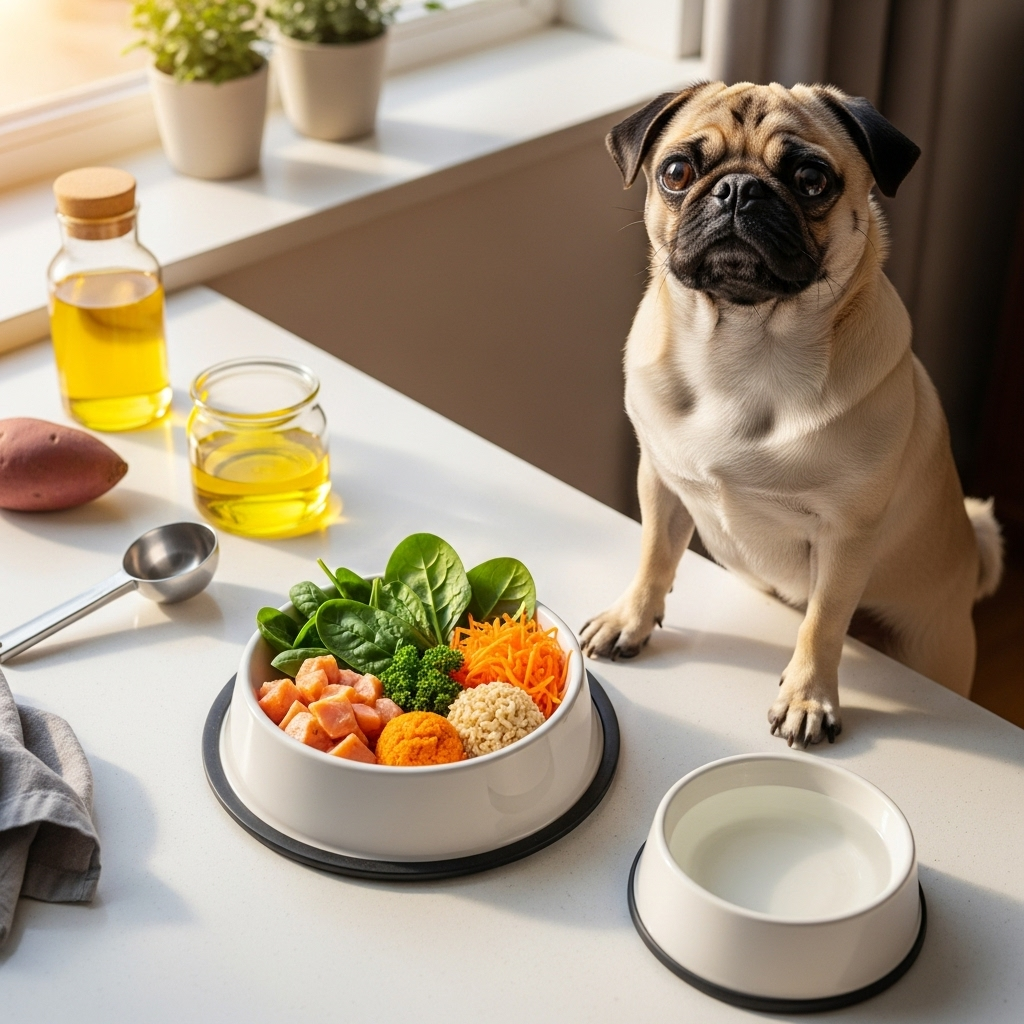
Forget the shiny marketing labels. Let’s get into what’s really important inside that bowl, and what to feed a pug. pug food recommendations,
4 Proven Tips for Pug Nutrition
01: Real Protein First Always
Choose whole-named meats like salmon, turkey, and chicken over meat by-product mystery mush. Protein fuels their little muscles and keeps them strong even if their biggest workout is chasing sunbeams
02: Healthy Fats
Healthy skin, soft fur, and that distinctive pug shine are all made possible by good fats. Despite their pleading for both, think about using omega-3s rather than bacon grease.
03: Light On The Carbs
Too many carbs equal extra pudge. Pugs don’t require wheat junk, corn fillers, or ten different kinds of rice. Simpler, cleaner carbs are better for their bellies.
04: The Essentials
Zinc, biotin, and vitamins A and E are the unsung heroes of eye health, immune system strength, and that silky pug coat you love to cover your face in.
Above all, keep it tidy. No neon dyes. No weird syrups. Avoid it if it seems like something from a science lab.
Which Pug Nutrition Foods Are Best for Pugs?
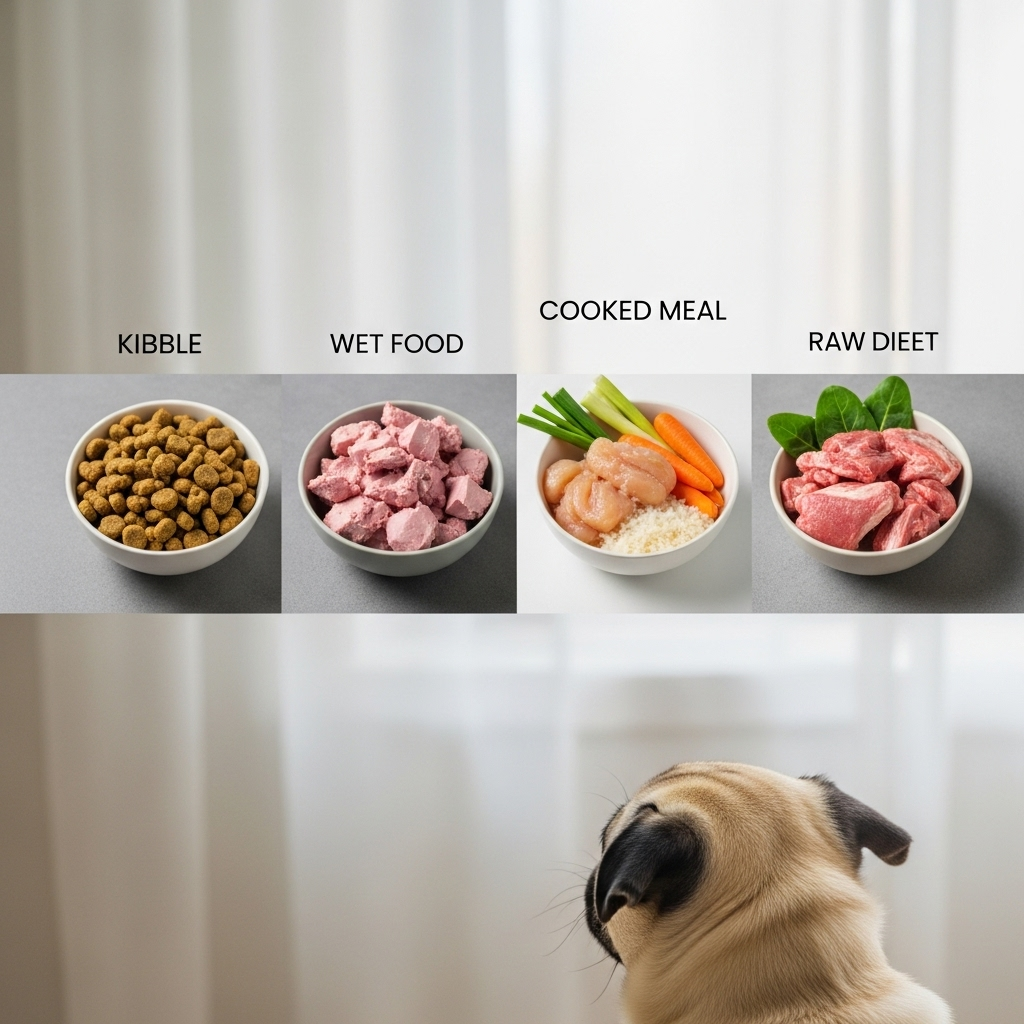
Raw, cooked, kibble, and wet are all subjective, but what matters most is what your pug likes and digests. So let’s break it down human-style & best food for pugs.
Dry Kibble
Dry kibble is the classic go-to. It is long-lasting, convenient, and simple to measure. Additionally, the crunch can help keep your pug’s teeth a little cleaner, which is advantageous because flat-faced breeds are more likely to have dental problems. The catch is that some pugs have trouble chewing those tough little morsels, particularly if they have sensitive teeth or simply like softer textures. That rapid gulping? It can lead to choking or gagging if you’re not careful. Pro tip: soften the kibble with warm water or low-sodium broth to make it easier on your pug’s mouth and slow down those speedy eaters. A lot of corn, wheat, or by-products can upset their sensitive stomachs and add empty calories, so be wary of those fillers.
Wet Food
Wet food is like the gourmet meal for pugs. The smell alone gets their little noses twitching in excitement, and the texture is often much easier for them to chew and swallow. It adds hydration to their diet, which is essential because pugs don’t always drink water well. The drawback? Some brands have a lot of salt or preservatives, and it’s messier and more costly. Combining wet food with dry kibble can benefit both parties by incorporating taste and preserving a well-balanced, less disorganized meal. Additionally, since wet food spoils easily and no one wants a sick pug, take care not to leave it out for an extended amount of time.
Cooked or Fresh Meals
Some pug parents swear by cooking their dog’s meals at home. It’s the ultimate control move. You decide exactly what goes in, from lean meats like chicken or turkey to dog-safe veggies like carrots and green beans, and even a little rice or sweet potato for carbs. The freshness can lead to shinier coats, better digestion, and fewer allergic reactions. But let’s face it, preventing deficiencies requires dedication to planning, preparation, and proper nutrient balancing. Consulting with a vet or pet nutritionist is a must if you want to do this right. Still enjoying a freshly prepared meal while watching your pug devour it? Pure joy.
Raw Diet
The raw diet is controversial but popular among some pug enthusiasts. It involves feeding uncooked meat, bones, and sometimes raw veggies, mimicking what dogs might eat in the wild. The idea is that raw food is more natural, less processed, and packed with nutrients. But pugs have sensitive digestive systems, and raw meat can bring risks like bacterial contamination or choking hazards from bones if not handled properly. If you’re curious, it’s vital to educate yourself deeply and work with a vet who knows raw diets well. This route isn’t for every pug parent, but some swear it transformed their dogs’ health. Always proceed with caution and prioritize safety.
Bottom line: There’s no one answer. Pay attention to how your pug reacts. The poop doesn’t lie
How Much Should You Feed a Pug?
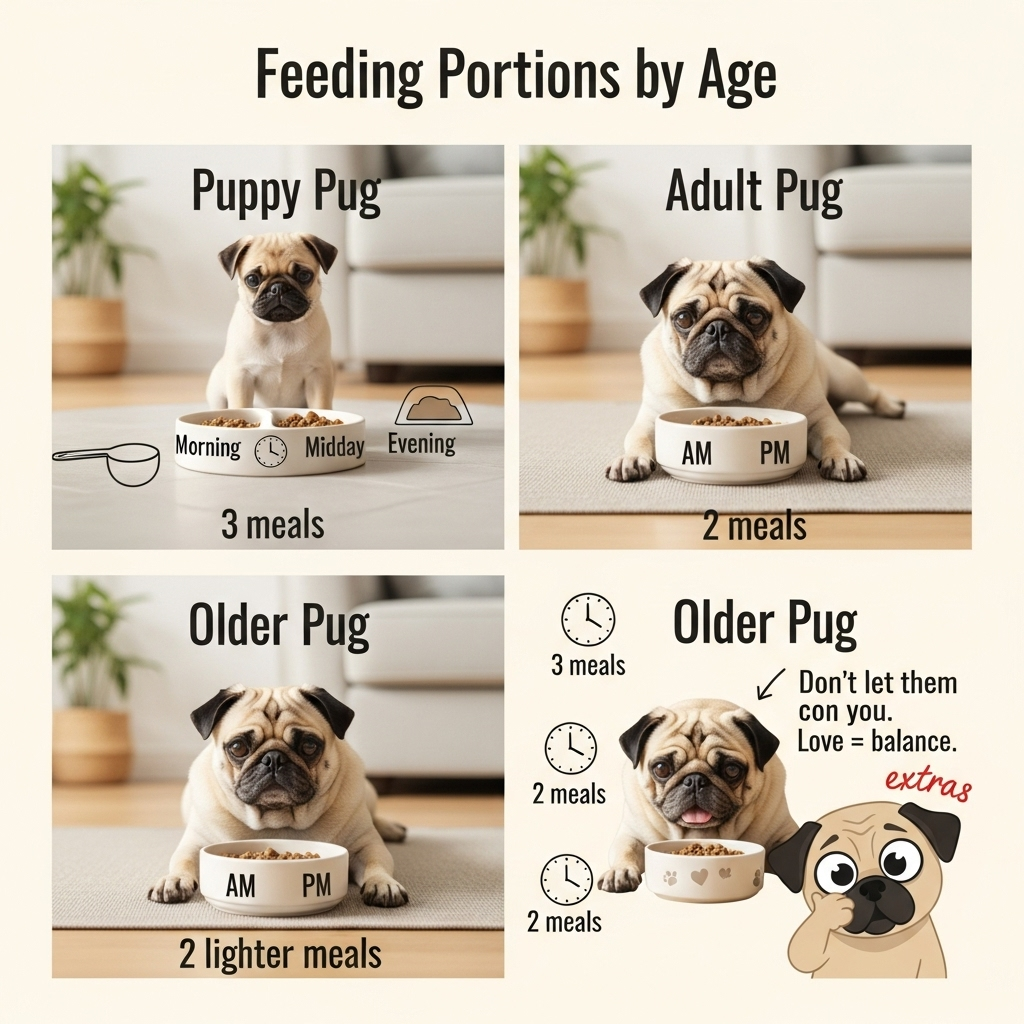
Pug Diet Tips
If you ask your pug More Always more
But here’s a simple breakdown for actual portions
Pug puppies three small meals a day
Adult pugs eat twice a day, in the morning and at night.
Pugs that are older still eat two meals, but they consume fewer calories.
Signs you’re on the right track
Their ribs are not visible, but you can feel them.
Without the crash, they are more energetic.
Their bathroom business is consistent
And keep in mind that they are cunning.
They have perfected the little huff, the paw tap, and the head tilt.
Don’t let it fool you. Overfeeding is the fastest road to health problems
To save you from having to make these mistakes, I made them myself.
Let’s be truthful. I had to experience things firsthand. You are not required to
Here’s what I messed up
Food is left out all day. He ballooned up and snacked nonstop.
eating the table’s leftovers. Hi, urgent veterinary appointment
Changing foods too frequently. Even good changes made his stomach riot
Falling for trendy food that sounded fancy but wrecked his gut
Lesson learned Limit yourself to simple, high-quality meals. Don’t chase labels. Listen to your pug’s body
Indications That Your Pug Is Doing Well
The transformation is nearly miraculous when you discover the correct food.
You’ll observe
Clear, bright eyes that aren’t watery or goopy; velvety soft, glossy fur
Normal solid poop is a cause for celebration.
Less licking and itching, more tranquil, joyful energy
Your pug will give you a “thank you, I feel good” look.
And that look Worth everything
The Treats Talk Because Life’s Too Short to Skip Snacks
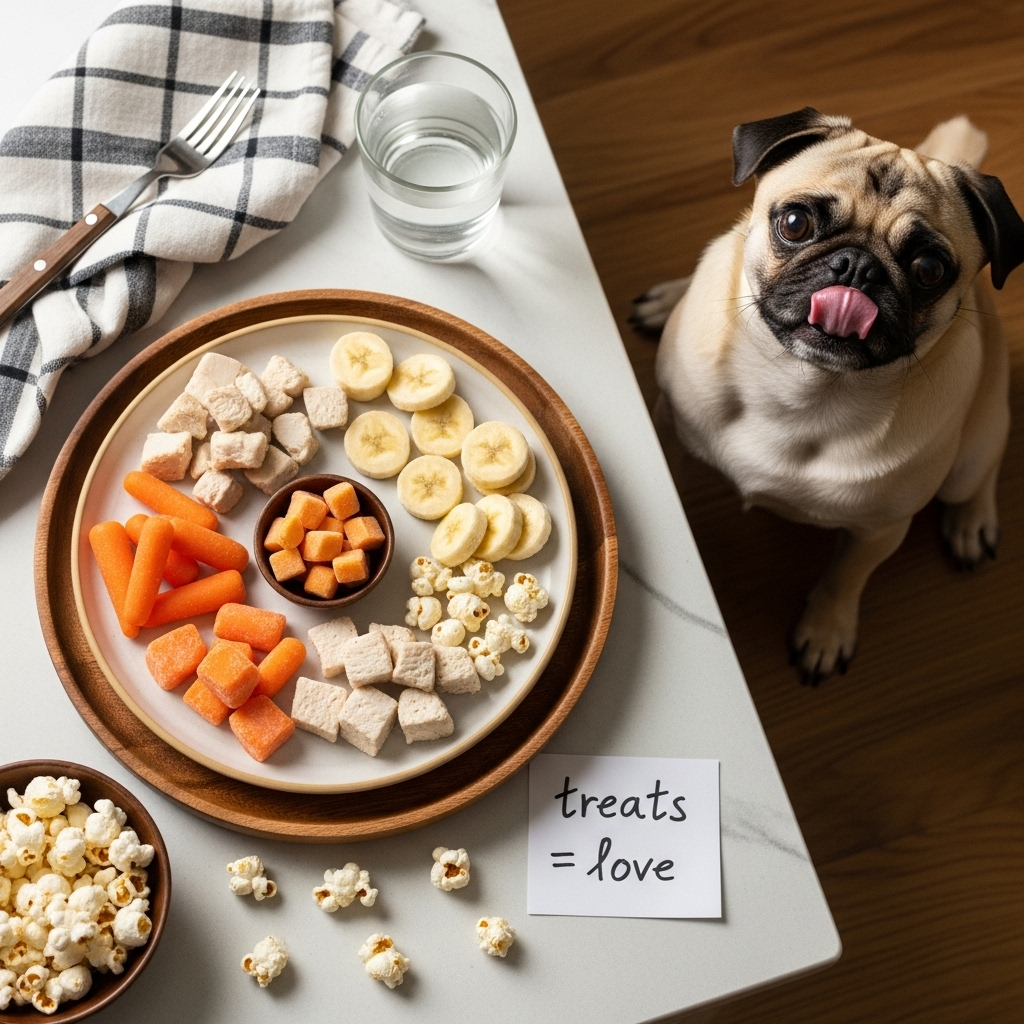
Because treats are a part of the fun and what makes life together feel special, pugs’ nutritional needs do not necessitate becoming health nuts. I keep things straightforward and deliberate. Frozen banana slices are a favorite on hot days, baby carrots make excellent crunchy snacks, tiny bits of boiled chicken make wonderful rewards, and occasionally plain popcorn is served during movie night. Small extras that are thrilling but not overly ostentatious or seasoned. Pugs are famously food-motivated, so portions are more important than perfection. Treats should make up no more than 10% of their daily intake, with the remainder coming from a balanced, nutritious diet that supports their breathing, joints, skin, and energy. However, the happiness these treats bring is impossible to quantify in percentages. Bright eyes, happy snorts, and wagging tails. They experience complete joy, and this joy is part of caring for them.
Final Thoughts Food Isn’t Just Nutrition It’s Love
There is more to feeding your pug than just avoiding health issues or crossing something off your daily to-do list. It’s about making a conscious effort to show up each day in a way that quietly says, “You matter “to me.” Your pug’s diet is one of the few things that influences every part of their life, including their energy, comfort, mood, and ability to appreciate their surroundings.
It’s more than just a meal in that bowl. It is comfort. It is care. It is a combination of routine and assurance. It is among the most profound ways we can express love and safety. You are expressing to your pug, “I have you,” through the act of feeding. I am considering your needs rather than just what is practical.
Feed with affection. Feed with focus. Observe your pug’s excitement before meals as well as their post-meal emotions. Take note of their energy, contentment, and digestion. Your pug’s lifestyle is supported by a healthy diet, not just their appetite.
Additionally, let go of the notion of perfection. No pug parent can consistently follow a perfect feeding schedule. Care, curiosity, and the ability to change course when something isn’t working are what count. You are more than just a pug owner. You are their person, their safe haven. They are reliable.
You are already doing something correctly if you are reading this. You are paying attention. You are learning. And that’s what makes your pug happy, healthy, and incredibly loved more than any one ingredient or feeding regimen. Visit more.
Frequently Asked Questions About Pug Nutrition
What distinguishes the diet of pugs from that of other dog breeds?
Pugs have compact bodies, slower metabolisms, and a strong propensity to gain weight. To support their joints, breathing, digestion, and general longevity, their diet must be carefully balanced.
What is the recommended daily intake of meals for a pug?
Two measured meals a day are ideal for the majority of adult pugs. For growth and consistent energy levels, puppies may require three smaller meals.
What kind of food is best for pugs?
The best diet is one that is balanced and includes high-quality protein, moderate amounts of healthy fats, controlled carbs, and vital vitamins and minerals. As crucial as ingredient quality is portion control.
Can pugs eat homemade food?
Pugs can survive on homemade diets as long as they are well-balanced and approved by a veterinarian. Meals prepared at home should satisfy all dietary needs and not depend on speculation.
Are pugs prone to food allergies?
Indeed. Many pugs are sensitive to specific grains, proteins, or additives. Itching, ear infections, upset stomachs, or persistent gas are symptoms.
How can I support my pug in keeping a healthy weight?
Limit treats, steer clear of table scraps, measure portions, and select nutrient-dense foods. Frequent, mild exercise is also very important.
Are treats harmful to dogs?
Although they shouldn’t be consumed in excess, treats should be included in daily caloric intake. Select easy, low-ingredient treats that are safe for dogs.
What foods should pugs never eat?
Chocolate, grapes, raisins, onions, garlic, xylitol, alcohol, and highly seasoned human food should never be given to pugs.
What is the required amount of protein for a pug?
Pugs benefit from high-quality, easily digested protein sources to support muscle and general health, though their protein requirements vary depending on age and activity level.
Can diet affect a pug’s breathing?
Indeed. Breathing problems in brachycephalic breeds, such as pugs, can be exacerbated by excess weight resulting from poor nutrition.
How can I tell if the diet my pug is following is effective?
Consistent energy, a healthy weight, normal digestion, clear eyes, and a shiny coat are indicators of a healthy diet.
Should I switch foods gradually?
Always. Digestive distress can result from abrupt dietary changes. Change gradually over a period of seven to ten days.
When should I discuss nutrition with a veterinarian?
Before changing your pug’s diet, see your veterinarian if they have any allergies, digestive problems, weight fluctuations, or medical conditions.
- Quisque aliquet nibh sit amet lectus
- Nulla at metus ultricies, placerat augue
- Curabitur mollis ex vestibulum
- Quisque aliquet nibh sit amet lectus
- Nulla at metus ultricies, placerat augue
- Quisque aliquet nibh sit amet lectus
- Quisque aliquet nibh sit amet lectus
- Curabitur mollis ex vestibulum