
4-Step Obedience Training for Pugs: The Trusted, Loving Way to Raise a Happy, Confident Canine Companion!
Obedience Training for Pugs: Dog training for beginners, Let’s be real for a second.
Nothing warms your heart more than watching your dog gaze at you with those large, trusting eyes as if you were their entire universe. And in many ways, you are. You feed them, walk them, cuddle them, laugh at their weird quirks, and whisper sweet nothings into their furry ears when the world gets quiet.
But sometimes… it gets frustrating, right?
The moment they chew on your favorite sneakers again, for example. Or when they dart out the front door and your heart drops into your stomach. Or when you ask yourself, “Am I doing this all wrong?” after they ignore you for the hundredth time.
Start by taking a deep breath. You’re not alone. And no, you’re not doing it wrong. You just need a roadmap. A way to speak your dog’s language. A method for transforming love into direction.
That’s what obedience training really is. Not some drill sergeant act. Not about “showing who’s boss.” It’s about building a relationship rooted in understanding, respect, and unconditional love.
Let’s walk through it together.
What Is Actually Obedience Training for a Pug?
Obedience training isn’t just teaching your dog to sit or stay. It’s about creating a bridge—one based on kindness, open communication, and trust—between your world and theirs.
It’s giving your dog the tools they need to succeed in a world that often doesn’t make sense to them. It’s saying, “I’ve got you, and I’ll help you figure this out.”
Obedience is love in action. It’s what happens when structure meets affection.
Why Obedience Training for Pug Truly Matters
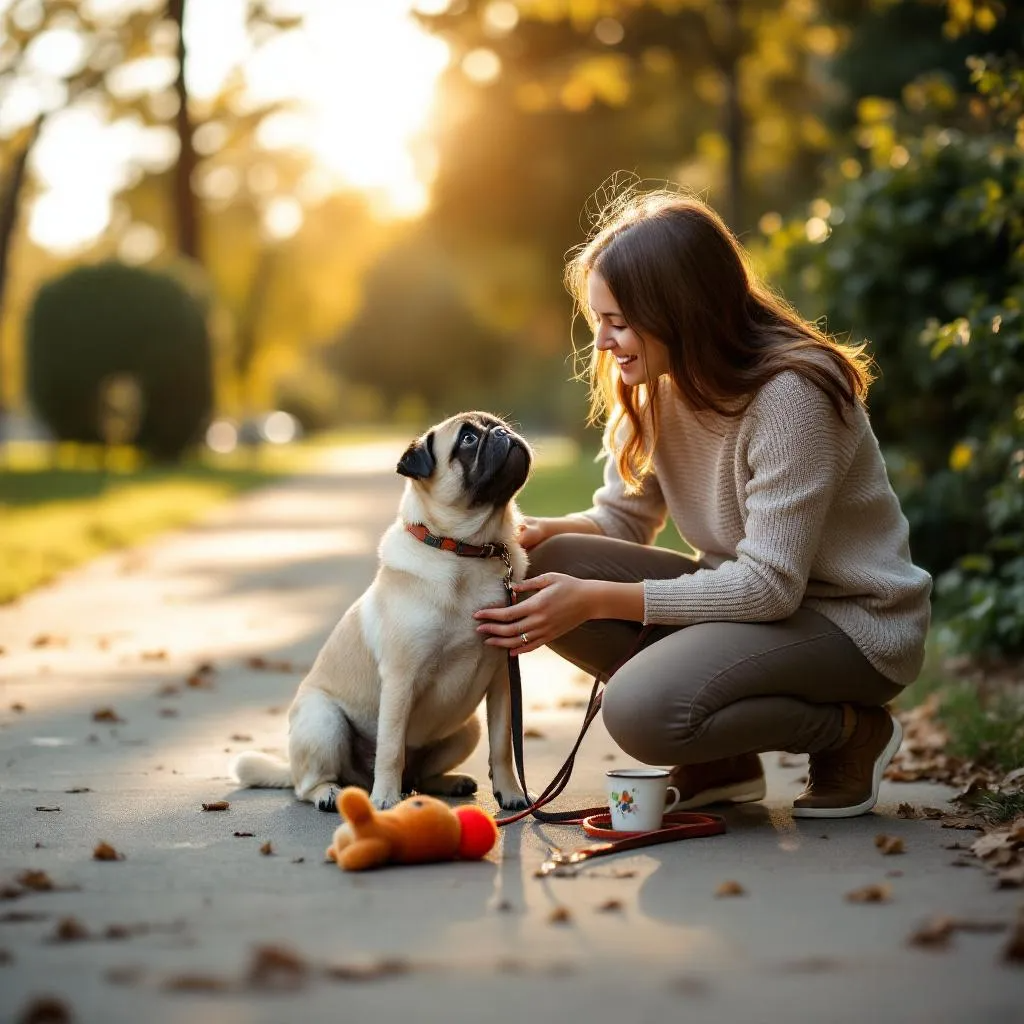
Your dog wants to do right by you. You can see it in their wagging tail, their eager eyes, and the way they follow you from room to room like your tiny, four-legged shadow. They just don’t always know how.
That’s where obedience training comes in. It creates a shared language. It turns chaos into calm. It turns confusion into confidence.
Training matters because it:
prevents your dog from getting into danger when their instincts take over.
increases your dog’s self-confidence, making them feel less nervous and more secure.
allows you to relax during walks and veterinary visits by giving you peace of mind.
improves your relationship because mutual understanding is the foundation of all bonds.
Obedience isn’t about control. It’s about compassion. It’s about showing up for your dog in a way that teaches them how to show up for you.
What Makes Pug Obedience Training Work?
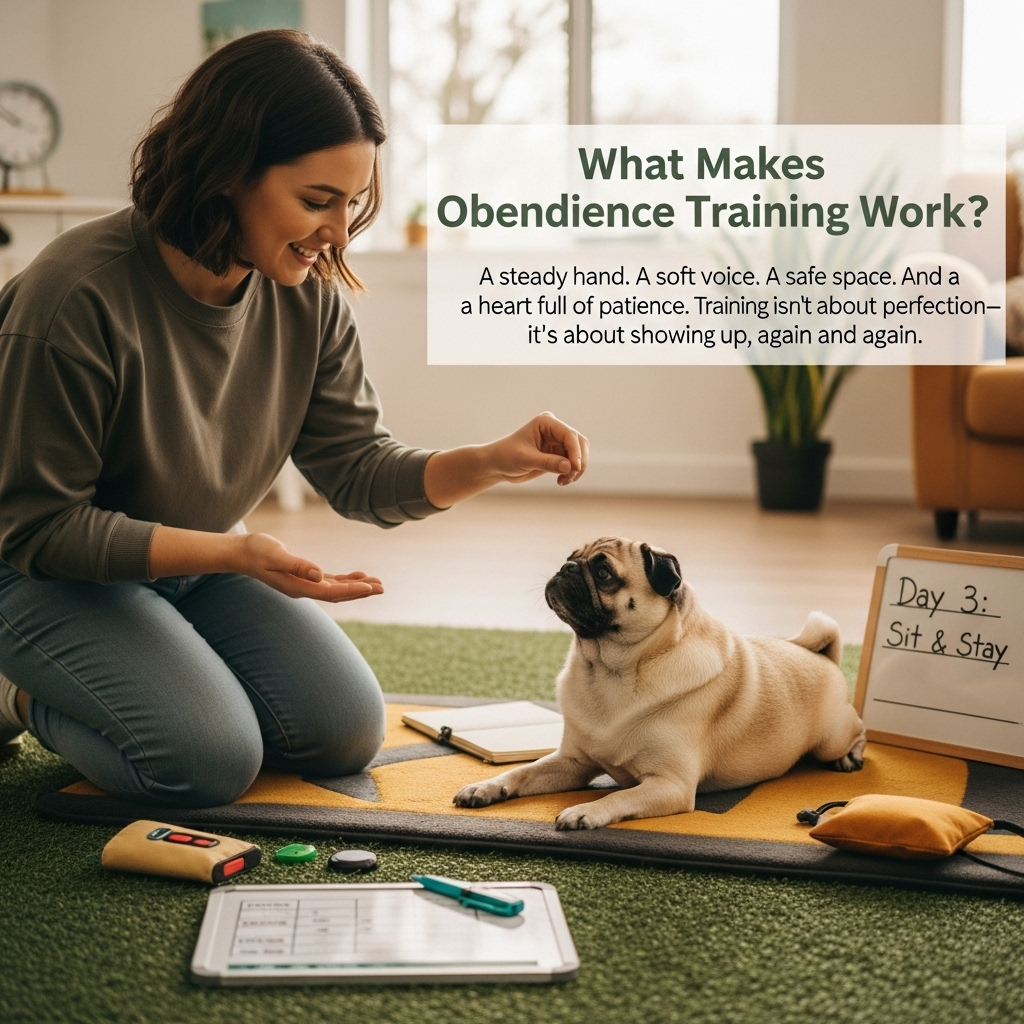
A dog who feels safe and a human who remains dependable, composed, and compassionate even on the difficult days are at the core of any successful training narrative.
Here’s what turns a good training plan into a great one. Best obedience training methods and positive dog training techniques:
Consistency That Builds Trust
Your dog thrives on routines and repetition. When your expectations stay the same, your dog learns what earns your smile, your praise, and your treats. It’s muscle memory, not magic.
Timing That Speaks the Right Language
Your dog is present-focused. A reward given too late is a missed opportunity. The magic occurs when they mark the exact moment they get it right and celebrate it as though it were a minor triumph.
Positive Reinforcement That Lights Them Up
Would you want to keep trying if all you got was “no” and “stop”? Dogs are the same. But give them a treat, a cheerful “Yes!”, and a belly rub? Watch how their whole face lights up with joy.
That’s when they want to listen. because it is pleasant.
Short, Joyful Sessions That Keep It Fun
Training should never feel like punishment. Make it a game. Five to ten minutes, a few times a day, packed with play and praise, is way more effective than a drawn-out session that leaves you both frustrated.
🗓️A Gentle Step-by-Step Roadmap for Training Success
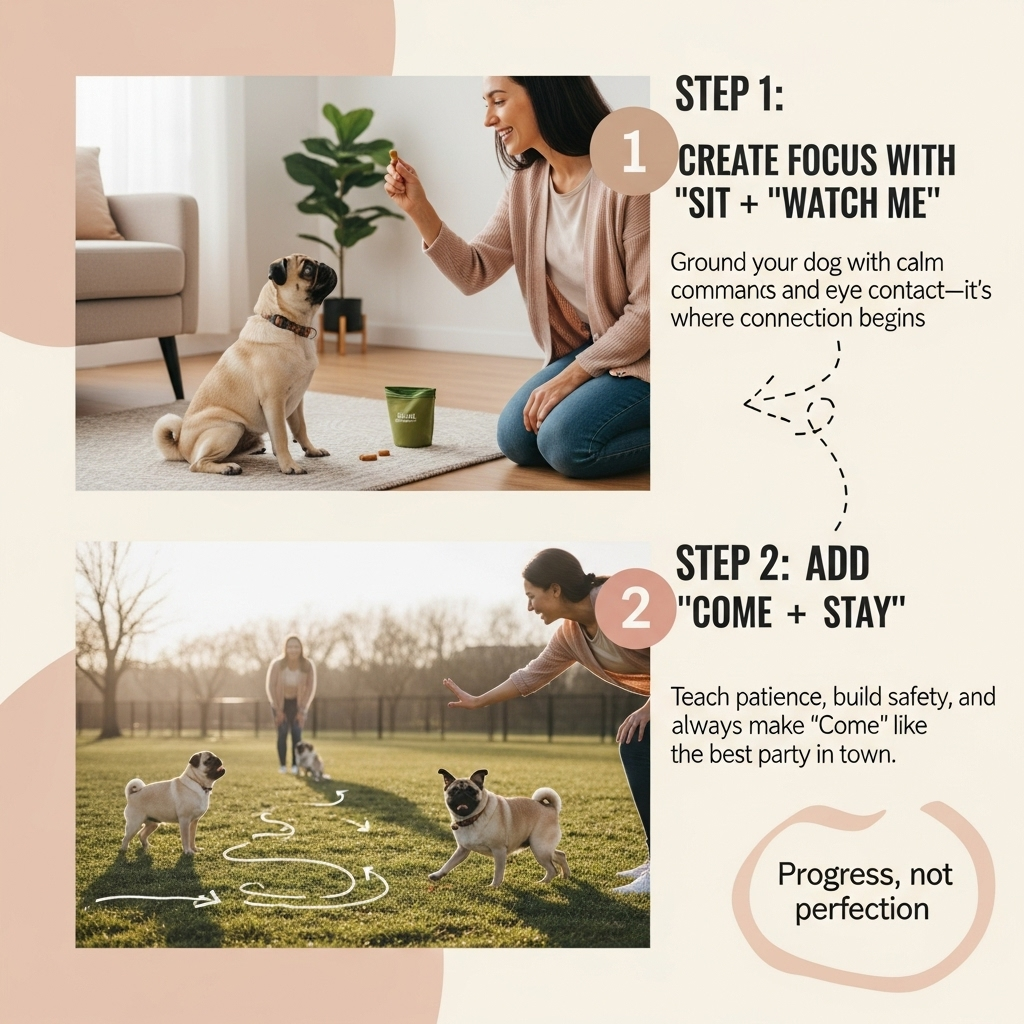
How to train a disobedient pug? Let’s make this simple: progress should be the only goal, not overwhelm or perfectionism. Let’s make this simple: progress should be the only goal, not overwhelm or perfectionism. Taking Care of a Pug Puppy That Is Stubborn. Pug obedience commands,
Step 1: Create Focus with “Sit” and “Watch Me”
The first thing your dog needs to learn is how to focus on you and block out distractions. “Sit” is the most important command for grounding. And telling them to look them in the eyes? That’s where connection begins.
When they do it correctly, give them lots of praise. Make them feel like rock stars.
Step 2: Include “Come” and “Stay.”
Now that they are paying attention, teach them to wait. To be honest, staying teaches patience and makes breathing easier.
One of the most crucial cues is coming. Always make it a party. Treats, praise, and excitement. Your goal is for your dog to run to you as if you were the greatest thing they have ever seen. observed. Why, they ask? You are.
Step 3: Introduce “Down” and “Leave It”
Down helps your pup settle. It’s the signal that says, “Hey, let’s unwind.”
Conversely, leaving it may save your life. It prevents them from devouring that strange, unidentified food on the pavement. “I know it’s tempting, but I promise there’s something better if you trust me,” it says to them.
Step 4: Practice in the Real World
Training is only effective if it is universally applicable. Take it outside after starting in the living room. Try it at the park, on walks, and in areas with distractions.
The real magic happens when your dog listens in both quiet and noisy environments.
Why does obedience training matter? Every Pug Should Know
Think of these like the ABCs of dog life. Once you master these, you’ll have a strong base.
Sit: To maintain peace, order, and tranquility in the midst of chaos
Remain: To keep them secure and motionless
Come, so you’re always within reach.
Down: When you require a quiet moment
Leave it: To guard against injury and poor choices
Wear heels for walks that don’t feel like a struggle.
Wait: To instill trust and patience
Off: For limits without being harsh
Every command is a letter of love to your dog, a gentle way to lead them through your life together.
Common Mistakes (And How to Move Past Them Without Shame)
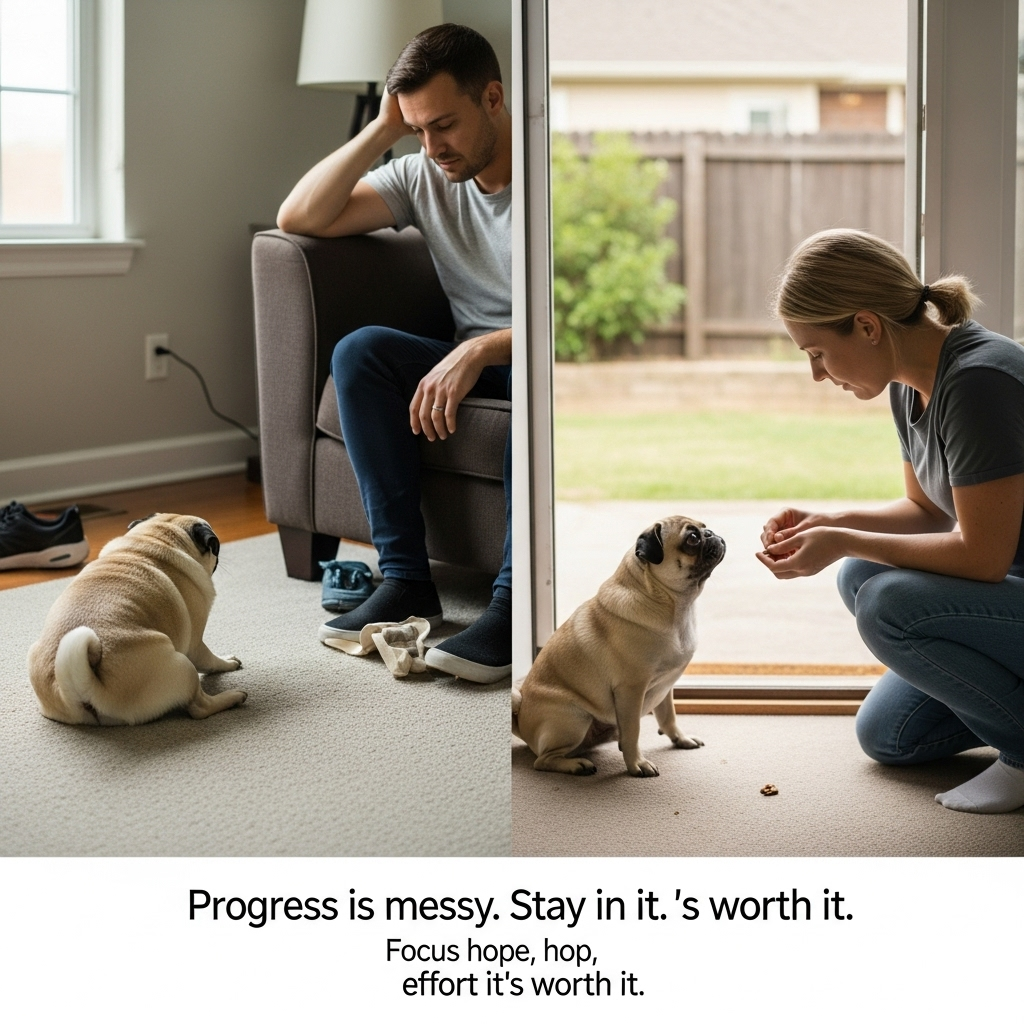
Dog behavior training at home. Every dog owner messes up. You’re human. Additionally, your dog only needs you to keep trying; they don’t expect you to be flawless.
Here are a few traps to watch for in basic obedience training for dogs:
Inconsistency: Your dog cannot win if the rules change.
Real life doesn’t take place in the living room; training is only conducted indoors.
Repeating instructions: They will learn to wait for the third attempt if you say, “Sit, sit, sit.”
Refusing to give rewards too soon: Continue giving praise and treats until the behavior is consistent.
And the most significant error? surrendering too soon. Progress is messy. Stay in it. It’s worth it.
Real Questions from Real Dog Owners
“Is it too late to train my dog?”
Never. Whether your dog is eight weeks or eight years old, they can still learn. It just takes time, patience, and love.
“What if I mess it up?”
You will, and it’s all right. Dogs are forgiving, and every new day is a fresh start.
“Do I need to hire a professional?”
Not always. You’re more capable than you think. However, asking for help when you’re feeling overwhelmed or stuck isn’t a sign of weakness; rather, it’s love in action.
In conclusion, obedience is love manifested in action.
Getting everything just right is not the goal of dog training. It has nothing to do with flawless timing, flawless commands, or a well-mannered dog. Training is fundamentally about making connections. It’s about making your dog feel confident in your company, safe in your world, and understood in their emotions.
You are not being harsh when you give your dog structure. You are providing them with clarity. You are comforting them when you remain dependable. Additionally, you are telling them, “I’ve got you,” when you take your time teaching rather than rushing.
There will be days when you feel like you’ve made significant progress. On other days, things will seem disorganized, sluggish, or even a little annoying. a little annoying. That is normal. Dogs learn through patience, repetition, and trust, just like humans do. They don’t expect you to be flawless. All they want is for you to continue showing up.
Every sit. Every stay. Your shared story is shaped by every treat, tail wag, and quiet time spent together. The bond develops in those little moments. They foster trust and teach your dog that listening to you is enjoyable rather than frightening.
So take a breath. Do not overthink every step. When things don’t go as planned, don’t be hard on yourself. Just stay present. Stay kind. Keep trying. Even on your bad days, your dog already thinks you’re pretty great.
The goal of obedience training is not dominance or control. It is about reassurance. It involves repeatedly reassuring your dog that they can trust you. Someone who always has their back, guides them, and keeps them safe.
Remember that your health is just as important as your training as you continue on this journey together. Learn more about Pug Health 101 to support your dog’s internal and external well-being as they develop alongside you. you.
Frequently Asked Questions (FAQ)
1. Do pugs actually need obedience training?
Yes. Despite their intelligence and affection, pugs can form obstinate habits if left unsupervised. They develop a closer relationship with their owner and learn about expectations thanks to obedience training.
2. What distinguishes pug training from that of other dog breeds?
Pugs are sensitive and people-oriented. Strict or coercive training methods do not work as well on them as gentle, encouraging ones. With this breed, patience is especially crucial.
3. When should I start teaching obedience to my pug?
Simple commands and rewards can be used to start basic training as early as eight weeks of age. With regular practice and support, older pugs can also learn new skills.
4. What is a four-step method for training obedience?
Foundation skills, consistency, positive reinforcement, gradual distractions, and real-world practice are typically the main focuses of a four-step method. It makes training easy to follow and structured.
5. How much time does it take to see results?
The dog and training consistency have an impact on the outcome. While some pugs show minor improvements in a matter of days, others might take weeks. Progress is gradual and normal.
6. How much time should I spend each day training my pug?
Short sessions work best. Your pug will typically be able to stay focused for ten to fifteen minutes once or twice a day without becoming overwhelmed.
7. Which training techniques are the safest for pugs?
The safest and most efficient forms of reinforcement are those that involve praise, treats, and gentle guidance. Help build trust and confidence.
8. Can stubborn behavior be helped by obedience training?
Yes. Behaviors like pulling on the leash, barking excessively, and disobeying commands can be lessened with consistent training. Over time, training aids in the replacement of negative habits with positive ones.
9. Can a pug be trained at home without the assistance of a professional trainer?
Many dog owners successfully train their pets at home by following set procedures and being consistent. Although they are not always necessary, professional trainers can assist if you feel stuck. stuck.
10. What happens if my dog doesn’t immediately follow instructions?
This is normal. Pugs may need repetition and patience. Remaining calm and consistent is more effective than yelling instructions or showing irritation.
11. Do treats play a role in training obedience?
Treats are helpful but not mandatory. Play, affection, and praise are also useful forms of rewards. rewards. As your pug learns commands, you can gradually cut back on treats.
12. Can obedience training boost my Pug’s self-esteem?
Indeed. Pugs feel more secure when there is clear communication and consistent routines. Particularly in unfamiliar settings or social situations, training can boost confidence.
13. Is training for obedience a one-time event?
No. Training is ongoing. Regular practice helps reinforce good behavior and strengthens your long-term relationship with your pug even after they have mastered basic commands.
- Quisque aliquet nibh sit amet lectus
- Nulla at metus ultricies, placerat augue
- Curabitur mollis ex vestibulum
- Quisque aliquet nibh sit amet lectus
- Nulla at metus ultricies, placerat augue
- Quisque aliquet nibh sit amet lectus
- Quisque aliquet nibh sit amet lectus
- Curabitur mollis ex vestibulum