❝A dog has one aim in life… to bestow his heart.” ― J. R. Ackerley❞
❝A dog has one aim in life… to bestow his heart.” ― J. R. Ackerley❞
Common Pug Health Issues: Pugs are one of those dogs that you can’t help but fall for. Their wide eyes, curled little tail, and goofy charm make them irresistible. They are loyal, affectionate, and full of personality. They fit easily into apartments, family homes, and even busy city lifestyles. But the truth is that behind all that cuteness, pugs do face some real health challenges.
If you already have a pug, you probably know what I mean. If you are planning to get one, you should know what you are signing up for. Their flat face and compact build create issues that other breeds rarely struggle with. These challenges do not make pugs weak or fragile. They just mean you need to stay informed, be prepared, and know how to prevent small problems from becoming big ones.
This guide breaks down the most common pug health issues in a friendly, easy-to-understand way. It also includes practical advice that actually works. Think of it like a handbook from a pug owner who wants you to enjoy life with your little buddy without stressing over the unknown.
Let us dive into the health issues you will see most often, what causes them, and how to manage them so your pug enjoys a long and comfortable life.
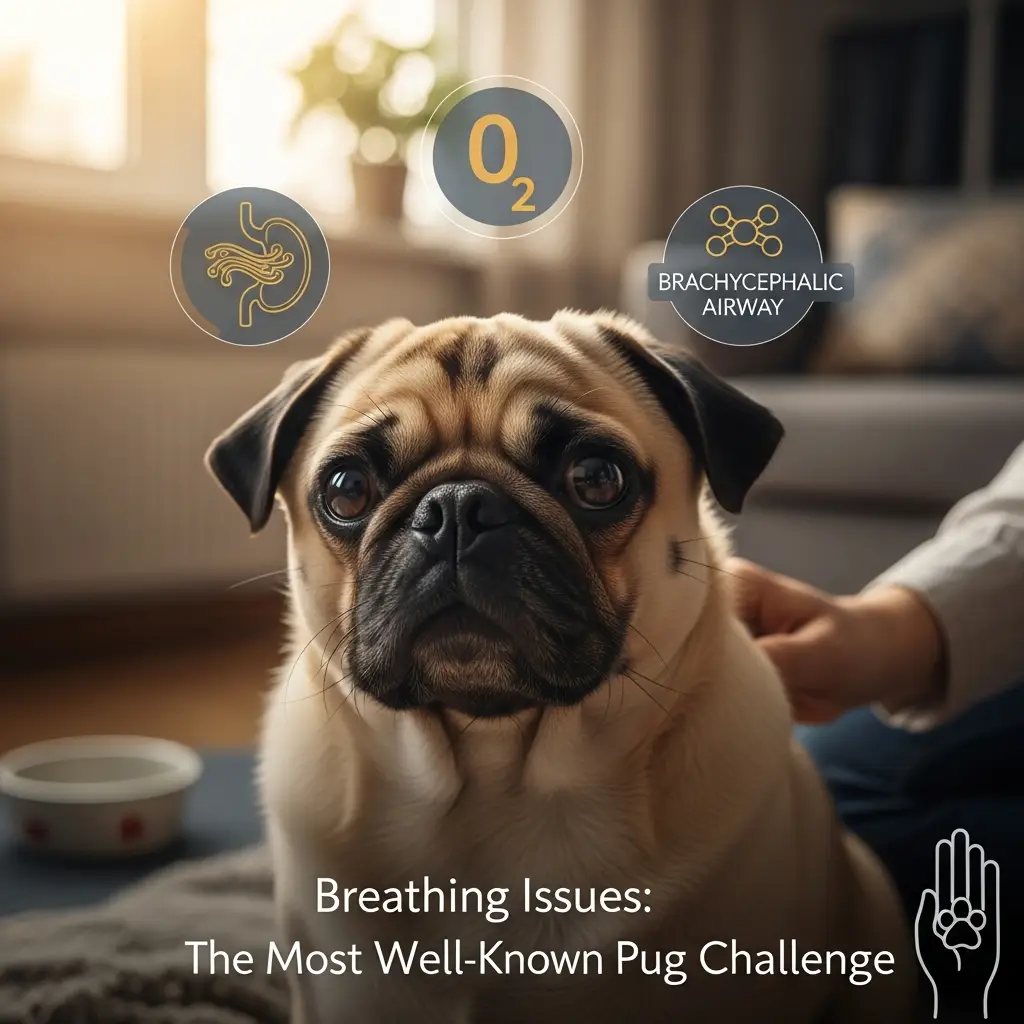
Pug breathing issues: If you have ever heard a pug breathe, you know they have a very unique soundtrack. The snorts, wheezes, and soft snoring can be adorable, but they are also signs of how hard your pug is working just to pull air through its nose and throat.
The problem comes from something called brachycephalic airway syndrome. Pugs have short noses and narrow air passages. Their nostrils can be pinched inward, their soft palate can be longer than normal, and their windpipe can be narrower than average. Some pugs have all these issues at once.
Pugs cannot cool themselves well because dogs lower their body temperature by panting. When the airway is tight, they cannot release heat efficiently. That is why heatstroke is a serious risk for them.
You do not need to panic if your pug snores. Many live long lives with mild symptoms. But you should take steps to reduce strain on the airway.
Keep your pug cool.
Heat is their enemy. Avoid long walks in the afternoon. Choose early morning or evening when temperatures are lower. Indoors, keep fans or AC running when needed.
Manage their weight.
Extra fat pushes against the airway and makes breathing harder every second of the day. Keeping them lean is one of the best health choices you can make.
Use a harness.
A collar pulls directly on the throat, which can make breathing worse. A soft harness distributes pressure around the chest.
Limit intense exercise.
Pugs enjoy movement, but they are not built for long or high-intensity activity. Slow, short walks are enough.
Talk to your vet.
If your pug struggles to breathe, has constant gagging, or cannot cool down, surgery may help. Many pugs improve greatly after widening the nostrils and shortening the soft palate.
Breathing issues are something you will manage throughout their life. With the right care, your pug can be comfortable and cheerful.
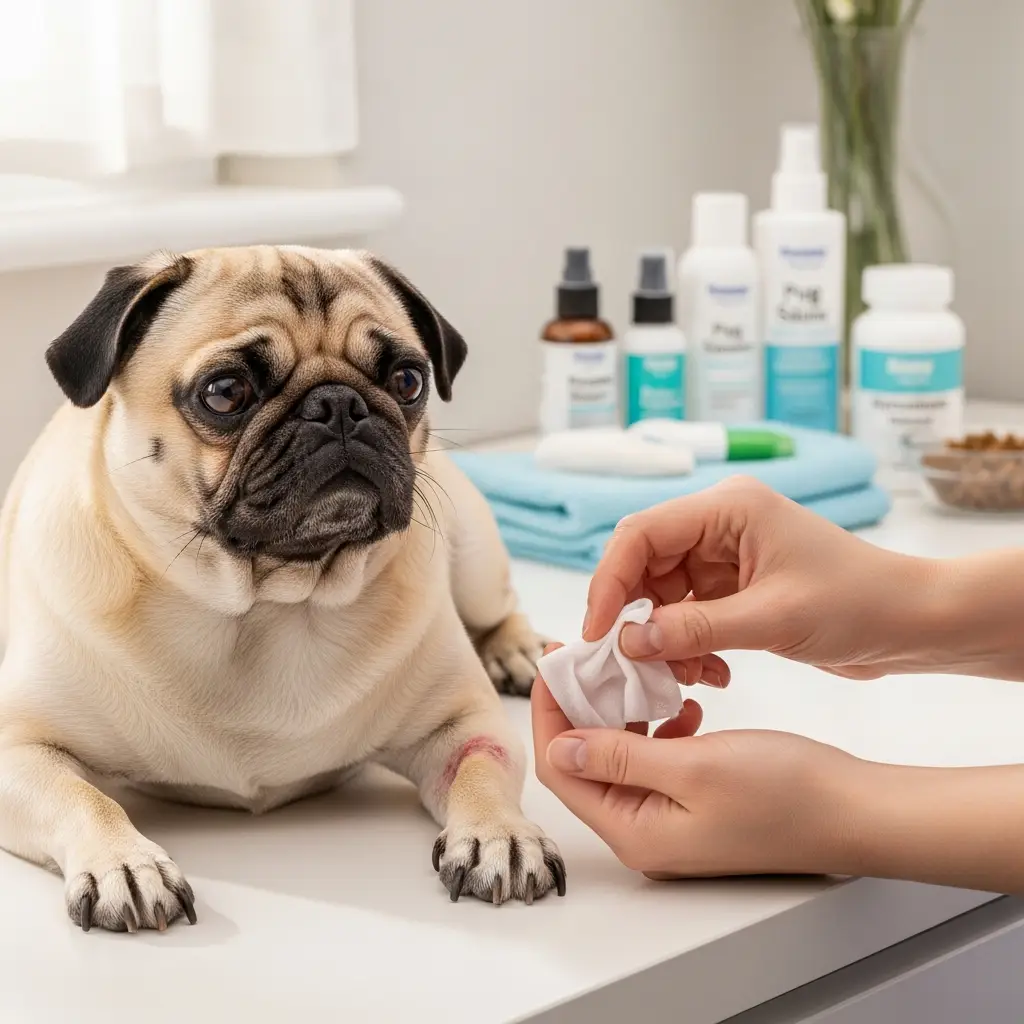
Pug Skin Problems and Allergies: Pugs have soft skin folds that frame their face. These folds trap moisture, sweat, dust, and food particles. That mix creates the perfect environment for bacteria and yeast to grow. On top of that, many pugs have sensitive skin and allergies that show up early in life.
Some pugs itch because of environmental triggers, and others react to specific foods. You will notice symptoms on their face, belly, paws, and ears.
Managing pug allergies is often a long-term process. You may need to try several solutions before you find what works.
Clean the face folds daily.
Use a soft cloth or vet-approved wipes. Make sure you dry the folds afterward. Moisture causes the growth of yeast and bacteria.
Follow a simple diet.
A limited ingredient diet helps you identify food triggers. If you suspect a food allergy, talk to your vet about an elimination diet.
Treat ear infections early.
Pugs get frequent ear infections because allergies cause inflammation. The sooner you treat them, the better.
Use gentle shampoo.
Choose hypoallergenic or oatmeal-based shampoo to soothe irritation.
Consider allergy testing.
If the itching never stops, your vet may suggest testing or allergy shots.
Use flea prevention consistently.
Many pugs react strongly to flea bites. One flea can trigger weeks of itching.
Skin issues are frustrating, but you can keep them under control with routine care. The key is consistency.
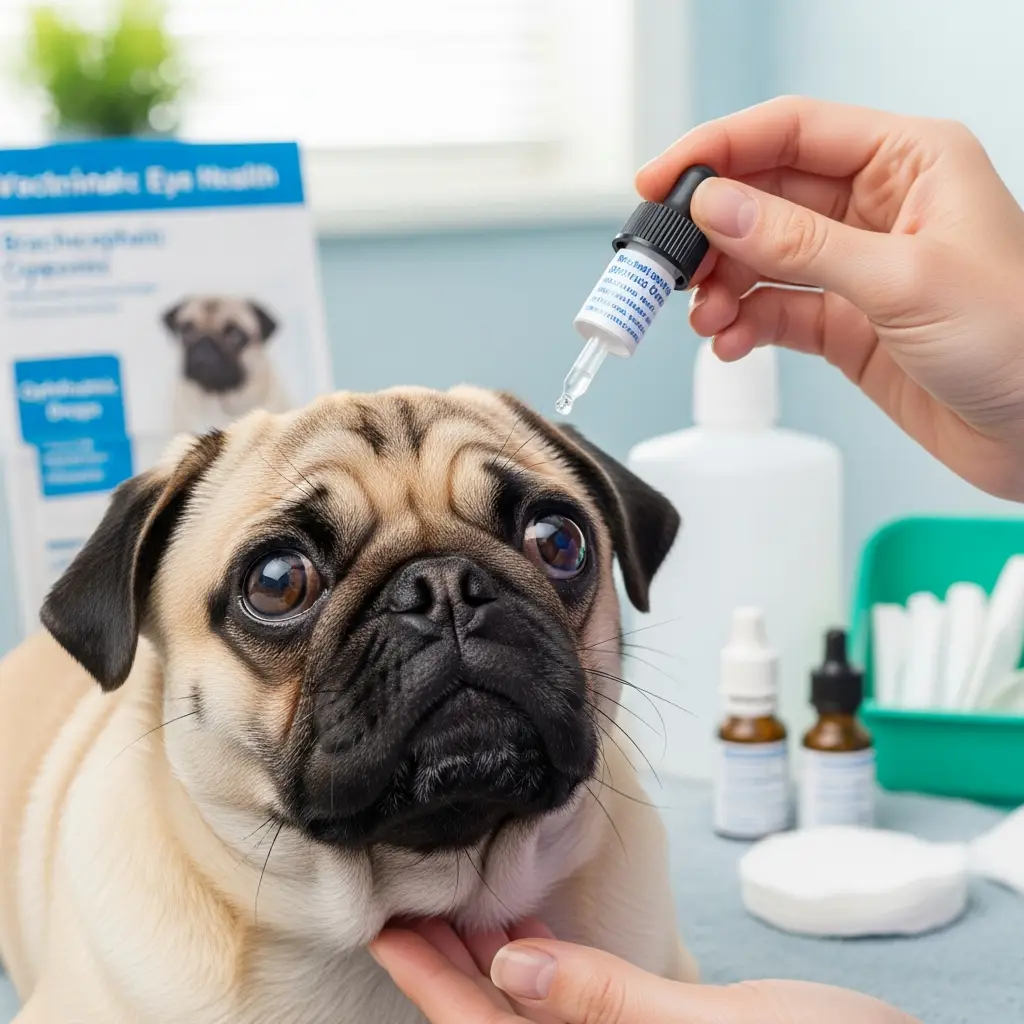
Pug Eye Problems: Those large round pug eyes are charming, expressive, and full of personality. They also make the breed more vulnerable than most dogs.
Pugs can easily scratch their eyes on carpet fibers, furniture, or even their own nails due to the slight outward bulge. Their eyelids may roll inward or outward, which also causes irritation. Many pugs produce tears at an uneven rate, which can lead to dryness or excessive staining.
Eye issues cause pain. Your pug may not show it, but you will see behavioral changes.
A small scratch on a pug’s eye can turn into an ulcer within hours. Quick action is important.
Trim the nails regularly.
Long nails increase the risk of accidental scratching.
Keep the house safe.
Avoid sharp plants, rough carpets, and furniture edges at eye level.
Clean tear stains gently.
This prevents buildup and reduces irritation.
Seek vet care fast.
If your pug squints, do not wait. A vet can stain the eye and check for ulcers.
Use eye drops if prescribed.
For dry eyes, some pugs require daily lubrication. It is common and manageable.
With prompt care, most eye issues heal well. Delays can lead to permanent vision loss, so always take changes seriously.
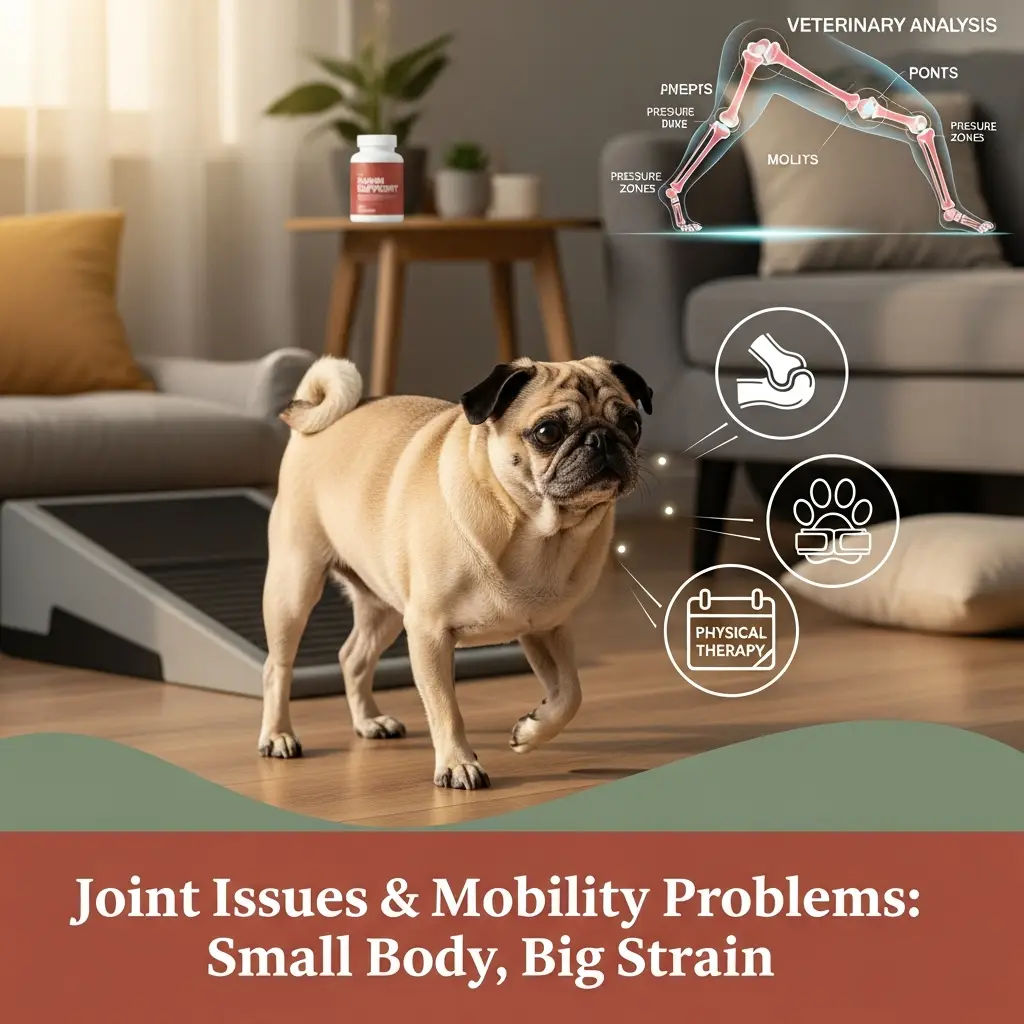
Pugs have a compact body that places extra pressure on their joints. Over time, many develop arthritis or hip problems. They are also at higher risk for luxating patella, which is when the kneecap slides out of place.
Some joint issues show up early. Others appear in middle age. You will probably notice your pug slowing down as they get older, but early care helps protect their mobility.
Joint health starts with daily habits.
Keep your pug at a healthy weight.
This point repeats often because it is one of the best ways to manage almost every pug health issue. Extra weight puts stress on the joints.
Offer soft, supportive bedding.
A comfortable bed reduces pressure on the hips and elbows.
Choose low-impact exercise.
Short walks and gentle play keep your pug mobile without straining the joints.
Add joint supplements.
Glucosamine and omega oils can help reduce inflammation and support cartilage.
Use ramps if needed.
If your pug loves the sofa or bed, a ramp prevents injuries from jumping.
See your vet for pain management.
Dogs hide pain. Medication or physical therapy can improve their quality of life.
Joint problems are common as pugs age, but with the right approach, you can keep your dog moving comfortably for many years.

Pugs have an almost impressive passion for food. They will stare at you with those big eyes until you feel guilty enough to share your meal. Their begging skills could win awards.
Unfortunately, the breed is predisposed to weight gain. Their stocky build makes every extra kilogram noticeable. Obesity worsens breathing problems, joint issues, skin problems, heart strain, and mobility limitations.
The beneficial news is that weight gain is one of the most preventable pug health problems.
Measure meals.
Instead of estimating, use a measuring cup. Pugs do best on controlled portions.
Avoid table food.
Human food is dense with calories. Even small bites add up.
Choose high-quality dog food.
Look for balanced nutrition without fillers.
Use treats wisely.
Training treats should be tiny. You can also use carrot slices or green beans.
Keep daily walks consistent.
Even short walks help maintain a healthy weight.
Monitor their shape.
You should feel the ribs with gentle pressure. Your pug should not look round from above.
A lean pug lives longer and breathes easier. It is one of the greatest gifts you can give your pet.
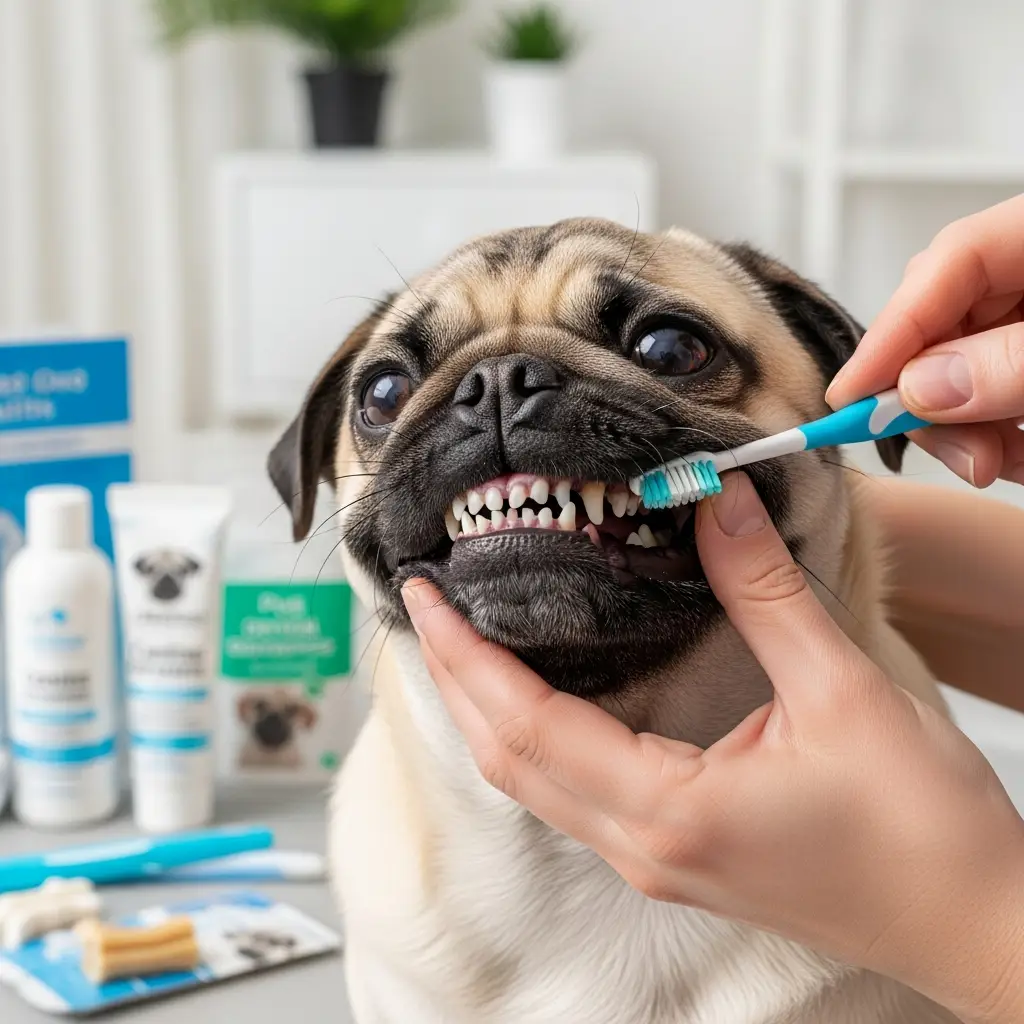
Pugs have a short muzzle with many teeth crammed into a small area. Crowding leads to tartar buildup, gum inflammation, and tooth decay. Many pug owners are surprised at how rapidly dental issues develop.
Dental pain affects appetite, mood, and overall health. Bacteria in the mouth can also reach the bloodstream and affect vital organs.
Brush the teeth often.
Daily brushing is best. Even a few times a week reduces plaque.
Use dental treats in moderation.
They help but cannot replace brushing.
Try dental gels or rinses.
These reduce bacteria and freshen breath.
Schedule yearly cleanings.
Professional cleaning prevents advanced gum disease.
Monitor for loose or broken teeth.
Your vet can treat them before they cause more pain.
Dental health is an area many owners overlook, but for pugs, it is essential.
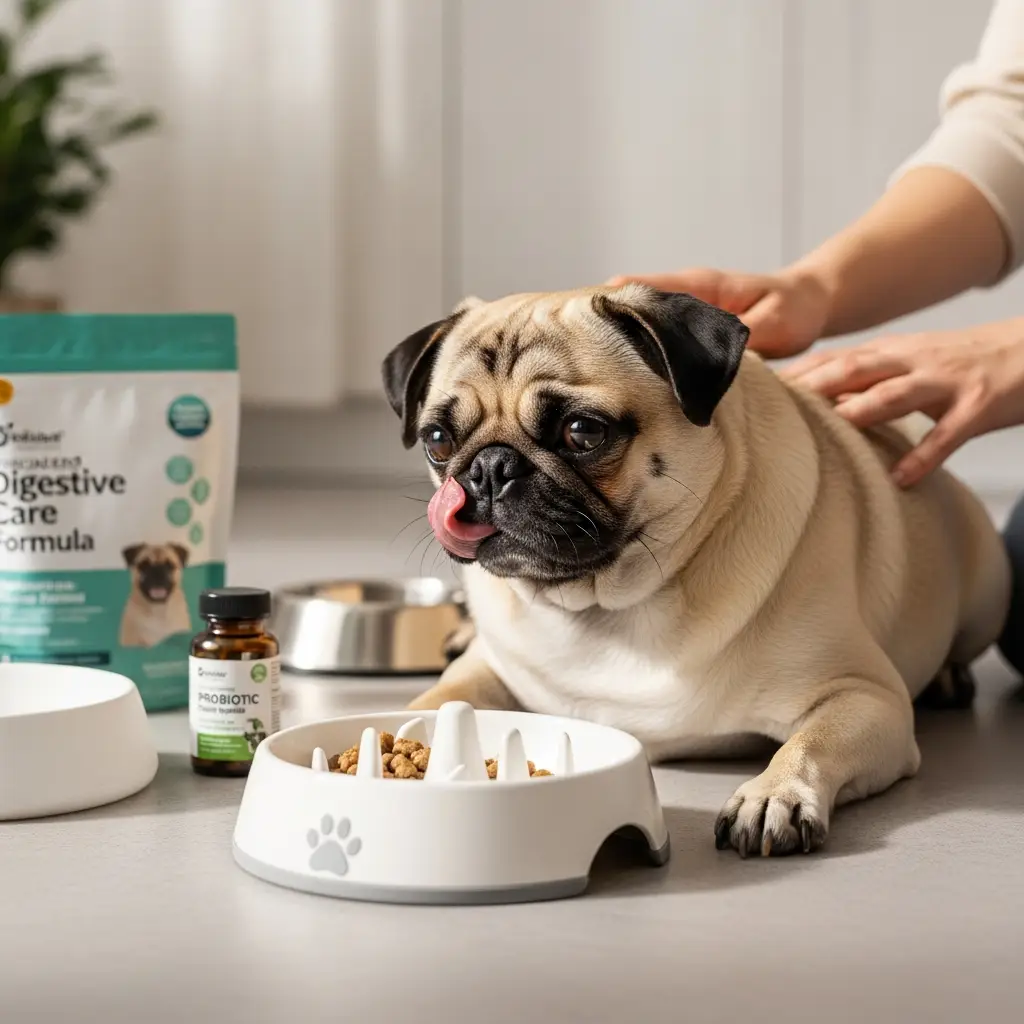
Pugs have sensitive stomachs. Many experience vomiting, gas, or loose stools at some point. Their digestive issues often link to allergies or unsuitable diets.
Choose gentle food.
Look for simple formulas that use ingredients your pug tolerates well.
Feed smaller meals.
Two or three small meals keep the stomach stable.
Avoid fatty foods.
High-fat meals may trigger pancreatitis in sensitive dogs.
Use a slow feeder bowl.
This helps prevent vomiting from rapidly eating.
Monitor stool quality.
Changes often signal an issue before symptoms worsen.
Digestive problems are manageable once you understand your pug’s triggers.
While you can’t avoid every health problem, you can increase your chances. Health problems become manageable when you follow consistent routines.
These habits build a strong foundation for your pug’s long-term health.
Pugs hide pain and discomfort. Many will continue acting normal even when they feel unwell. The safest approach is to call the vet when something seems off.
The faster you act, the easier the solution tends to be.
Pugs are endearing, funny, and incredibly affectionate canines. Their playful demeanor, expressive faces, and unwavering desire to be close to the people they love most make a home feel cozy. They have large personalities, fierce loyalty, and unwavering affection. Because they are always nearby, many owners find that life with a pug quickly becomes quieter, funnier, and more comforting.
With that joy comes responsibility. Due to their distinct physical characteristics, pugs need careful maintenance. You can approach pug ownership with confidence rather than anxiety if you are aware of the common health issues they face. You don’t have to be flawless or extremely careful. What matters most is consistency. Early indicators that something needs attention can frequently be found by observing slight changes in breathing, movement, skin, or appetite.
Daily routines make a powerful difference. The cornerstones of long-term health are a balanced diet, mild exercise, frequent grooming, and routine veterinary examinations. These practices support breathing, help control weight, safeguard joints, and stop discomfort before it gets worse.
Your dog depends on you to make deliberate decisions for them. They can live long, comfortable, joyful lives if they are given patience, awareness, and consistent care. They give unconditional love without hesitation. One of the most meaningful ways to return that love on a daily basis is to take care of their health.
Because of their special body structure, pugs frequently suffer from joint problems, obesity, eye injuries, skin fold infections, and breathing problems.
Because of their short noses and constricted airways, pugs are brachycephalic, which can make breathing more challenging, particularly in hot or physically demanding situations.
Maintaining a healthy weight requires portion control, daily low-impact exercise, and limiting treats to no more than 10% of daily intake.
They can be. Regular examinations are crucial because pugs’ prominent eyes are more prone to injuries, ulcers, and scratches.
To avoid moisture accumulation, irritation, and infections, skin folds should be gently cleaned and dried on a regular basis.
Indeed. Particularly as they get older or put on weight, their small stature may be a factor in hip, knee, and back problems.
A veterinarian should be consulted right away if there are any changes in breathing, movement, appetite, or behavior.
Indeed. When done safely, regular, mild exercise promotes joint health, weight control, and general wellbeing.
While some problems are inherited, many can be controlled or minimized with a healthy diet, regular veterinary care, exercise, and grooming.
Annual examinations are advised, with more frequent visits for older pets or those with pre-existing medical issues.
Absolutely. Long-term pug comfort and health are frequently most affected by small daily routines.