❝A dog has one aim in life… to bestow his heart.” ― J. R. Ackerley❞
❝A dog has one aim in life… to bestow his heart.” ― J. R. Ackerley❞
Because your little snorty sidekick deserves more than belly rubs. They deserve to thrive.
There is something beautifully chaotic about loving a pug. They are like living cartoons, charming, stubborn, and possessing that head-tilting curiosity that makes you wonder if they secretly understand everything you’re saying. And maybe, just maybe, they do.
But behind that squishy face and those soulful eyes is a brain that wants to work. Your pug can think, learn, and solve problems; they are more than just cuddly pets. The trick is giving them the right kind of stimulation, encouragement, and love.
So if you have ever looked into your pug’s eyes and wondered what they are really thinking, this post is for you. Let’s talk about how to make your pug smarter while deepening the bond that already means the world to both of you.
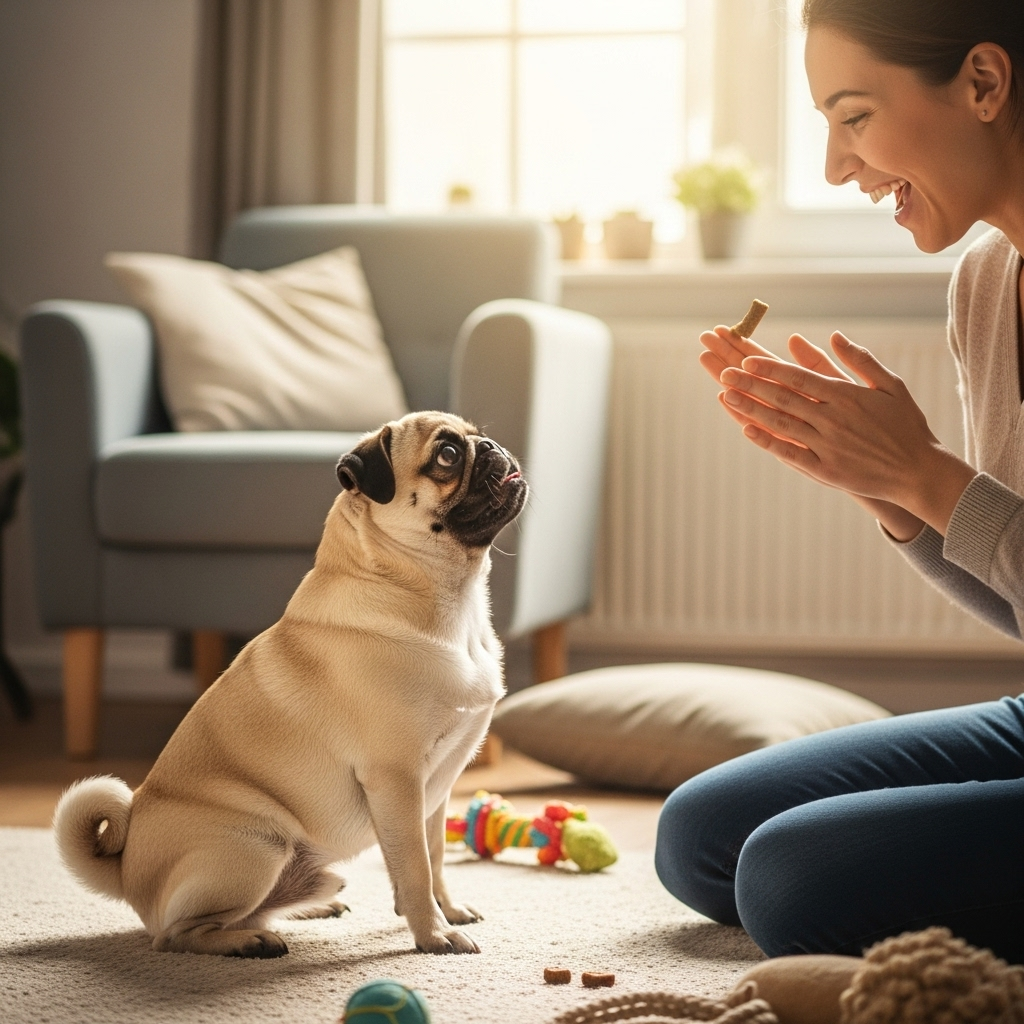
Interactive games for pugs: Training should never feel like a chore. It should feel like a game, a time to hang out, or a chance for your pug to bond with their favorite person.
Start small. The lesson is to sit, stay, and come. Make use of your joyful voice, praise, and treats. When they do something right, celebrate like they just won the lottery. They live for your attention and approval.
Even when they get it wrong, keep the vibe gentle. Pugs are sensitive little souls. They will put forth more effort during training when it is infused with love and patience, not out of fear but out of happiness.
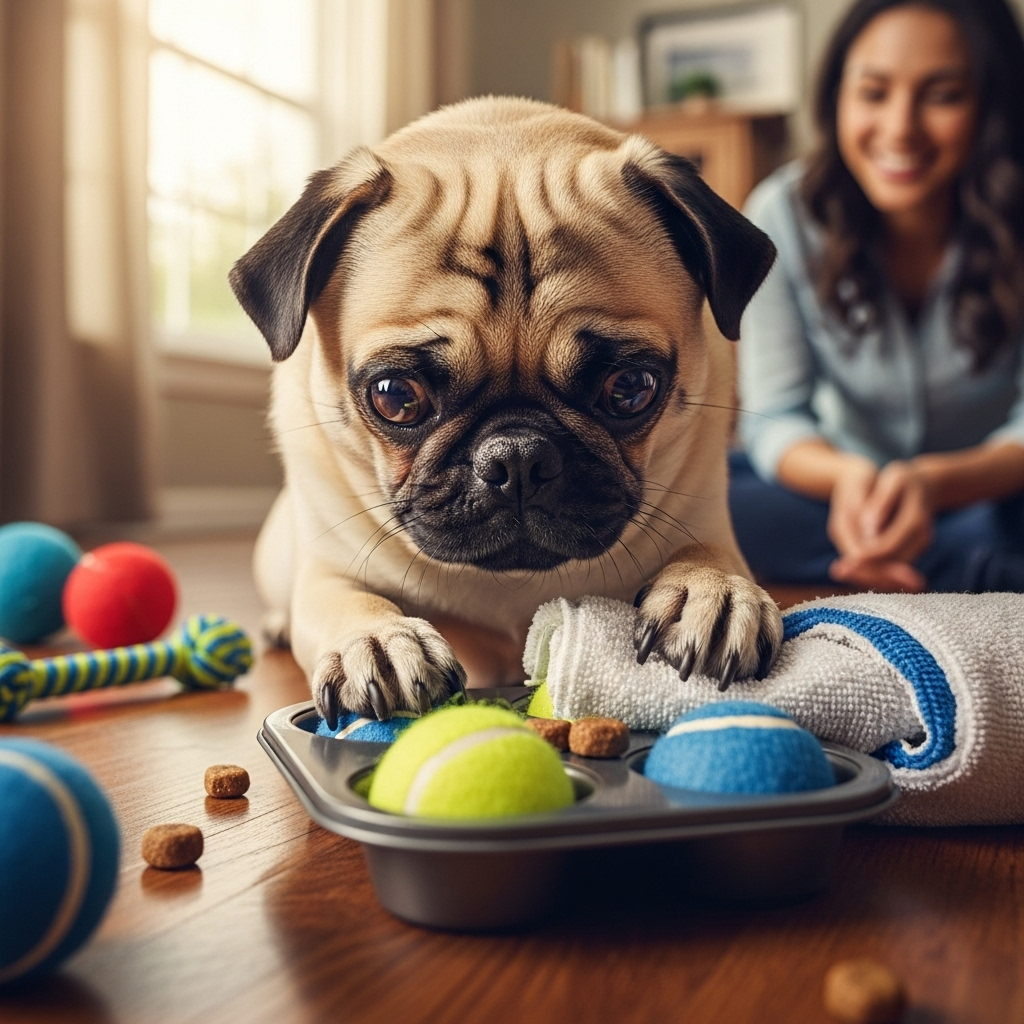
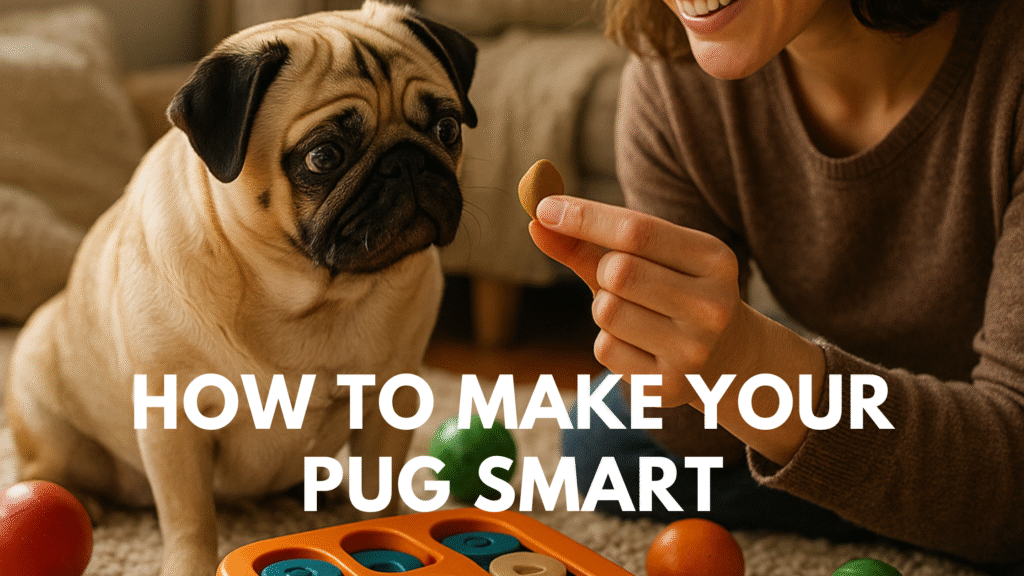
You would be amazed at how determined your pug can get when there is a treat hiding inside a toy. Puzzle feeders and enrichment toys are a game changer.
They do more than pass the time. In fact, they stimulate your dog’s brain, which helps with memory, focus, and decision-making. Start with simple puzzles and work your way up to trickier ones.
And no, you don’t have to buy expensive gadgets. Hide treats in a rolled-up towel. Use a muffin tin and tennis balls. Make brain time part of your daily routine.
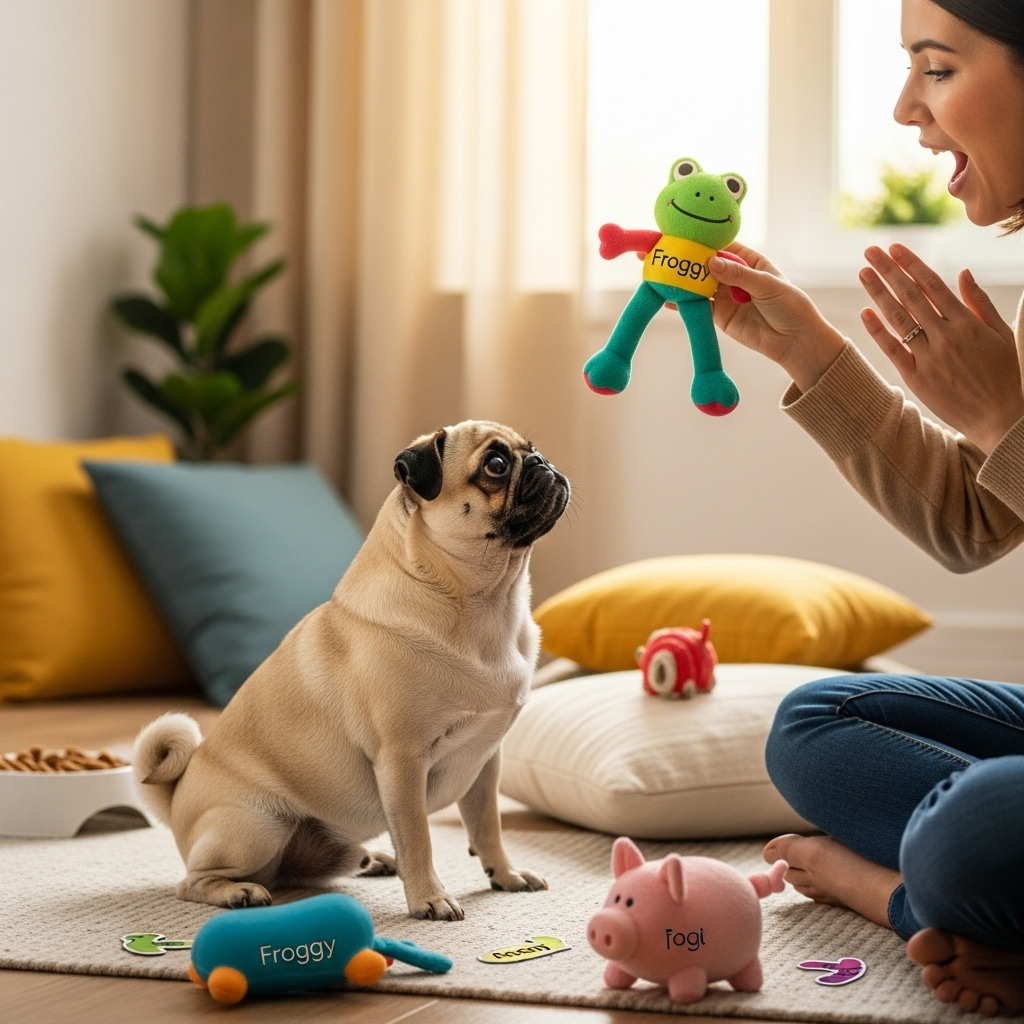
Your pug may not speak your language, but they can absolutely learn to understand it.
Start by naming their toys. Every time you toss Froggy or Squeaky Pig, say the name with enthusiasm. Eventually, ask, “Where’s Froggy?” and celebrate big time when they get it right.
This not only raises your IQ but also enhances your communication abilities. You are building a vocabulary together, one word at a time.
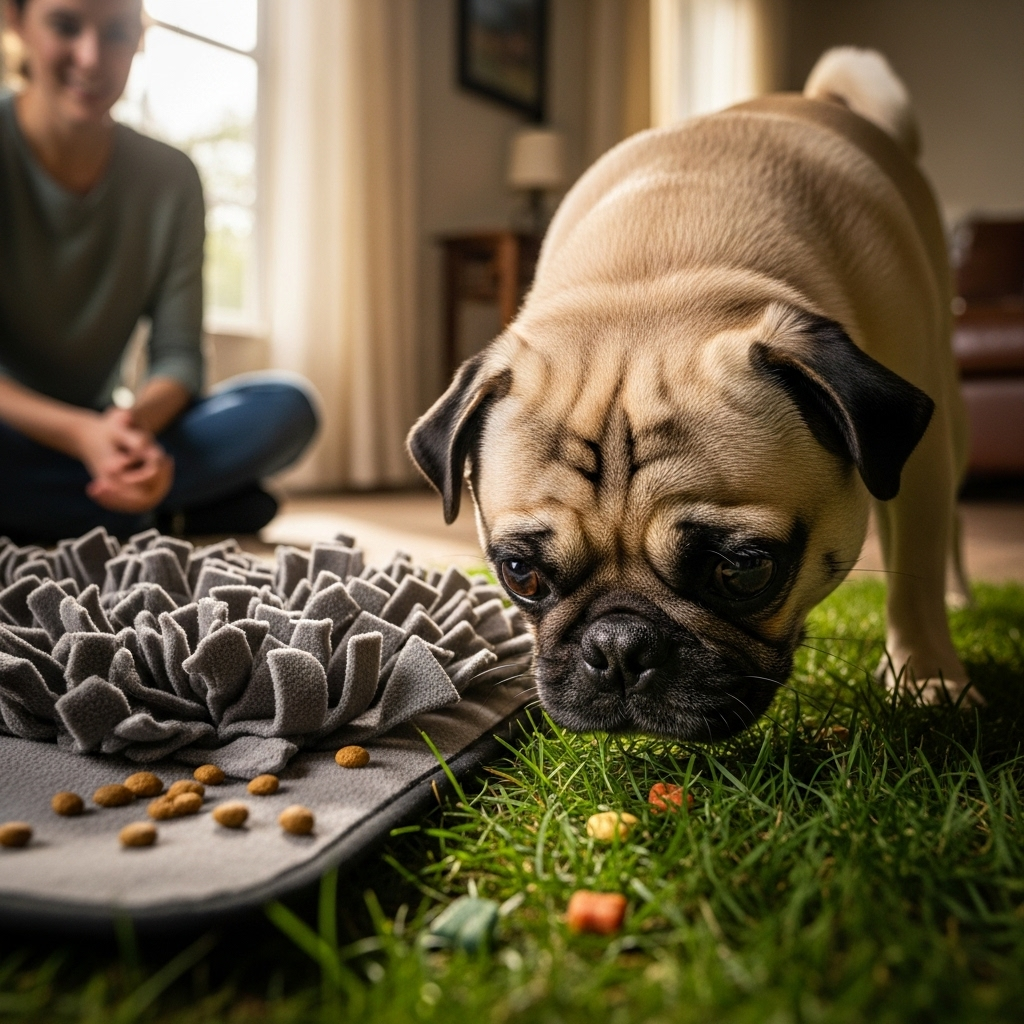
Brain training for pugs, Let your pug use their nose. Even with their adorable little face structure, their sense of smell is powerful. Hide a few treats around the house and encourage them to find them.
For dogs, this type of activity is not only enjoyable but also incredibly fulfilling. Sniffing helps them relax, engages their primal instincts, and stimulates their brain.
Try hiding kibble in a snuffle mat or scattering it in the grass. Let them take their time and enjoy the process.
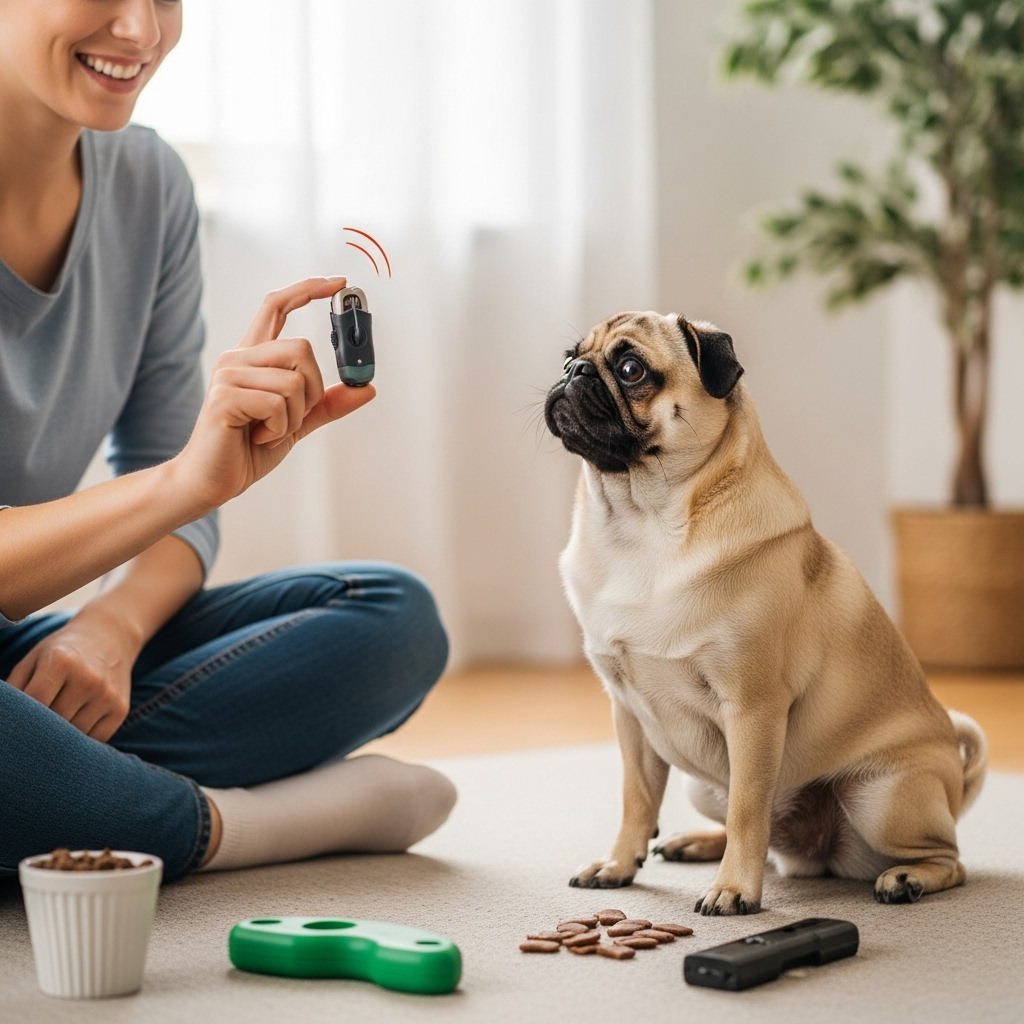
Pug enrichment ideas, Clicker training is like building a secret language between you and your pug. Each click means, “Yes, you nailed it,” and that clear feedback builds their confidence fast.
Clickers are especially helpful for sensitive or shy pugs who might get overwhelmed easily. With consistent practice, your pug will begin to understand what you want and respond with real excitement.
It creates a rhythm between you, a way of working together that builds trust and understanding.
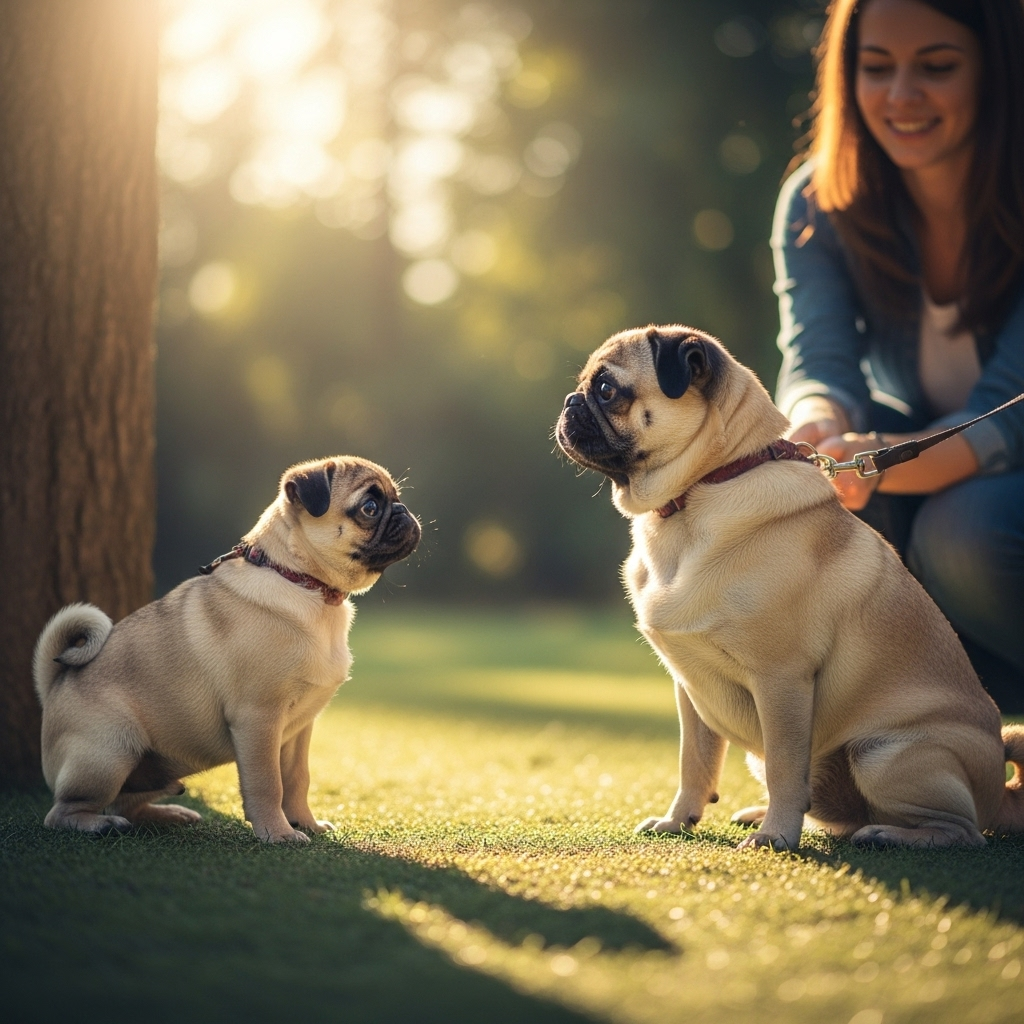
Smart pug tips, Dogs are social creatures and learn a ton by observing others. Set up time with calm, well-behaved dogs and let your pug watch and mirror.
They will pick up on behaviors like sitting politely, waiting patiently, or walking calmly beside another dog. It is like free tutoring, but with more tail wags.
You want role models, not chaos, so make sure the other dogs are positive influences.
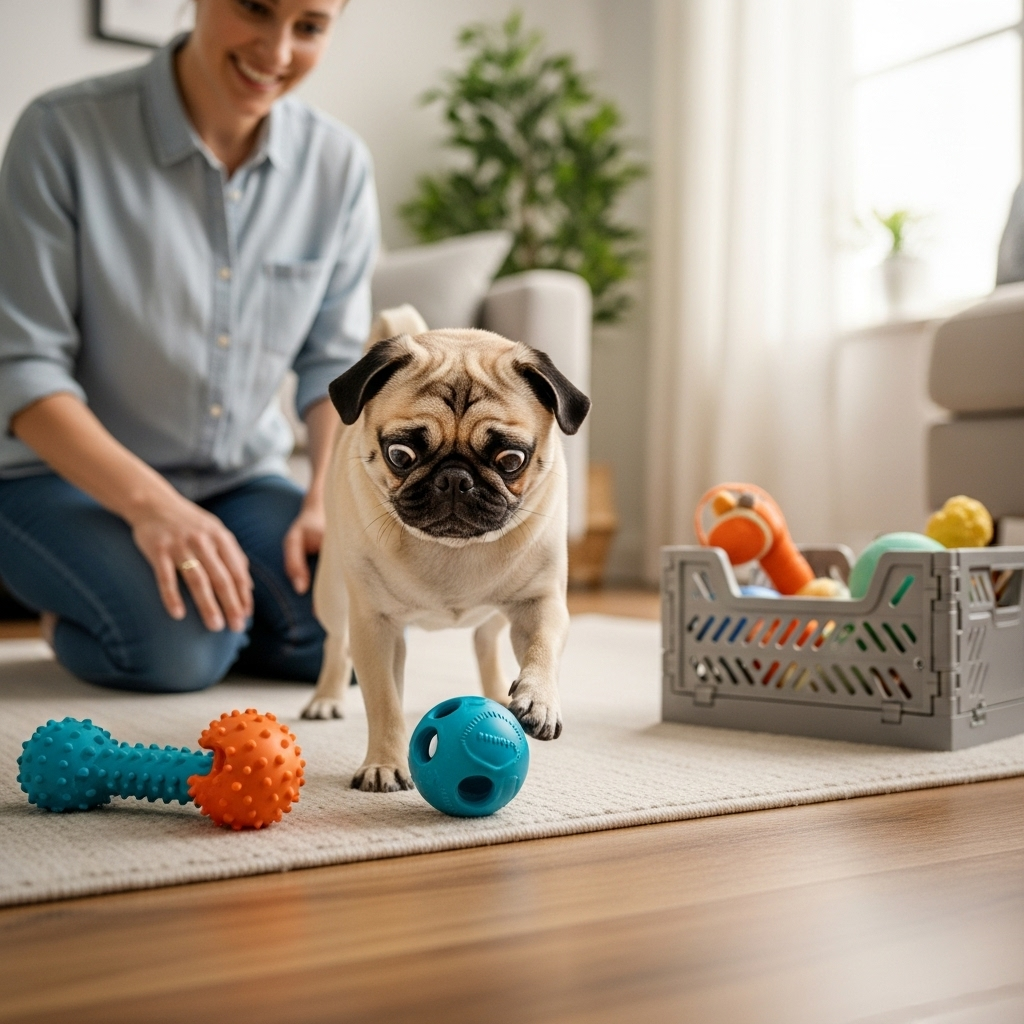
Mental stimulation for dogs, If the same toys have been lying around for weeks, your pug is probably bored. Rotate toys every few days to make old ones feel new again.
Even better, hide a few and make a big deal when you reintroduce them. This kind of variety keeps your pug curious and excited to play, which keeps their brain active and sharp.
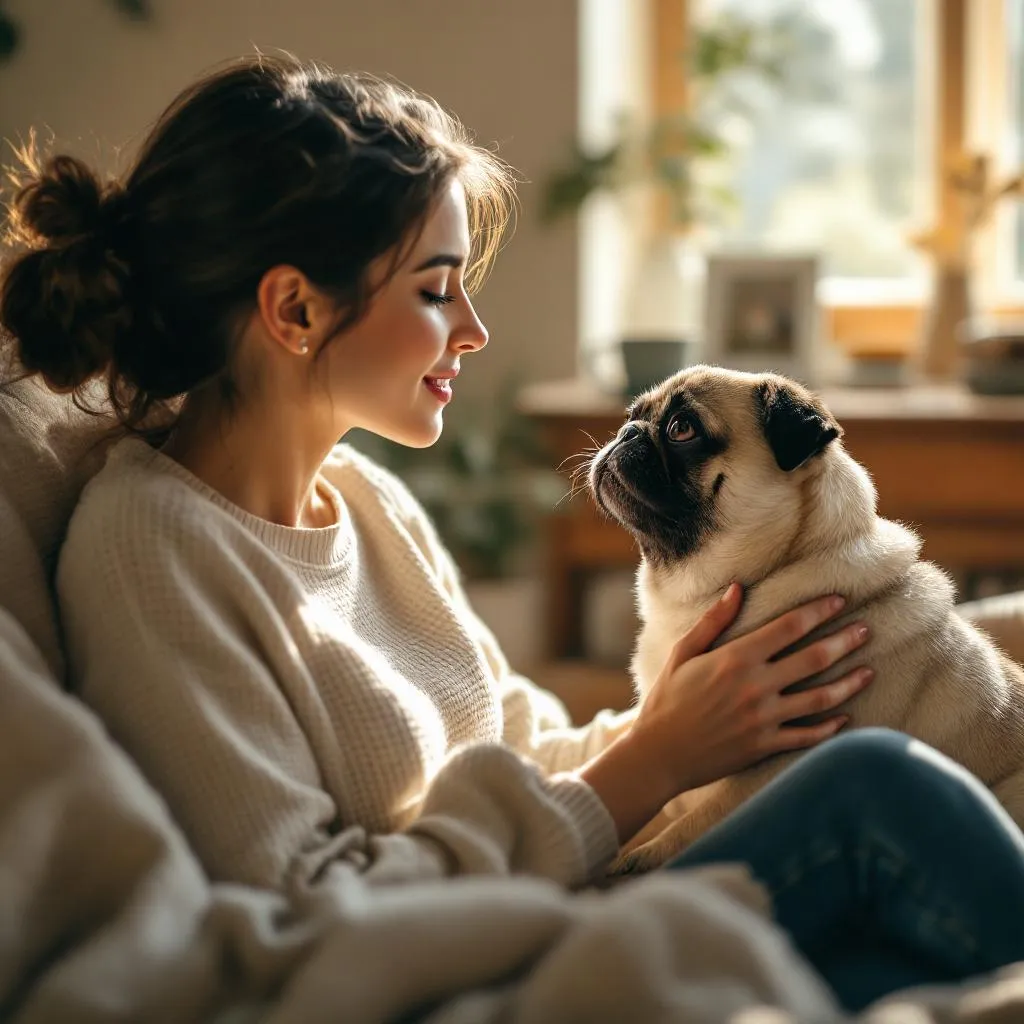
This may sound silly to some, but it is backed by science. Talking to your dog regularly helps with bonding, emotional connection, and even understanding.
Tell them about your day. Narrate what you are doing. Speak clearly, with love and energy. They may not get every word, but they get the tone. The intent. The emotion.
How To Make Your Pug Smart Over time, they will start to recognize words and associate them with actions, routines, or moods.
Raising a smart pug is easier than it seems, but it’s more complex than most people realize. The first step is to love them completely, just the way they are. After that, you gently push them in ways that pique their interest rather than put them under duress. You applaud their victories, no matter how minor, because they boost self-esteem. Additionally, you show them that learning is safe by consoling them when they make mistakes rather than giving them harsh corrections.
When a dog feels seen and supported, its intelligence develops. Your pug’s brain will be motivated to stay active if you provide them with a variety of activities throughout the day, including games, smells, experiences, and constant attention. Learning comes naturally to your pug when they are given the freedom to think, explore, and make decisions.
You are not merely imparting cues or tricks. You are nurturing confidence. Through your direction and responses, you are creating a tiny life that revolves around you and learning how to live in the world. Whether you are aware of it or not, every interaction imparts knowledge.
Being intelligent does not equate to perfection. Your pug can develop into all of that and more if you are patient, consistent, and kind.
Visit more of our training and enrichment guides to continue learning, exploring, and developing your relationship with your pug, one thoughtful moment at a time.
Yes. Pugs’ cognitive abilities are strengthened through problem-solving play and mental enrichment. Learning, flexibility, and self-assurance are all factors in the development of intelligence, not just heredity.
For pugs, intelligence is not about doing complicated tricks but about having good emotional control, curiosity, focus, and the capacity to make deliberate decisions.
Training, puzzle toys, sniffing games, or enrichment feeding provide the majority of pugs with 15 to 30 minutes of mental stimulation per day.
Compared to passive play alone, puzzle toys promote cognitive development more successfully because they necessitate active thinking and decision-making.
Sniffing lowers stress and activates a lot of brain regions. Activities involving scents enhance concentration and promote healthy mental exhaustion.
Ideally, there should be two or three quick training sessions per day, each lasting five to ten minutes. Short sessions improve learning retention.
Yes. Dogs continue learning throughout their lives. Age-appropriate mental enrichment can be very beneficial for adult and senior pugs.
Yes. Dogs that possess self-control abilities, such as waiting and leaving things alone, are better able to pause, reflect, and make better decisions, all of which promote learning.
Yes. Stress and lack of focus can result from overstimulation. For brain health, balanced routines that incorporate rest are crucial.
After a few weeks of regular training and enrichment, many owners report improved concentration and more composed behavior.
Yes. A balanced mix of mental and physical stimulation enhances learning potential and promotes general well-being.
Yes, when portion sizes are managed. To prevent overfeeding, regular meals can be substituted with puzzle feeders and scatter feeding.
Yes. Boredom-related behaviors like chewing, barking, or restlessness are frequently lessened by mental stimulation.
Routines that are predictable make pugs feel safe, which enhances concentration and learning. Consistency supports cognitive growth.
pushing too hard or expecting quick results. Positive, stress-free experiences gradually increase learning.
It’s not about pressure or intensity to make your pug smarter. Your pug can develop into a more composed, self-assured, and capable companion with routine, patience, and play that is supported by science.