❝A dog has one aim in life… to bestow his heart.” ― J. R. Ackerley❞
❝A dog has one aim in life… to bestow his heart.” ― J. R. Ackerley❞
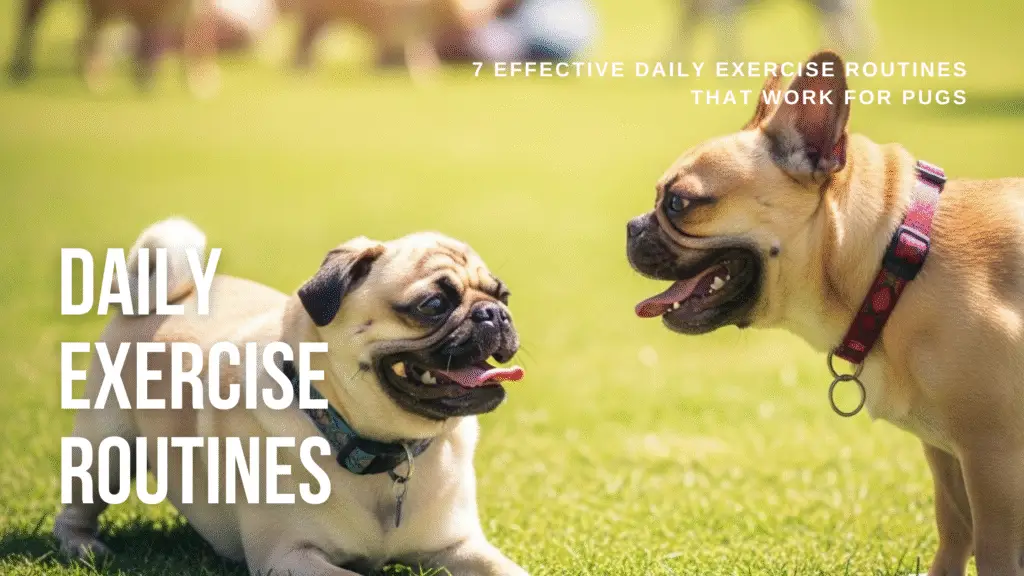
Daily Exercise Routines for Pugs: Caring for a pug is a lot of fun, but it also comes with a few responsibilities that you cannot ignore. One of the most important parts of pug care is giving them the right amount of daily exercise. This breed has a friendly nature, a charming personality, and a strong desire to stay close to their favorite humans. They enjoy being active, but they also tire quickly, and their flat faces can make heavy exercise unsafe. This is why you need a balanced routine that keeps them fit without stressing their breathing or their joints. When you know what works for a pug and what does not, you can build a simple daily plan that supports their health for years.
In this full guide, you will find a clear and practical breakdown of daily routines that help a pug stay fit. You also get advice on timing, intensity, and safety. Everything here is based on how pugs actually behave, how their bodies work, and what owners can realistically manage each day. If you follow these routines, you can help your pug avoid weight gain, improve energy levels, and maintain a healthy lifestyle. Pugs love structure, and they respond well to consistent habits. It does not matter if your pug is a calm adult, an energetic puppy, or a senior that moves a little slower. The routines here can be adapted for any dog as long as you pay attention to their limits.
Below, you will find seven reliable routines that fit the way pugs move. You do not need special equipment. All you need is time, patience, and a willingness to stay consistent. Prior to starting, keep in mind that you should constantly monitor their breathing, their degree of effort, and the outside temperature. If something feels too intense, slow it down. With pugs, safety always comes first.
A pug is a small dog, but they are built in a way that makes exercise different for them compared to longer-snouted breeds. Their short legs mean they take more steps to cover the same distance as other dogs. Their flat faces mean they take in less air with every breath. Because of this, they can overheat faster and tire sooner, especially during summer. This does not mean they should avoid exercise. It means you have to choose activities that fit their natural abilities.
Pugs do best with short and steady movement. They do well with activities that do not involve too much jumping. They respond well to routines that happen at the same time each day because it helps them anticipate what comes next. When you build a structured plan, your pug becomes more confident and more relaxed. This leads to better behavior and better sleep.
Some owners think pugs are lazy, but the truth is that a pug usually becomes lazy only when the activities they do feel too difficult or uncomfortable. When you adjust the routine to their needs, you will see that they enjoy movement. They enjoy the engagement, the attention, and the time spent with you. The key is to choose routines that help them burn calories and stretch their muscles without straining their breathing.
The average adult pug needs about 30 to 45 minutes of total daily activity. This can be broken into two or three shorter sessions. Puppies need more breaks because they get bursts of energy, but they also need naps as well. Seniors need slower and shorter sessions, but they still benefit from consistent movement.
A full routine does not need to be complicated. Even simple activities like steady walking, gentle play, and low-impact movement can support their health. The important thing is consistency. Once your pug gets used to daily routines, they become more energetic, more mentally focused, and more likely to maintain a healthy weight.
Try to avoid long, intense workouts. Try to avoid running next to a bike or taking them on long hikes. Pugs are not built for extreme endurance. They are optimized for controlled movement that keeps joints safe and breathing stable.
The seven routines listed below respect a pug’s distinct body structure and breathing requirements while fitting their natural movement. Every routine is easy to follow, kind to joints, and intended to promote low-impact, safe exercise. They are simple to incorporate into a daily routine without stress or pressure because they don’t call for a lot of work, specialized equipment, or lengthy time blocks.
Depending on your pug’s age, energy level, and the weather, you can mix and match these routines throughout the week. One day, you might combine indoor play with a quick stroll, and the next day, you might concentrate more on puzzle games or gentle movement. Your pug will remain mentally active and continue to move regularly if you rotate their activities. Variety prevents boredom without sacrificing routine.
These exercises all support balanced energy levels, muscle maintenance, and healthy weight control. Additionally, as pugs get older, regular movement promotes circulation, joint comfort, and general mobility. Daily exercise is equally important in strengthening your relationship with your pug. Exercise becomes something your pug looks forward to when it is enjoyable and doable, forming a beneficial habit that eventually promotes both physical and mental wellbeing.
A calm morning walk is one of the best things you can do for a pug. The temperature is cooler, the environment is quieter, and your pug wakes up gently without stress. Morning walks help reset their internal rhythm. They help stimulate digestion. They also help burn calories slowly without overwhelming your pug.
A morning walk should last around 10 to 15 minutes. Make sure your pug walks at a steady pace. Do not rush them. Let them sniff around because sniffing is mental exercise. It stimulates their brain and helps them feel more relaxed.
If your pug starts to pant heavily or slow down too quickly, shorten the walk. If they seem excited and comfortable, you can extend it slightly. What matters is reading their cues. Every pug is different. Some move slower because of age. Some move faster because they are younger or more energetic.
The goal is to keep the walk even and predictable. Morning walks encourage calm energy through the rest of the day.
Since pugs cannot handle intense midday heat, indoor play is usually the best option during this time. Indoors, you can control the temperature and avoid the risk of overheating. Low-impact playtime helps your pug burn off extra energy and stay mentally alert.
Some activities that work well include gentle fetch using a soft toy, slow tug-of-war, and puzzle-style games. These activities do not require intense running. They encourage controlled bursts of action followed by short breaks. This method works well for dogs that tire easily.
If you want to challenge your pug mentally, use treat-based puzzle toys. Hide a treat inside a toy and let your pug figure out how to release it. This keeps their mind sharp and reduces boredom. Mental exercise burns a surprising amount of energy, and it balances their mood.
You only need 10 to 12 minutes for this session. The goal is not to exhaust your pug. The goal is to keep them active and focused without stress.
An evening walk is different from the morning walk because it helps your pug wind down. After a full day of activity, a slow evening walk encourages your pug to stretch their muscles. It improves digestion after dinner. It also reduces anxiety and helps them sleep more peacefully.
Keep this walk short and relaxed. About 12 to 15 minutes is enough. Avoid intense walking because your pug has already used energy earlier in the day. Make this walk calm and steady.
If you live in a crowded area, try to choose a quieter route. Pugs react strongly to noise and movement. A calm environment helps them relax fully. If your pug tends to pull the leash, use a harness that supports their chest instead of a collar that pulls on their neck.
This simple habit can improve your pug’s sleep quality and mood.
Indoor obstacle circuits are an easy and safe way to give your pug structured movement. You do not need special tools. You can use household items like small cushions, rolled blankets, and low stools. The purpose of this activity is to keep your pug moving at a low height and low speed.
Create a simple path. For example:
This routine trains balance and coordination. It is especially helpful for pugs that need more joint-friendly exercise. You can adjust the obstacle size depending on your pug’s confidence level.
Start slow. Let your pug explore each part of the circuit before guiding them through it. Use treats and praise to build encouragement. When your pug gets comfortable, increase the number of laps.
A session like this can last 8 to 10 minutes. It burns energy in a controlled way and builds confidence without strain.
If your home has stairs, you can use them carefully as part of your pug’s exercise routine. Stair climbing strengthens their leg muscles, improves circulation, and adds healthy resistance to their movement. The key is to keep it slow.
Never let a pug run up and down stairs. That puts pressure on their joints and can cause accidents. Instead, guide them step by step. One slow climb followed by a slow descent is enough for beginners.
Repeat this two or three times. This is a short session, but it is effective. It builds strength without requiring high speed.
Always supervise. If your pug is older or has joint issues, skip this routine entirely. Choose one of the other low-impact activities instead. Safety always comes first.
Mental workouts are just as important as physical movement. Pugs tend to be clever and curious. When they do not receive enough mental stimulation, they may start chewing random objects, barking more than usual, or acting restless.
Mental workouts include scent games, puzzle toys, name-recognition games, or simple training sessions using basic commands like “sit,” “stay,” “turn,” “come,” or “touch.” These games improve focus, structure, and communication between you and your dog.
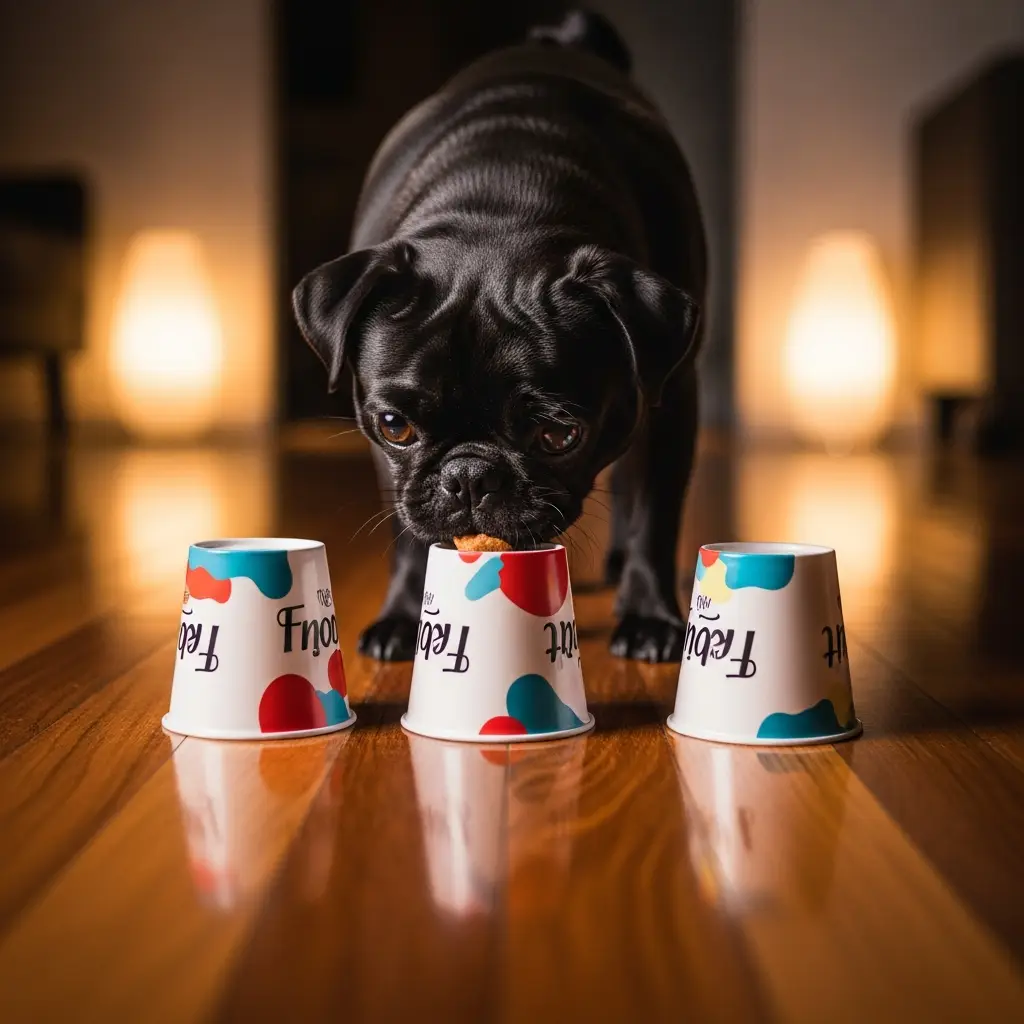
You can hide treats behind small household items and encourage your pug to find them. You can place two cups upside down, hide a small treat under one of them, and let your pug choose the correct one. These simple games keep their brain active.
A mental workout session can last 8 to 15 minutes. It burns energy in a calm and controlled way. Even though your pug is not running, this type of activity helps reduce anxiety and builds confidence.
Pugs benefit from simple strength routines that support their back and legs. You can guide them through slow movements that build tone without stress.
These routines include:
Sit-to-stand repetitions help maintain core strength. Gentle stretching improves mobility. Controlled directional changes improve coordination. Together, these routines support long-term mobility and reduce the risk of injuries.
Keep each movement slow and steady. Do not force your pug into any position that seems uncomfortable. Always use praise and gentle motivation.
A full session can last 6 to 8 minutes. This is enough for strength building without pressure.
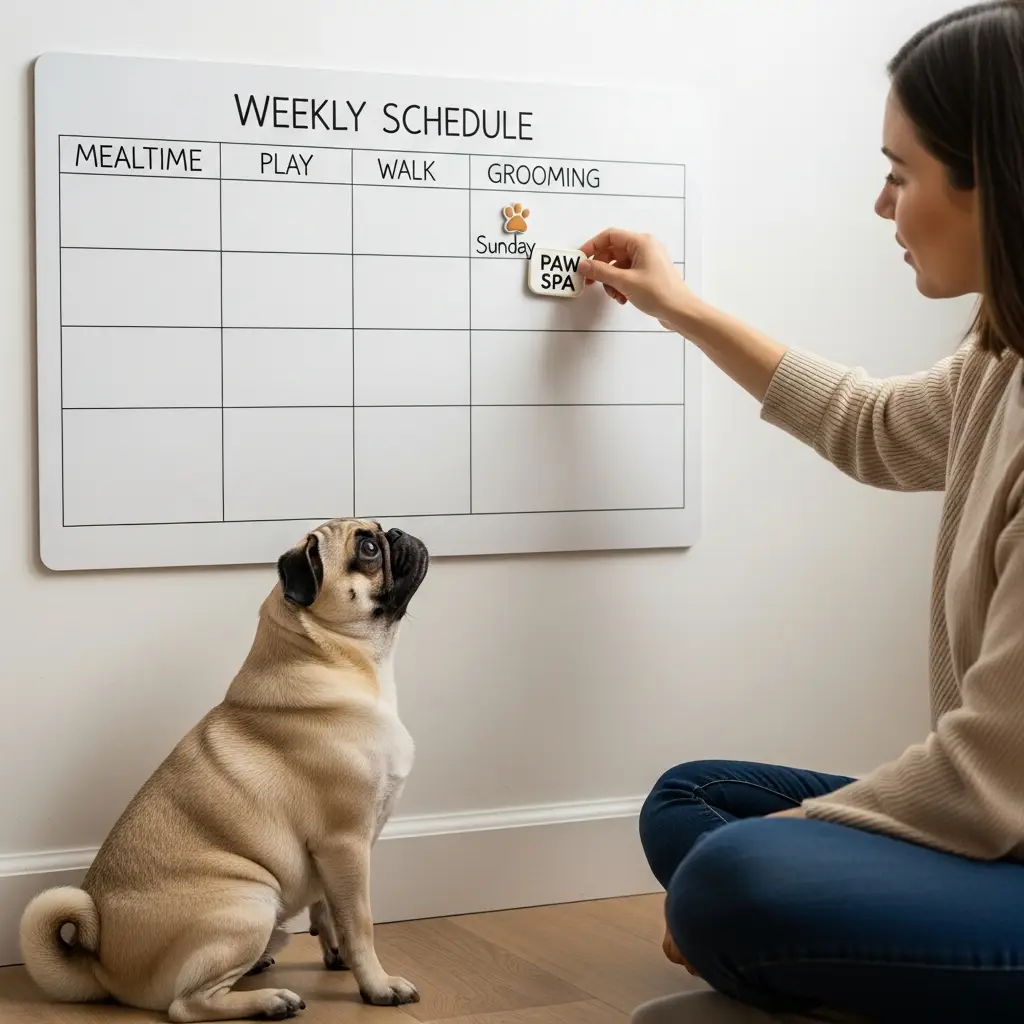
Now that you understand the individual routines, you can create a simple weekly plan. Pugs respond well to structure. A predictable routine helps them feel secure. It also helps you stay consistent with your fitness.
Here is a simple weekly layout you can follow:
Monday
Tuesday
Wednesday
Thursday
Friday
Saturday
Sunday
This plan is flexible. You can adjust it based on weather, your schedule, or your pug’s energy. The main idea is to combine physical movement with mental stimulation while avoiding intense strain.
Because pugs have breathing limitations, you always need to pay attention. Here are key safety points every owner should follow:
These simple habits protect your pug from unnecessary risk.
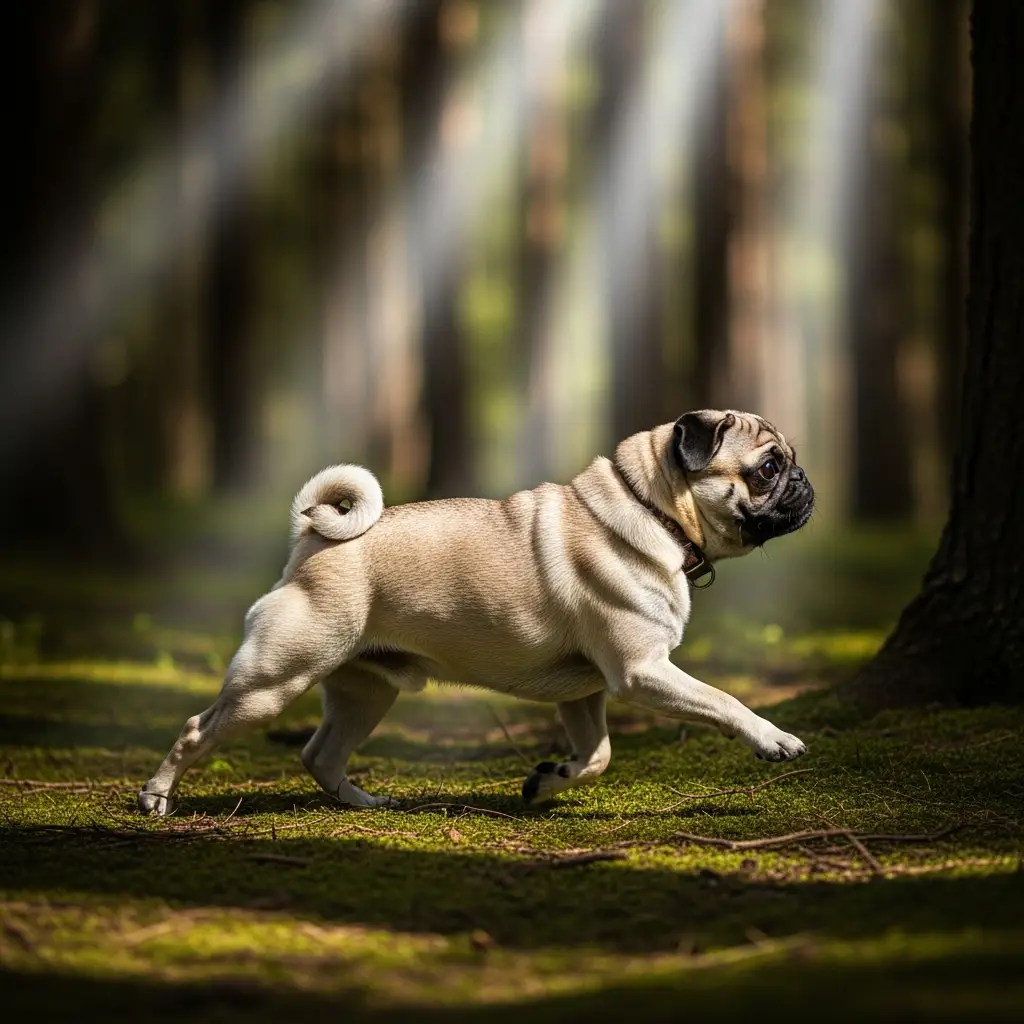
Daily exercise influences every part of a pug’s health. It helps control weight, and this is important because pugs gain weight easily. It improves mood and reduces anxiety. It improves muscle tone and joint flexibility. It boosts cardiovascular health and digestion. It even improves sleep quality.
A pug that exercises regularly becomes more balanced and more emotionally stable. They bark less, chew less, and show fewer signs of restlessness. They become more obedient because structured routines encourage focus.
Without regular exercise, a pug is more likely to gain weight, become lethargic, and experience breathing difficulty. They may also develop behavioral issues because of pent-up energy. This is why a balanced and consistent routine is one of the most essential components of caring for pets.
If you want your pug to live a long and healthy life, consistent daily exercise is one of the best gifts you can give them. You do not need to overthink the routine. You do not need expensive equipment. All you need is a small amount of time each day and a focus on healthy movement.
When you mix short walks, mental workouts, low-impact strength exercises, and simple indoor games, you create a well-rounded routine that fits the way pugs move. You protect their joints. You support their breathing. You help them maintain a stable weight. You also build a stronger bond with your dog through consistent daily engagement.
Your pug depends on you to guide their activity safely. When you stick to a structured routine that respects their limits, you help them stay happy, lively, and comfortable throughout their life. A pug that feels healthy becomes more confident, more playful, and more connected to you. Daily exercise is not just physical movement. It is part of a lifestyle that keeps your pug joyful and thriving.
Most pugs require 30 to 45 minutes of light exercise per day, split into short sessions to avoid fatigue.
Missing a day is acceptable, but regular daily movement is essential for weight control and overall health.
Indeed. Compared to long or fast-paced walks, short, leisurely walks are much safer.
Of course. When outdoor conditions are dangerous, exercise needs can be satisfied by indoor play, puzzle toys, and quick games.
Yes. Exercise should be discontinued at the first indication of severe panting or discomfort because pugs are prone to overheating.
Indeed. Gentle, low-impact movement that is adapted to their comfort level is beneficial for senior pugs.
While mental stimulation plays a significant role in lowering boredom, it should complement physical activity rather than take its place.
Particularly in warmer climates, early mornings or evenings are ideal.
Yes. Frequent exercise frequently lessens destructive behaviors, anxiety, and restlessness.
Yes. As people age, their daily movement should not change, but their intensity should.
If your pug exhibits coughing, slowing down, heavy panting, or reluctance to move, stop immediately.