❝A dog has one aim in life… to bestow his heart.” ― J. R. Ackerley❞
❝A dog has one aim in life… to bestow his heart.” ― J. R. Ackerley❞
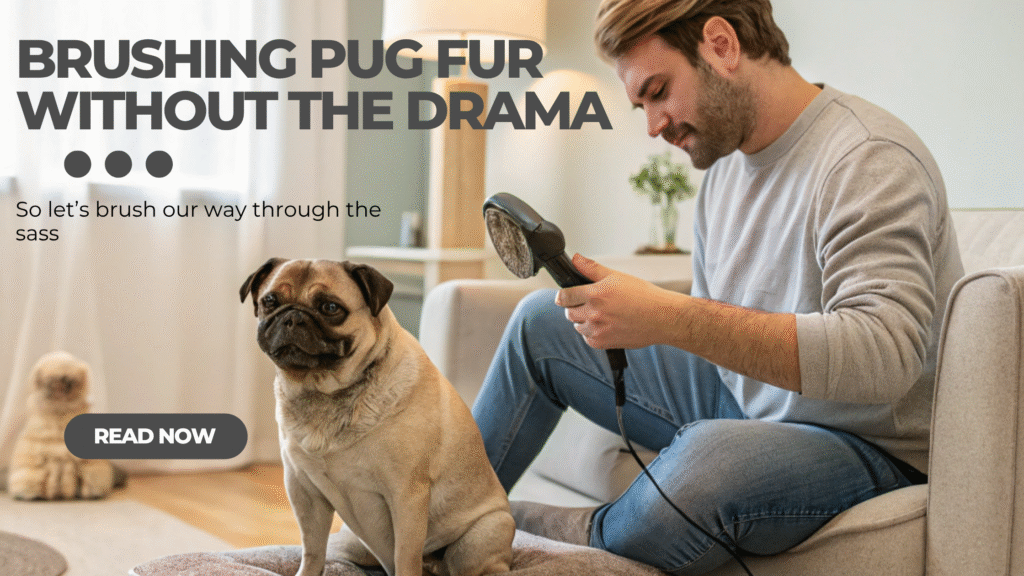
How to brush a pug: Brushing pug fur, Let’s not pretend. Brushing your pug doesn’t feel like some magical bonding ritual when you’re halfway through it. It feels like negotiating peace with a royal toddler who might scream, fart, sneeze, or all three at once.
We both know they secretly enjoy the attention, even though they act as though you’re taking away their happiness. Their Oscar moment is that pug stare, which is dramatic, accusing, and full of treachery. Brushing them, however, is absolutely necessary. They need it, not just to prevent your black jeans from turning beige. They need you.
So let’s brush our way through the sass. Together.
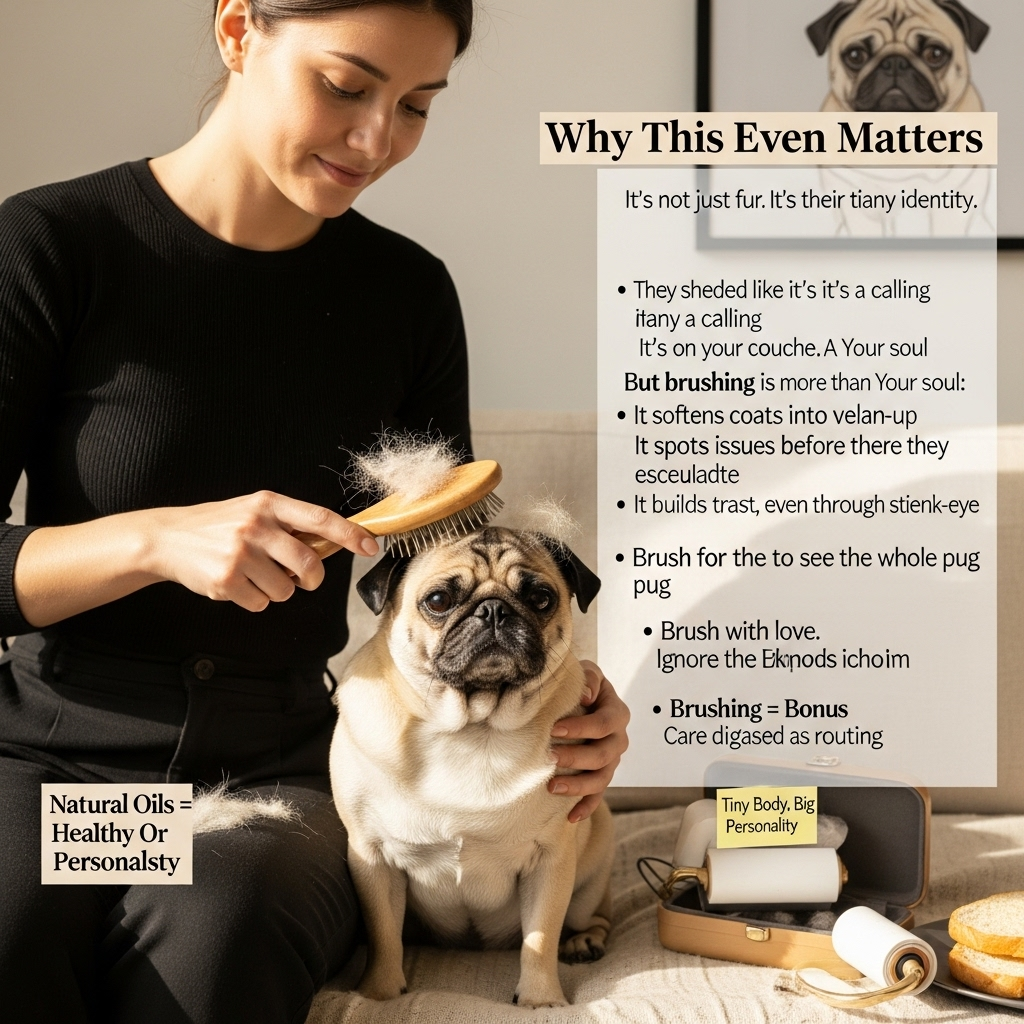
How to brush a dog properly: you’d think short hair equals less shedding, right? Rookie mistake. Pugs shed like it’s their full-time job. It is ubiquitous, much like glitter. The couch, your lap, your breakfast.
But brushing isn’t just about saving your vacuum from an early death. It helps distribute their natural oils, keeps their skin healthy, and turns their coat into buttery-soft velvet. Plus, it lets you spot weird bumps or scratches before they become problems.
And perhaps the most crucial element? It fosters trust. Even when they look at you like you’re ruining their week.
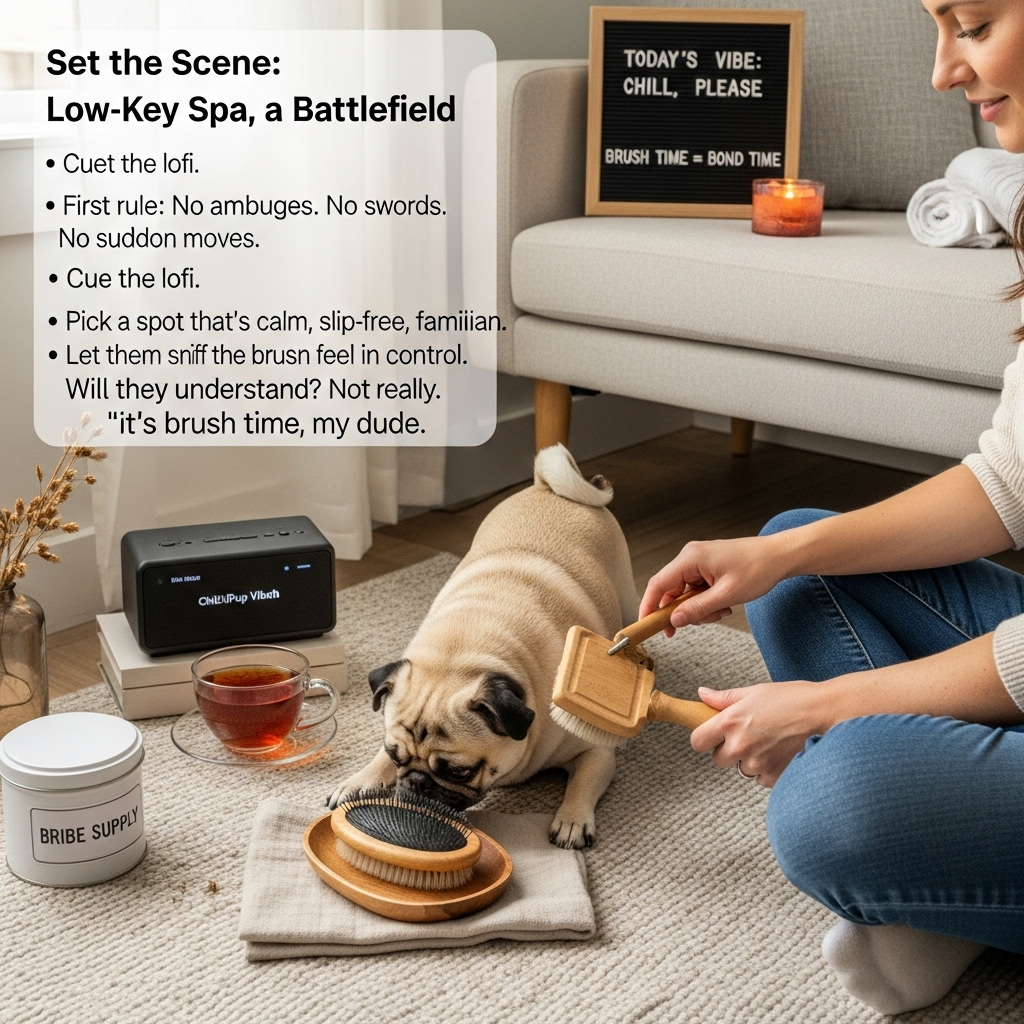
First things first: avoid ambushing them. You can’t just storm in waving a brush like it’s a sword. You must create the atmosphere. Make it chill. Peaceful. Maybe even play some lofi or nature sounds. Yes, really.
Pick a peaceful area where they frequently congregate. Somewhere without slippery floors, bright lights, or distractions. Let them sniff the brush. Let them feel like they’re part of the plan.
Talk to them. Give them a heads-up like, “Hey buddy, it’s brush time. You’re going to look fabulous.” Are they going to understand? Not a word. But they’ll feel your energy, and that matters more.
You don’t need a full-on grooming studio. Just a few solid tools and some bribes:
A rubber curry brush or soft bristle brush for daily use
A gentle deshedding tool once a week (think: FURminator lite)
Wipes or a soft cloth for wrinkle-cleaning
Treats that your pug would commit crimes for
A towel for the inevitable “why are we like this” moment
Pro tip? Keep it nearby. If you leave mid-session to grab something, your pug will absolutely use that moment to escape.
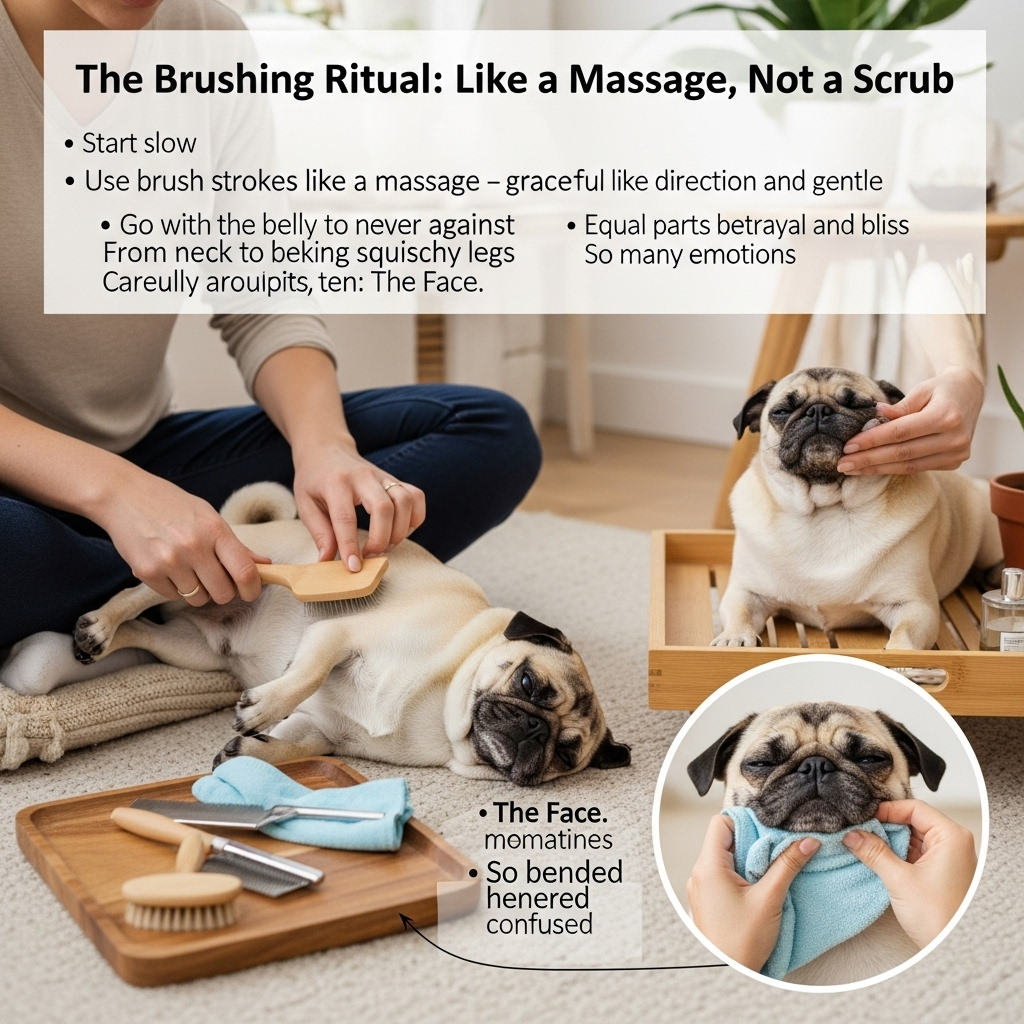
Start slow. Apply the brush as though you were massaging their back. Not too hard. You’re infatuated with a little potato with legs, not sanding furniture.
Go with the fur, never against. Work from the neck down, hitting the back, sides, belly, and those tiny little legs that kick when they’re happy-annoyed. Be extra gentle around the armpits and tail.
And then there’s the face. Oh, the face.
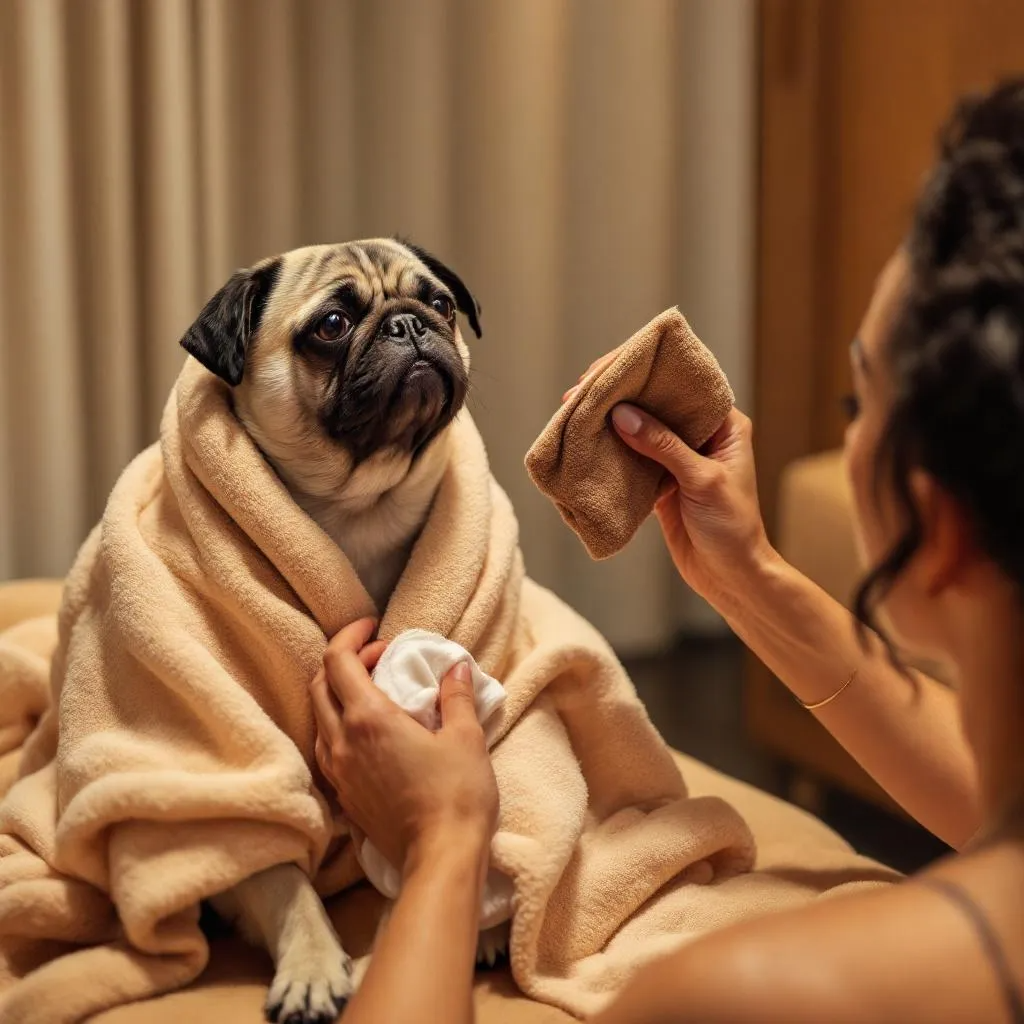
Although those folds are adorable, they are also tiny dirt traps. So clean them. Lovingly.
Use a damp cloth or dog-safe wipe and gently lift each fold. Don’t rush. Dab the inside, then go back in with a dry cloth. Imagine it as a kind, considerate, and effective way to pat down royalty.
Never let moisture sit in there. That’s bacteria’s happy hour.
They’ll probably grunt. Maybe snort. Possibly throw a little tantrum. But stay calm. You’re just showing love, one wrinkle at a time.
Once it’s over, act like they just conquered Everest. Hype them up.
Give them their favorite treat. Toss a toy. Speak in a high-pitched voice like you just saw a baby goat. Make it a whole event. Give your pugs a curtain call; they love a fantastic show.
And most importantly, don’t immediately chase them around with the vacuum. Let them live in the glow of their fresh look for a few minutes.
Here’s your cheat sheet:
Brush 2 to 3 times a week if you want a cleaner house and a shinier pug
Deep-brush once a week, especially during shedding season
Wipe down those facial folds every few days (non-negotiable)
For brushing pug fur set a reminder if you have to. Like laundry or meal preparation, incorporate it into your week. You’ll thank yourself. So will your pug. Still, probably with a snort and a side-eye.
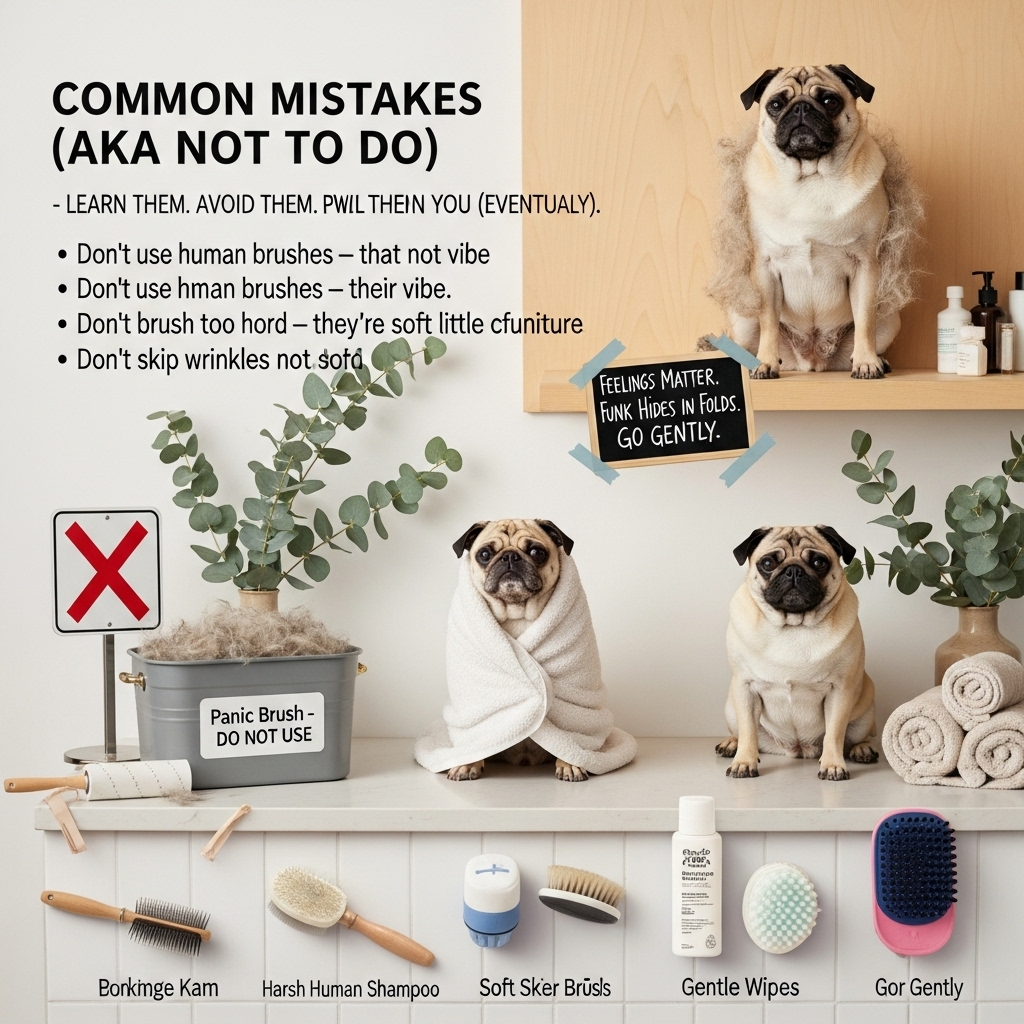
This isn’t just about cleaning them up. It’s about caring for them.
When it comes to brushing pug fur, let’s be honest. You’re not just brushing your pug to keep hair off the couch or your shirt. This is one of the ways you speak their language, which is why you are doing it. This is care made tangible. This is attention turned into action. You disregard them because they are your special soul mate and you need to support them.
Exaggerated sighs, dramatic snorts, and the obvious expression of extreme inconvenience could be the first signs. But slowly, something shifts. Your touch becomes familiar. The rhythm becomes predictable. Tolerance develops from resistance, and trust develops from tolerance. Their body relaxes. Their breathing slows. The moment becomes quiet.
Then they curl up next to you as if nothing had happened, their fur smoothed down and the subtle, reassuring smell of coconut dog shampoo lingering in the air. No grudges held. No score kept. Just solace, intimacy, and the unwritten knowledge that you looked after them.
This is what it’s really like to love a pug. It is rarely drama-free and is not Instagram-perfect. There are schedules to adhere to, fur all over the place, and repetitive routines. But it is honest. It is steady. And it is full of love.
So brush the fur. Wipe the wrinkles. Hand over the treat. After a few days, repeat the entire process. Because that’s how you appear. This is the process of developing trust. Care develops into a relationship in this way.
There is always more to discover if you’re interested in learning more about calming methods, gentle grooming routines, or regular ways to promote your pug’s comfort and well-being.
At least two or three times a week, pugs should be brushed. Daily brushing keeps their coat and skin healthy and helps control loose fur during periods of heavy shedding.
Indeed. Pugs shed all year long, and because of their short fur, shedding is frequently more obvious. Frequent brushing dramatically lowers the amount of loose hair in your home.
The best tools are rubber grooming mitts, soft bristle brushes, or deshedding tools designed for short coats. Avoid using stiff or sharp brushes as they could irritate sensitive skin.
Brushing should never hurt. You might be applying too much pressure or using the incorrect tool if your pug appears uncomfortable. Gentle pressure is always best.
Sure. When done gently, daily brushing is safe and can actually enhance coat health, particularly during shedding seasons.
Both are helpful. While brushing after drying helps smooth the coat and lessen shedding, brushing before a bath eliminates loose hair and debris.
Keep sessions short, calm, and positive. Use gentle strokes, praise, and treats. Consistently good experiences foster trust and tolerance over time.
Indeed. In addition to distributing natural oils and promoting circulation, brushing helps avoid dry or irritated skin.
Frequent brushing can lessen allergens in your home by removing loose fur and dander.
No. Brushing is mainly for the body. To prevent irritation, facial wrinkles should be cleaned separately with a gentle cloth.
Usually, five to ten minutes is sufficient. Frequent, brief sessions are more effective than lengthy ones.
Well, no. While brushing promotes coat health, bathing is still necessary. Both are crucial components of a thorough grooming regimen.
Check for lumps, bald spots, redness, scabs, or sensitivity. These could be signs of skin conditions that require care.
Absolutely. Brushing fosters trust and deepens your relationship with your pug when done gently and regularly.