5 Easy Beef Recipes for Pugs: Cook Up Some Love and Strength for Your Squishy Best Friend
Beef recipes for pugs: Cooking for your pug has a genuinely magical quality. That moment when you turn simple ingredients into a dish that makes them smile, wag their tails, and sparkle. Beef is a protein and a nutrient-dense powerhouse that can greatly enhance your pug’s general health. Rich in iron, zinc, and vital amino acids, it helps them develop muscle, boost their immune system, and maintain a glossy coat that will make all the other dogs in the neighborhood envious.
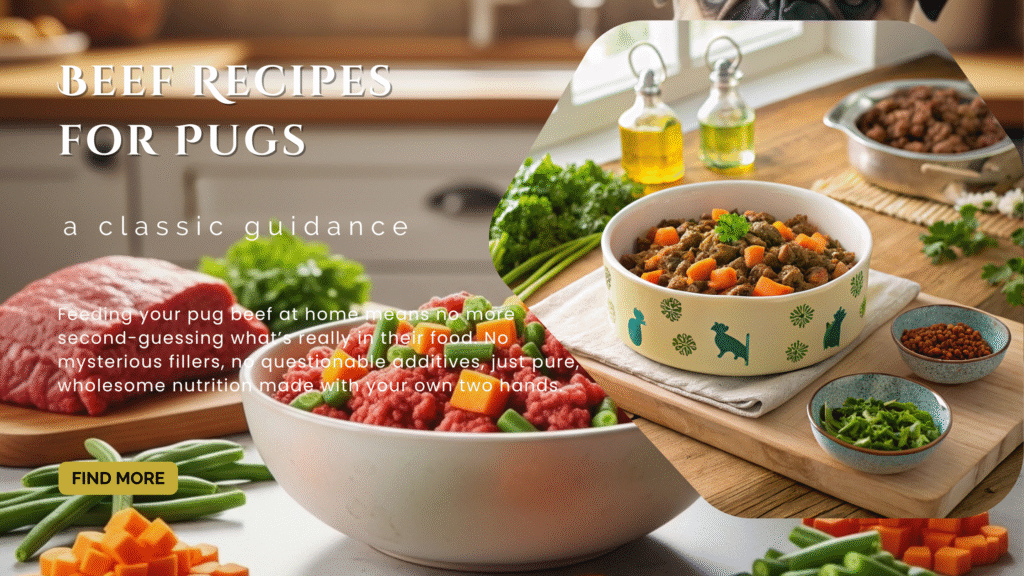
You can stop worrying about what’s actually in your pug’s food when you feed them at home. No questionable additives or mysterious fillers, just pure, healthful nutrition made by you. It’s the pug equivalent of “I love you.”
Control and attention to detail are also important when preparing beef for your pug. The meat’s quality, cooking technique, and accompanying ingredients are all up to you. Pugs can easily chew and digest lean beef cuts that have been gently cooked until they are tender, which is crucial for a breed with sensitive stomachs. Beef can be combined with basic vegetables like sweet potatoes, green beans, or carrots to create a balanced meal that provides energy without adding extra calories.
Beyond your physical health, homemade beef meals enhance your relationship. Pugs love routine and attention, and they are very people-oriented. They experience a sense of connection when food is prepared specifically for them. The snorts of anticipation, the eagerness with which they sit by the kitchen doorway, the way they follow your every step. These moments matter. They transform daily feeding into a ritual of trust and care.
Additionally, beef can be modified to suit your pug’s life stage. The amino acids that promote growth and development are beneficial to puppies. Adult pugs maintain their muscles and acquire sustained energy. Soft, slow-cooked beef meals that are kind to aging teeth and joints are preferred by senior pets. Beef can be a dependable and consistent component of their diet if it is prepared simply and in the right amounts.
Of course, moderation is key. Pugs love food, sometimes a little too much, so serving appropriate portions helps them maintain a healthy weight. Garlic, onions, salt, and spices should never be used when cooking beef; it should always be done simply. To prevent upset stomachs, fresh water should always be close by and new recipes should be introduced gradually.
Cooking beef for your pug is fundamentally an act of love. It’s picking presence over expediency, nourishment over ease. It’s knowing you gave them something purposeful while you watch them lick the bowl clean. A homemade beef dinner is a straightforward reminder that love can be warm, nourishing, and served in a bowl on the kitchen floor in a world full of hectic days and prepackaged solutions.
Why Beef Is a Total Game Changer for Your Pug’s Health
Let’s take a moment to acknowledge that pugs are small, powerful animals with unique needs. Their tiny bodies require nutrient-dense foods that give them energy without adding unnecessary fats or fillers. That is exactly what beef does. Lean beef provides:
-
High-quality protein that builds strong muscles and keeps your pug active
-
Iron to support healthy blood flow and prevent fatigue
-
Zinc, which is key for a glowing skin and a lustrous coat,
-
B vitamins for healthy brain function and metabolism
When properly prepared, beef can be easy on your pug’s digestive tract, giving them filling meals that make them feel loved from the inside out. The key? Choosing the right cuts and preparing it safely.
Simple Beef and Veggie Stew for Pug Happiness
This stew is a bowl of pure comfort that your pug will adore. It is high in protein, fiber, and vitamins, and it tastes good and is easy to digest.
Ingredients:
One cup lean ground beef
Half a cup diced carrots
Half a cup diced sweet potatoes
Quarter cup peas (fresh or frozen)
One cup low-sodium beef broth (check ingredients to avoid onion and garlic)
Instructions:
Brown the beef in a non-stick pan until fully cooked, and drain any excess fat. Add the carrots, sweet potatoes, and peas with the broth. Simmer until the veggies are tender. Let it cool completely before serving.
This stew is like a warm hug in a bowl. It’s full of nutrients and easy on the stomach, so your pug’s tail will continue to wag all day.
Beef and Rice Bowl: The Ultimate Balanced Meal
For pugs with sensitive stomachs, this easy recipe combines the strength of beef with the tender comfort of rice.
Ingredients:
- One cup cooked lean beef, chopped
- Half a cup cooked white or brown rice
- Quarter cup steamed green beans, chopped finely
Mix everything together once cooled and serve fresh. The rice provides energy, while the green beans add fiber and crunch. This meal is all about balance—fueling your pug’s body and satisfying their taste buds.
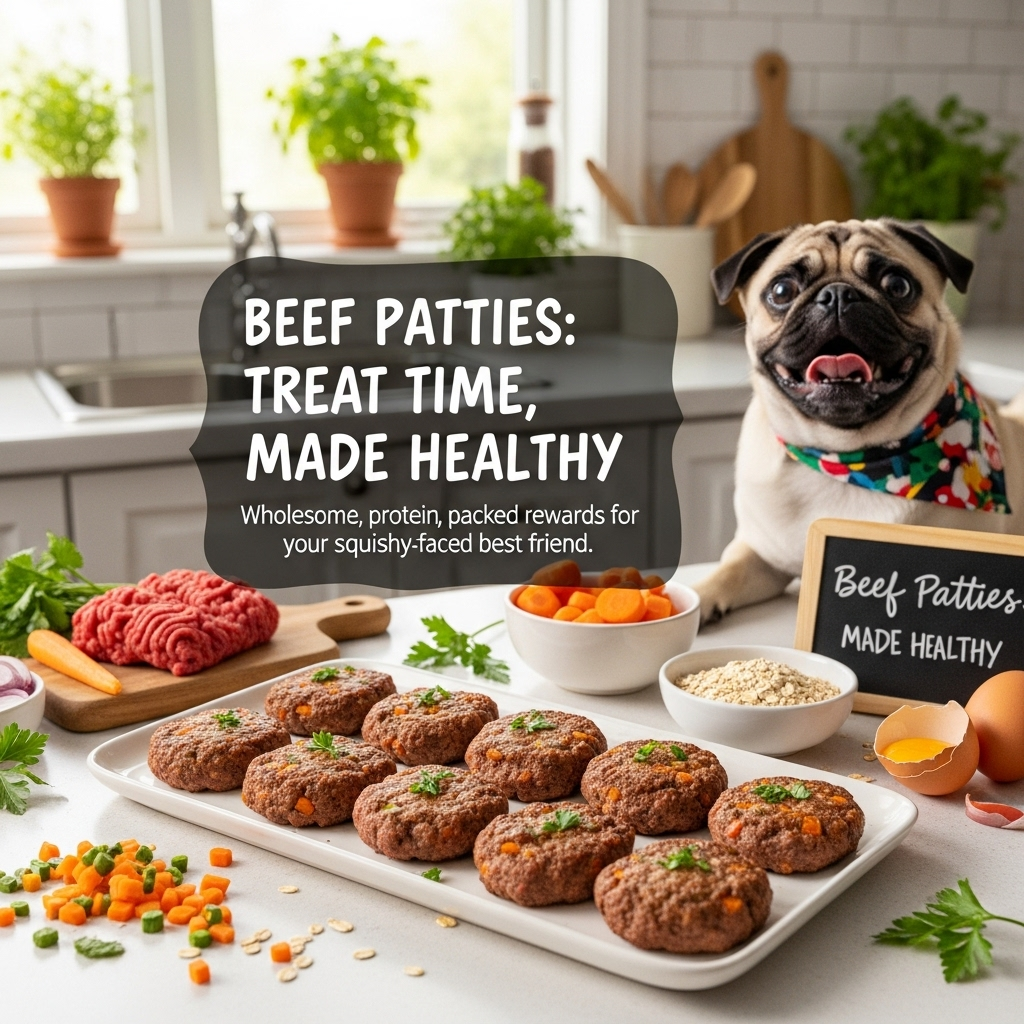
Beef Patties: Treat Time, Made Healthy
A good patty is enjoyed by all. These beef treats are ideal for rewarding your pug with something special or for use during training sessions.
Ingredients:
- One cup ground lean beef
- One egg (optional, helps bind)
- Quarter cup finely chopped spinach or kale
Combine all ingredients thoroughly, shape into small patties, and bake at 350°F for approximately 15 minutes, or until thoroughly cooked. Before giving it to your dog, let it cool.
These tasty patties are ideal for bonding exercises like snorts, hugs, and belly rubs.
Tips for Safely Feeding Beef to Your Pug
Not all beef is made equal, so be mindful of that. Giving your pug fatty cuts could upset their stomach, so avoid doing so. Avoid seasonings because they are unhealthy, especially salt, onion, and garlic. Steer clear of seasonings, particularly salt, onion, and garlic, as they are unhealthy. Beef should always be cooked through to eliminate the possibility of bacteria. Additionally, if you’re introducing beef for the first time, proceed cautiously to check for any sensitivities or allergies.
 Weekly Beef Meal Plan for Easy Prep and Happy Pugs
Beef recipes for pugs: Here’s a quick strategy to maintain wholesome, varied meals without overtaxing your schedule:
Day | Meal | Notes |
Monday | Beef and Veggie Stew | Comfort and nutrients |
Tuesday | Beef and Rice Bowl | Gentle and balanced |
Wednesday | Beef Patties | Treat and training time |
Thursday | Beef and Sweet Potato Mash | Fiber and vitamin boost |
Friday | Beef and Carrot Mix | Crunchy and tasty |
Saturday | Slow-Cooked Beef Stew | Weekend special |
Sunday | Beef and Spinach Scramble | Protein-packed start |
Feeding Your Pug Is Feeding Your Heart
Every meal you prepare for your dog is a love letter, written with patience, care, and purpose rather than words. Long before the bowl hits the ground, it starts. Choosing fresh ingredients, cooking slowly, and considering what will make them feel their best are the first steps. In those moments, love takes on a physical form that they can trust, taste, and smell.
They do more than just nourish their bodies when they cook beef recipes at home. It strengthens a bond characterized by comfort, laughter, and loyalty. Making meals specifically for pugs is one way to return the personality, humor, and warmth that pugs bring to a home. It is a shared daily rhythm where your concern and their steadfast devotion collide.
Your pug senses the effort that goes into each meal, even though they may not understand it. They sense it in the consistency of their routine, in the ease with which their stomach is satiated, and in the serenity that comes after a satisfying meal. They express their appreciation by following you from room to room, snoring softly during afternoon naps, and gently pressing their bodies against yours when they settle in close.
Over time, these meals become memories. The bowl’s well-known clink, the place where they wait every time, and the expression they give you when they want more. These little things combine to create a shared life that is based on love and consistency. Cooking for your pug doesn’t have to be complicated or flawless. It is about consistently and genuinely showing up with love.
A homemade beef meal is ultimately more than just food. It is reassurance. It is comfort. It’s a subdued way of saying, “You are loved, you belong here, and you always will be.”
Remember: Always Consult Your Vet
When it comes to nutrition, pugs differ in size and shape and have different health needs. The way your pug digests food depends on a number of factors, including age, activity level, weight, and underlying medical conditions. When feeding homemade meals, flexibility and observation are crucial because what suits one pug may not suit another.
Take seriously any changes you observe in your skin, coat, digestion, or general behavior. Signs that an ingredient needs to be adjusted include loose stools, itching, excessive shedding, or changes in appetite. Before making significant changes, consult your veterinarian if in doubt. Instead of inadvertently creating nutritional gaps, their advice helps make sure your beef recipes stay safe, balanced, and beneficial to your pug’s long-term health.
If your pug has allergies, sensitivities, or medical conditions like weight problems or joint issues, veterinary advice is particularly crucial. A veterinarian can help you adjust serving sizes, suggest supplements if necessary, and make sure your homemade meals meet your pug’s particular requirements. This additional step transforms well-meaning intentions into genuinely responsible care.
Another key component of a nutritious homemade diet is variety. In addition to keeping meals interesting and nutritionally varied, rotating proteins can help lower the risk of food sensitivities. Adding other mild proteins to your pug’s diet can add excitement and balance if they like beef. A fantastic next step is to look into chicken-based meals, which provide a lighter option that many pugs can handle.
You establish a feeding regimen based on love and wisdom by remaining vigilant, knowledgeable, and receptive to professional guidance. In addition to a contented pug during mealtimes, the outcome is a healthier friend who will be able to enjoy those tail wags, snorts, and cuddles for many years to come.
Frequently Asked Questions About Beef Recipes for Pugs
Can pugs safely consume beef?
When beef is prepared simply and served in suitable portions, it is safe for the majority of pugs. It offers iron, protein, and other vital nutrients that promote vitality and strength.
What kind of beef is ideal for pets?
The best cuts are lean ones like round cuts, sirloin, or low-fat ground beef. Unnecessary weight gain and digestive distress can result from eating fatty beef.
How should beef be prepared for pets?
Boil, bake, or gently pan-cook beef without adding salt, seasoning, oils, onions, or garlic. The safest preparation is simple.
Can I give my pug beef every day?
Unless a veterinarian advises otherwise, beef can be a regular part of a rotation but shouldn’t be the sole source of protein. Balance and variety are important.
What is the recommended amount of beef for a pug?
Ten to twenty percent of your pug’s daily calories should normally come from beef. Age, weight, and degree of activity all affect portion size.
Can pugs that require more strength benefit from eating beef?
Indeed, beef is high in iron and protein, both of which promote healthy muscles and general physical strength.
Can pugs be allergic to beef?
Beef may cause sensitivity in certain pugs. After feeding, keep an eye out for any changes in digestion, ear infections, itching, or excessive licking.
Can puppies eat beef recipes?
Although homemade meals must satisfy growth-related nutritional requirements, puppies can consume beef. Before giving beef to puppies on a regular basis, always get advice from your veterinarian.
Can senior pugs eat beef?
When beef is lean, well-cooked, and served in smaller, easier-to-digest portions, senior pugs can enjoy it.
Can I mix beef with kibble?
Indeed, incorporating small amounts of cooked beef into kibble can improve its flavor and protein content while preserving a healthy diet.
Is raw beef safe for pugs?
Bacteria are more likely to be present in raw beef. Before feeding beef to pugs, the majority of veterinarians advise cooking it.
How should my pug’s cooked beef be stored?
Cooked beef can be frozen in portion-sized servings or kept in the fridge for up to three days in an airtight container.
What should I keep out of beef recipes for pets?
Steer clear of any ingredients that are dangerous for dogs, such as salt, spices, sauces, butter, oils, onions, and garlic.
Lorem ipsum dolor sit amet, consectetur adipiscing elit, sed do eiusmod tempor incididunt ut labore et dolore magna aliqua. Ut enim ad minim veniam, quis nostrud exercitation ullamco laboris nisi ut aliquip ex ea commodo consequat. Duis aute irure dolor in reprehenderit in voluptate velit.