❝A dog has one aim in life… to bestow his heart.” ― J. R. Ackerley❞
❝A dog has one aim in life… to bestow his heart.” ― J. R. Ackerley❞
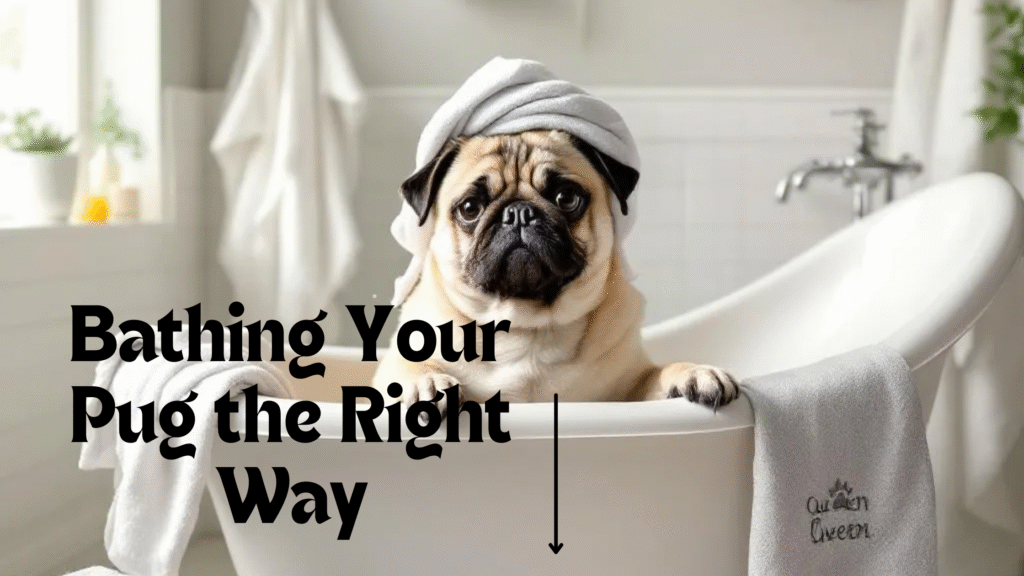
How to properly bathe your pug: Let’s be honest for a second. Pugs are small, wrinkle-covered, snorty bundles of sass. Additionally, the drama is evident and instantaneous when bath time arrives. They look at you as though you have personally betrayed generations of trust after just one look at the tub. The side-eyes are sharp. The sighs are theatrical. The energy says, “I’ll remember this.”
Beneath all that show, though, they are aware. They always know. Even though they would prefer to act otherwise, they are aware that this is a part of the agreement. They simply won’t acknowledge it without a hint of emotion.
Giving your pug a proper bath involves more than just cleaning them. It’s about treating them the way they feel they should be treated, like the royalty they firmly believe they are. It’s about keeping wrinkles healthy, safeguarding delicate skin, and ensuring those recognizable folds aren’t clinging to enigmatic mementos from the previous week’s stroll. Yes, it’s time if your pet begins to smell like forgotten socks or if the wrinkles on their face are telling you stories you didn’t want to hear.
The good news is that bathing a pug doesn’t have to be stressful, hectic, or totally submerging. It can actually become a surprisingly bonding experience if done with preparation, patience, and a composed attitude. One that is full of quiet conversation, assurance, and the kind of trust that only comes from competent hands.
There is no need to hurry. It is not about forcing cooperation. Furthermore, it is unquestionably not about winning. This is the tried-and-true method for giving your pug a loving, caring bath that will keep everyone calm, mostly dry, and emotionally intact. Bath time becomes less of a struggle and more of a brief annoyance if you approach it properly, followed by towels, treats, and forgiveness.
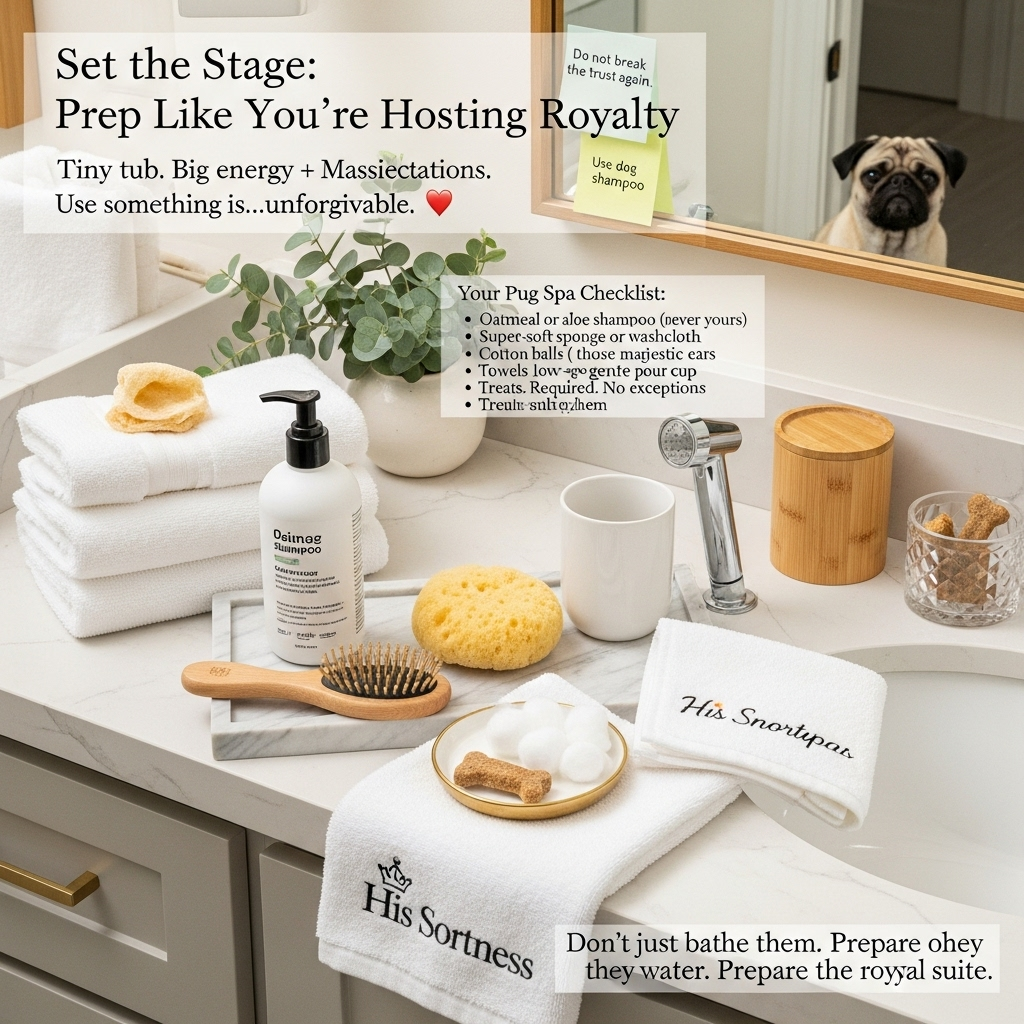
Frequency of pug baths is important, but preparation is equally important. Wait until your entire station is ready before you even consider turning on the faucet. There is no going back once your dog smells betrayal during bath time. If you hesitate, they will only have time to doubt your intentions, hide under furniture, or get ready for drama on an emotional level.
This is more like setting up a small spa than a rush. The process remains calm, effective, and much less chaotic when everything is easily accessible. Your pug senses that you have consistent energy when you are well-organized.
This is your pug-spa checklist, which only includes non-negotiable items:
This is one of the most important pug bath tips. Avoid using your own shampoo. Even the elegant, kind, purportedly organic human stuff. Using human shampoos can dry out your pug’s skin, irritate it, and cause itching or flare-ups because they are designed for a completely different pH of skin. Their minuscule bodies possess unique chemistry, sensitivities, and, yes, a distinct vibe.
Dog-specific products honor that equilibrium. Dog-specific products honor that equilibrium. They keep skin calm and healthy while cleaning without depleting natural oils. Selecting the appropriate shampoo is not a luxury. It is basic care.
Bath time no longer feels hurried and reactive when you are properly prepared. It becomes calmer, more organized, and much easier to recover from. You might still get the look from your pug. That is tradition. However, the experience ends more quickly, feels safer, and goes straight to the best part when it is set up properly. Towels, cuddles, and treats.
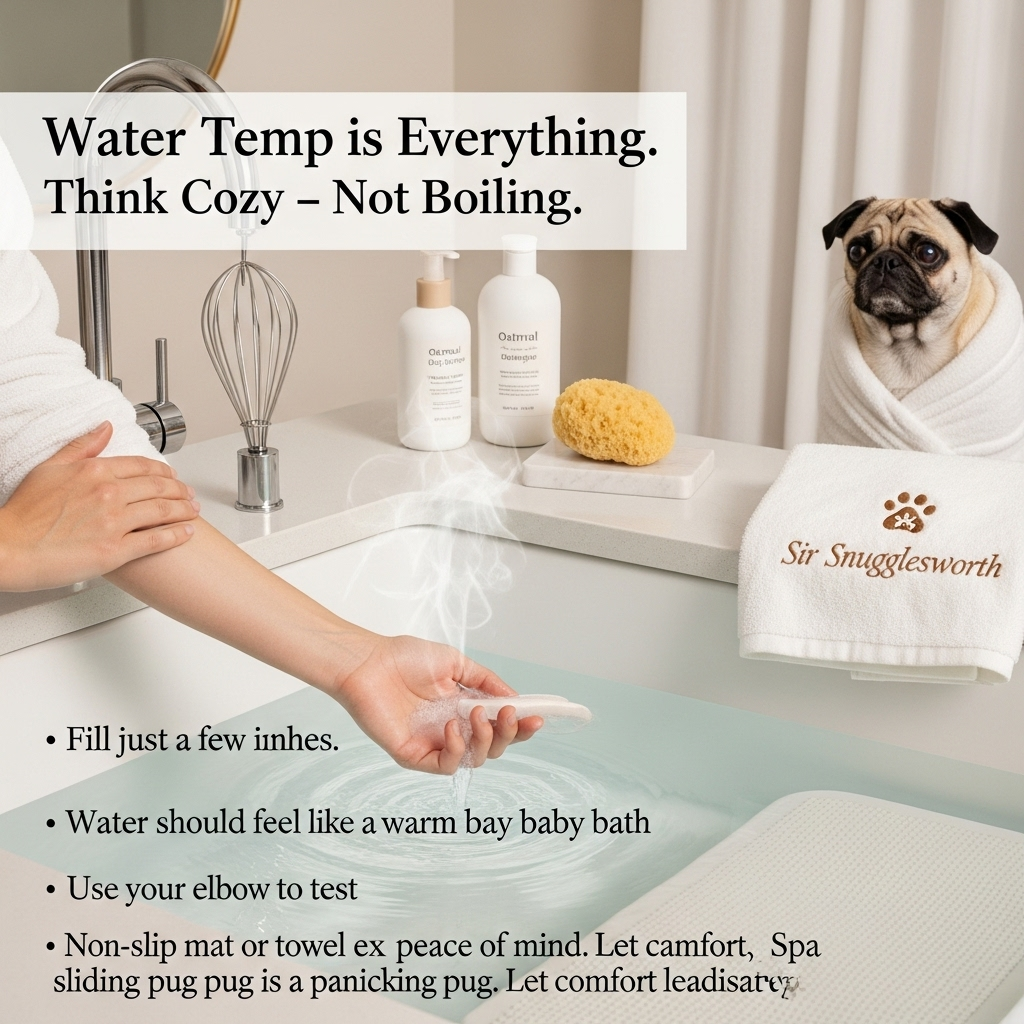
You are not cooking pasta. When you think of yourself as pampering a pug, everything is different. First, add a few inches of lukewarm water to the sink or bathtub. Imagine a gentle, warm baby bath that is neither hot nor cold. Due to their sensitivity to temperature, pugs can become tense in water that is either too warm or too cold. Test the water with your wrist or elbow if you’re not sure. You should be able to put a baby in it without hesitation because it should feel neutral and comfortable.
Before your dog ever gets in the tub, give them an opportunity to succeed. Put a folded towel, rubber liner, or non-slip mat at the bottom. Stability is essential. Pugs feel vulnerable and uncontrollable on slick surfaces, and a sliding pug soon turns into a panicked pug. An ordinary bath becomes a stressful experience for everyone involved when panic causes shaking, scrambling, and resistance.
The impact of that tiny layer of traction is enormous. Your pug’s body relaxes when their feet feel safe. They breathe more evenly, stand with greater assurance, and are much more tolerant of the remainder of the procedure. Establishing a secure and cozy space early on demonstrates to your pet that bath time is not a trap. It is care. It is attention. Additionally, you are doing it with them rather than to them.

Wet your pug down gradually and deliberately using your hands, a cup, or a mild sprayer. Ease them into the water rather than hurrying them because sudden splashes can be frightening. Avoid the face and ears completely for the time being. Many dogs feel threatened by that area, so it’s best to save it for later and handle it carefully and separately. Pay attention to the body, working your way down from the shoulders or back, and treat it with the same gentleness as you would a drowsy toddler who hasn’t requested a bath.
Keep your touch steady and reassuring. Give your dog time to get used to it by allowing the water to slowly seep through the coat. Pause as well if they hesitate or become tense. These brief acts of patience foster trust and facilitate baths in the future.
Here’s a professional tip that really makes a huge difference. Talk to them. Use your voice constantly. In a very strange situation, your voice serves as their safe haven and anchor. Narrate what you are doing. Joke with them. Sing softly. Murmur reassuring nonsense. If it helps you unwind, pretend you are putting on a jazz performance late at night. The words do not matter. The tone does.
Your soothing voice conveys connection and safety. It conveys to your pug that they are still loved and protected despite being wet, slightly offended, and doubting your decisions in life. Bath time becomes more about trust than endurance when the atmosphere remains peaceful. That consistent presence becomes crucial over time.
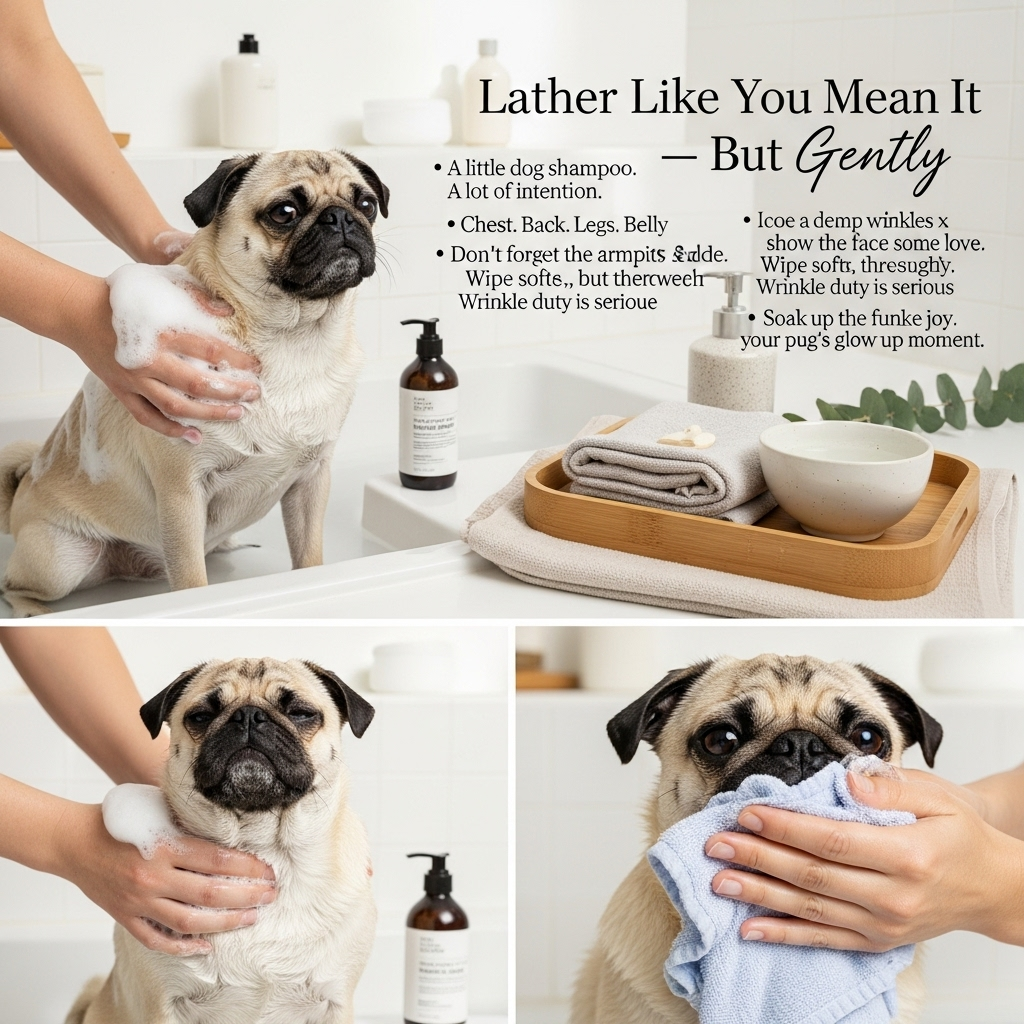
For pugs in particular, selecting a safe dog shampoo is crucial for sensitive skin. This is where the magic happens once you have the right product. Work slowly and deliberately to massage a small dollop of dog shampoo into your pug’s fur. To ensure that nothing is overlooked, start where dirt and oil tend to accumulate the most and proceed methodically.
Focus on these areas:
Use your fingertips instead of your nails and maintain a steady, calm touch. This is about cleaning, not scrubbing. Dirt can be lifted with light pressure without causing irritation to delicate skin.
After cleaning the body, use a moist washcloth on the face. Wipe gently under the chin, between those recognizable wrinkles, and around the eyes. Take your time here. Cleaning without overtaxing your pet is the aim. To avoid pain or irritation, stay away from the nose, the inside of the ears, and the eyes themselves.
Wrinkle duty is serious business. Ignoring those folds can result in moisture, bacteria, and odor being trapped in their tight little funk bunkers. Gently but thoroughly clean each one by wiping inside and slightly lifting the folds. When done correctly, this step avoids irritation, infections, and that distinctive pug odor. One of the most crucial aspects of bathing your pug is careful, patient wrinkle cleaning, and your efforts will pay off in terms of comfort and long-term skin health.
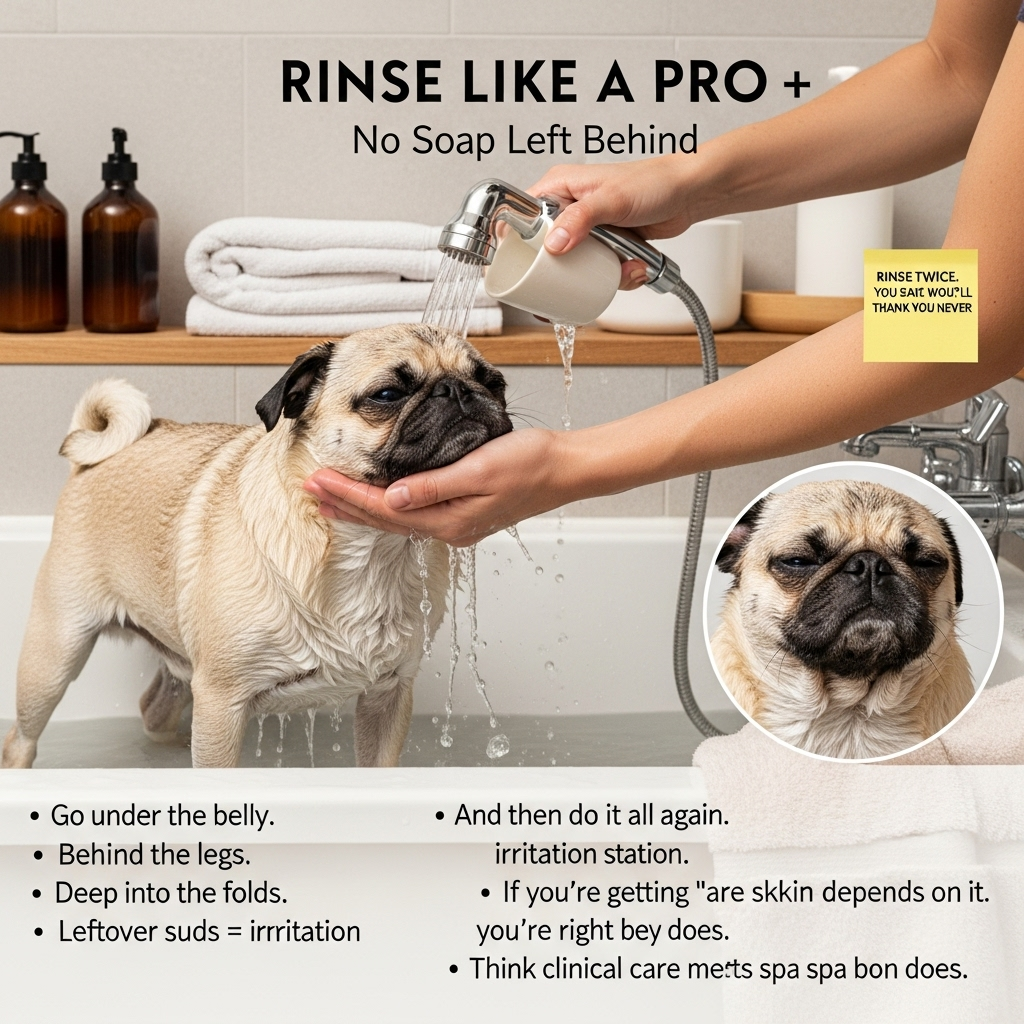
Here’s the thing. Even tiny amounts of leftover shampoo can cause your pug’s skin to become irritated, causing itching, redness, or that annoying post-bath scratching that nobody likes. For this reason, rinsing is one of the most crucial steps in the bath, not just a part of it. Rinse as if you’re on a mission. Take your time and be deliberate. Go under the belly, behind the legs, around the neck, along the chest, and gently into the creases where soap likes to hide. Rinse once more if you believe you have had enough. The objective is for clear water to run off the coat.
Because pugs have thick coats and lots of skin folds, shampoo residue may end up in unexpected places. Irritation frequently begins in those hidden places. After the bath, a thorough rinse protects their delicate skin and improves overall comfort. Additionally, it lessens the likelihood of itching after a bath, which could ruin all of your hard work.
You’re on the right track if your pug is giving you that traditional “are we done yet?” look, which includes slow blinks and dramatic sighs. That expression indicates that you are taking your time and being thorough instead of hurrying. They might not enjoy the procedure, but they will definitely value the comfort that follows. Once the towel and treats are removed, a well-rinsed pug feels better, settles more quickly, and forgives bath time much more readily.
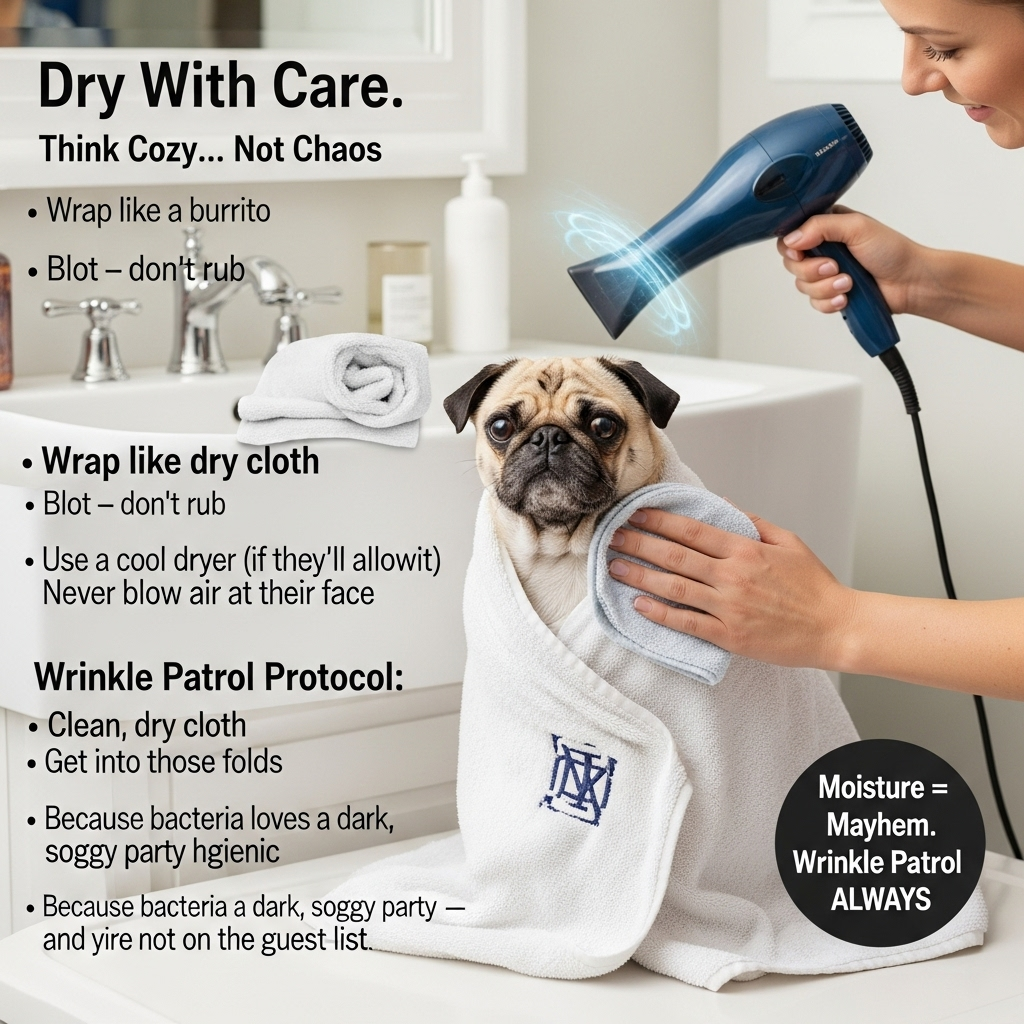
It’s time to encase them like a burrito and restore their sense of security. Instead of rubbing their coat, gently blot it with a soft, absorbent towel. Pug skin is sensitive enough that rubbing causes friction without making things more dramatic. Their skin remains calm and comfortable while moisture is drawn out by slow, steady pressure.
A hair dryer on a cool or low setting can help expedite the process if your pug is tolerant of it. Hold the dryer at a safe distance and keep it moving at all times. Never point it at their eyes, ears, or face. Watch their body language closely. Stop and return to towel drying if they stiffen, attempt to flee, or appear anxious. Comfort always comes first.
The most crucial step is now. Wrinkle care cannot wait. One by one, carefully dab inside each facial fold with a clean, dry cloth. Make sure every wrinkle is completely dry by taking your time. The ideal conditions for bacteria and yeast to flourish are created by moisture and darkness, and that is a party you most definitely did not RSVP for. Here, proper drying stops infections, irritation, and odors before they arise.
completing difficult tasks. Armpits, tail area, under the neck, and dry paws. Your pug’s skin remains healthy, they remain comfortable, and bath time ends on a peaceful, comforting note when drying is done completely and gently. When the treats are revealed, this is how you transform a damp, suspicious experience into one that feels secure, affectionate, and worthy of forgiveness.

Taking care of your dog after a bath is crucial and, in many respects, the most memorable aspect of the experience. This is the moment that transforms bath time from something your pug just puts up with to something they can confidently and comfortably recover from. Your pug will be able to relax and realize that the unpleasant part is over with the help of gentle drying, warm towels, and calm assurance. Slowing down here matters. All the trust you established during the bath can be destroyed by rushing through post-bath care.
It makes a big difference to take a few extra minutes to let them warm up in a familiar setting, gently check for wrinkles, and rub them dry. It offers emotional comfort, helps control body temperature, and guards against moisture-related skin problems. Your pug will know they are safe and that you are still very much on their side if you provide them with quiet, attentive care.
Pugs have excellent emotional memory. They undoubtedly recall how the experience concluded, even though they might not recall the drama of getting soaked or the humiliation of standing in a tub. They recall the person who consoled them, spoke to them politely, and improved the situation afterwards. Indeed, they do recall who gave them the cherished toy, the favorite treat, or the peanut butter.
Your pug starts to associate bath time with a positive outcome when it always ends with warmth, praise, and something fun. With time, resistance diminishes, trust increases, and the fear lessens. They believe that if love, comfort, and a well-deserved reward are waiting on the other side, even the most dubious behaviors are acceptable.
How Frequently Should Your Pug Be Bathed?
Don’t go too far. Their skin may become dry from taking too many baths. The recommended frequency for the majority of pugs is once every three to four weeks.
Assuming they didn’t roll in duck poop. After that, all wagers are off.
Additionally, wipe their wrinkles once a week. Even if it’s not bath day, a quick swipe with a damp cloth and a dry one can prevent a whole world of gunk.
Giving your pug a bath is more than just a chore to cross off a list. It is bonding. It’s silent eye contact in a setting devoid of dignity. As they stand there drenched, slightly offended, and utterly exposed, trust is being transferred. They are allowing you to enter their peculiar little world at that precise moment, one that is based on routine, security, and the conviction that you would never act without a valid reason.
Therefore, take a moment to smile the next time your pug gives you that distinct “why are you like this” look from the tub. This is love at its most pragmatic, absurd, and nose-smooshed. They accept you even though they don’t fully comprehend how you are showing up for them. That is more important than flawless technique or a bathroom free of splashes.
Set the mood if it helps. Light a candle, metaphorically or literally. Put on some calm music. Breathe through the chaos and the unavoidable shake that causes water to flow everywhere but where you intended. Yes, these moments are messy, but they’re also strangely personal. They are a part of the trust you develop when you take care of someone who is entirely dependent on you.
Cleaning a dog is not all you are doing. You are caring for your squishy-faced sidekick, who makes your life louder, cozier, and infinitely funnier. To be honest, they never looked cuter than when they were wrapped in a towel, blinking slowly, and taking in everything.
It’s definitely treat time once you’re both mostly dry and nobody has experienced a complete emotional breakdown. Perhaps even some playtime. Allow them to choose a favorite or present a novel idea. Make bath day a rewarding and comforting full circle. Because it went beyond simply giving your dog a bath. It was time with you. And that is always worth it.
A bath every three to four weeks is ideal for the majority of pugs. While bathing too infrequently can result in buildup and odor, bathing too frequently can dry out their skin.
Always use a mild, dog-specific shampoo. Pugs’ sensitive skin can be irritated by human shampoos and strongly scented products.
Well, no. Even baby shampoo may cause dryness or irritation because it is not designed for the pH of a dog’s skin.
Indeed. Wrinkles on the face can be gently cleaned during bath time. Afterward, make sure they are completely dry to avoid moisture-related problems.
Steer clear of dousing the head with water. When taking a bath, you can gently insert cotton balls into the outer ear and remove them right away.
Leftover shampoo residue and frequent bathing are common causes of itching. Rinse thoroughly and space baths appropriately.
While many pugs prefer towel drying, some can tolerate a blow dryer on a low, cool setting. Never use high heat.
Depending on the thickness of the coat, drying may take ten to twenty minutes. Paws, ears, and wrinkles need special care.
Sure. With the right planning and perseverance, most pug baths are safe to perform at home.
Keep the experience calm and positive. Move slowly, talk softly, and use treats. Over time, consistency helps reduce anxiety.
Indeed. Frequent brushing and bathing reduce shedding around the house by removing and loosening extra fur.
Wrinkles on the face, the area under the neck, the chest, the paws, and the tail should all be closely examined because these areas gather moisture and dirt.
Sure. Before continuing with routine baths, a veterinarian should assess any persistent itching, redness, or odor.