
6-Month Old Pug Training: Guiding Your Little Gremlin With Love
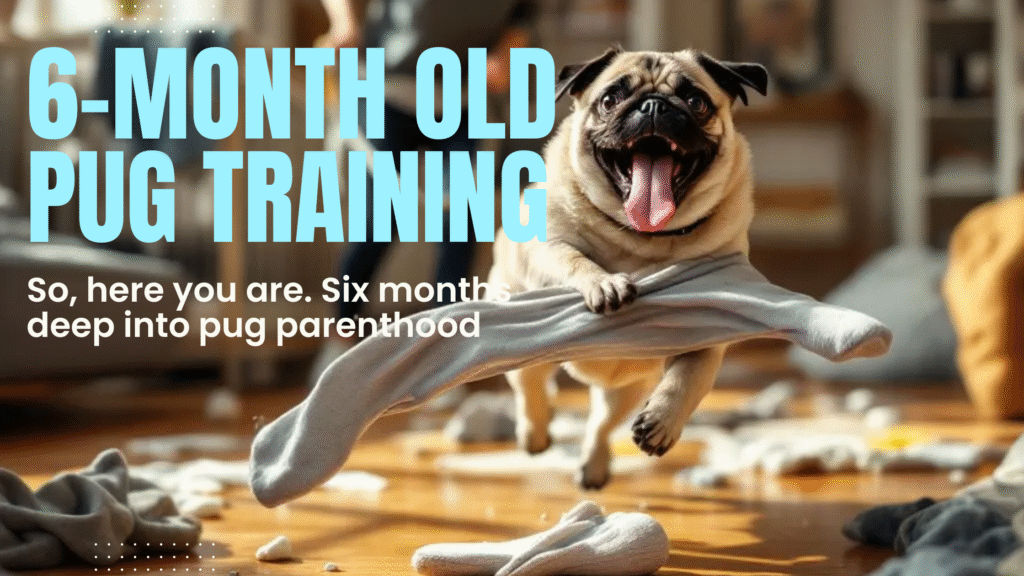
6-Month Old Pug Training– So, here you are. Six months deep into pug parenthood.
If you’re anything like the rest of us, you’re wondering how this snorting, squishy-faced chaos machine managed to steal your heart and wreck your sanity all in the same moment. One minute they’re cuddled up in your arms like a tiny angel, and the next, they’re dragging your underwear through the house like it’s a victory flag.
But pay attention—the age of six months marks a sea change. You’re not in that helpless puppy phase anymore, but you’re not out of the storm either. This is the teenage stage. That means stubbornness, sass, and sudden selective hearing.
But it also means your pug is finally old enough to learn, listen (kinda), and bond with you in a way that’ll last for life.
Let’s discuss what this stage actually looks like from an emotional, practical, and honest standpoint.
What’s Actually Going On With Your 6-Month Old Pug
Pug socialization guide your six-month-old pug is no longer a baby; instead, they resemble a hyperactive toddler who believes they are an expert on everything.
They’re curious, bold, and way too confident for their own good.
They test every limit, every rule, and every ounce of your patience.
Potty training? Still a work in progress.
Chewing? You better believe it.
Listening? Only if there’s cheese involved.
Beneath all of that mischief, though, is a dog who is frantically trying to learn about the world and you. They’re trying to figure it all out, and they’re looking to you to lead the way.
6-Month Old Pug Training 01 : Carefully and Regularly Review the Fundamentals
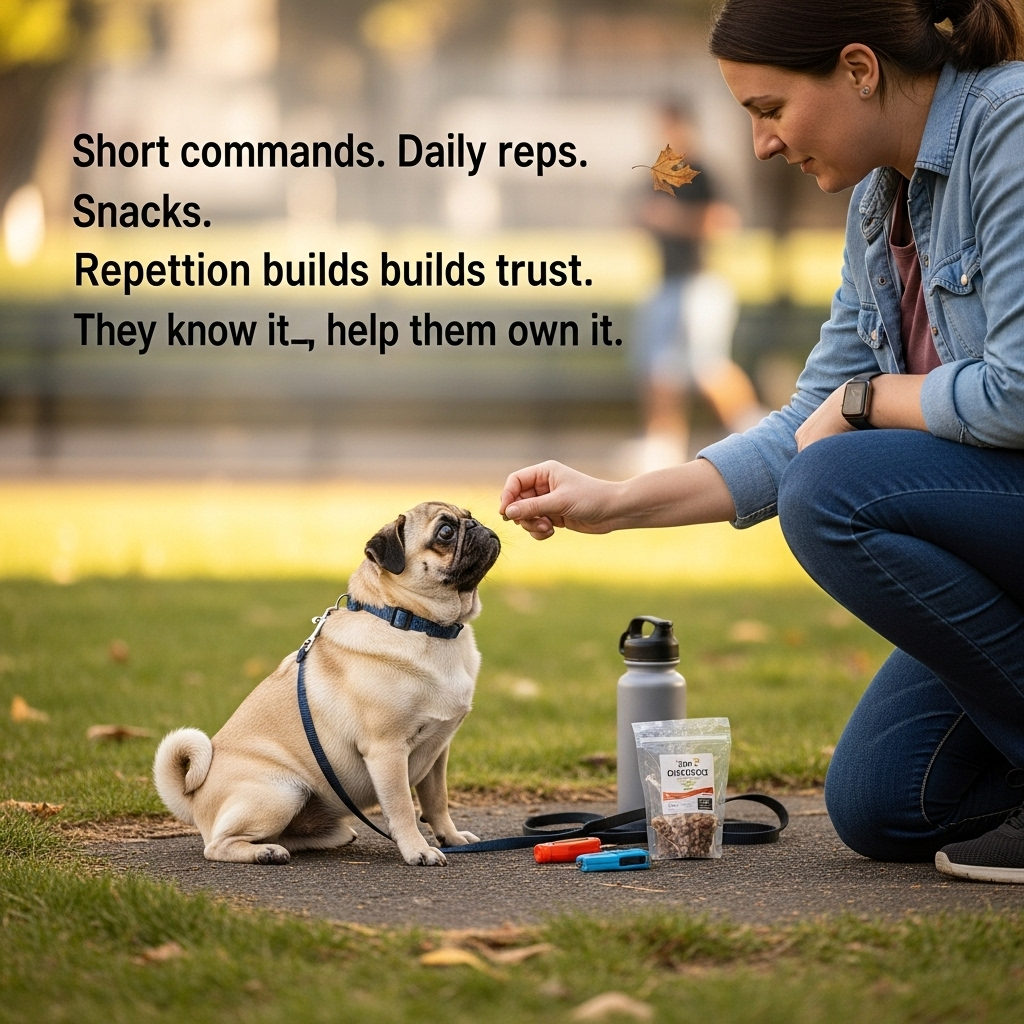
Stubborn pug training tips: They are aware of the word “sit”—when they feel like it.
Indeed, they have heard “no,” but they think it’s a cute suggestion.
Six months is the time to go back to basics, not because they forgot, but because repetition builds muscle memory and real-world confidence.
Keep your commands short and your tone loving but firm.
Reward every win like it’s the first time they ever got it right.
Practice daily, even if it’s only for five minutes, to avoid becoming lazy.
Vary the environment so they learn to listen anywhere, not just on your living room rug.
Training at this age is like teaching a teenager how to drive. It takes time. It takes trust. It takes snacks.
6-Month Old Pug Training 02 : You're Closer Than You Think: Potty Training Isn't Over
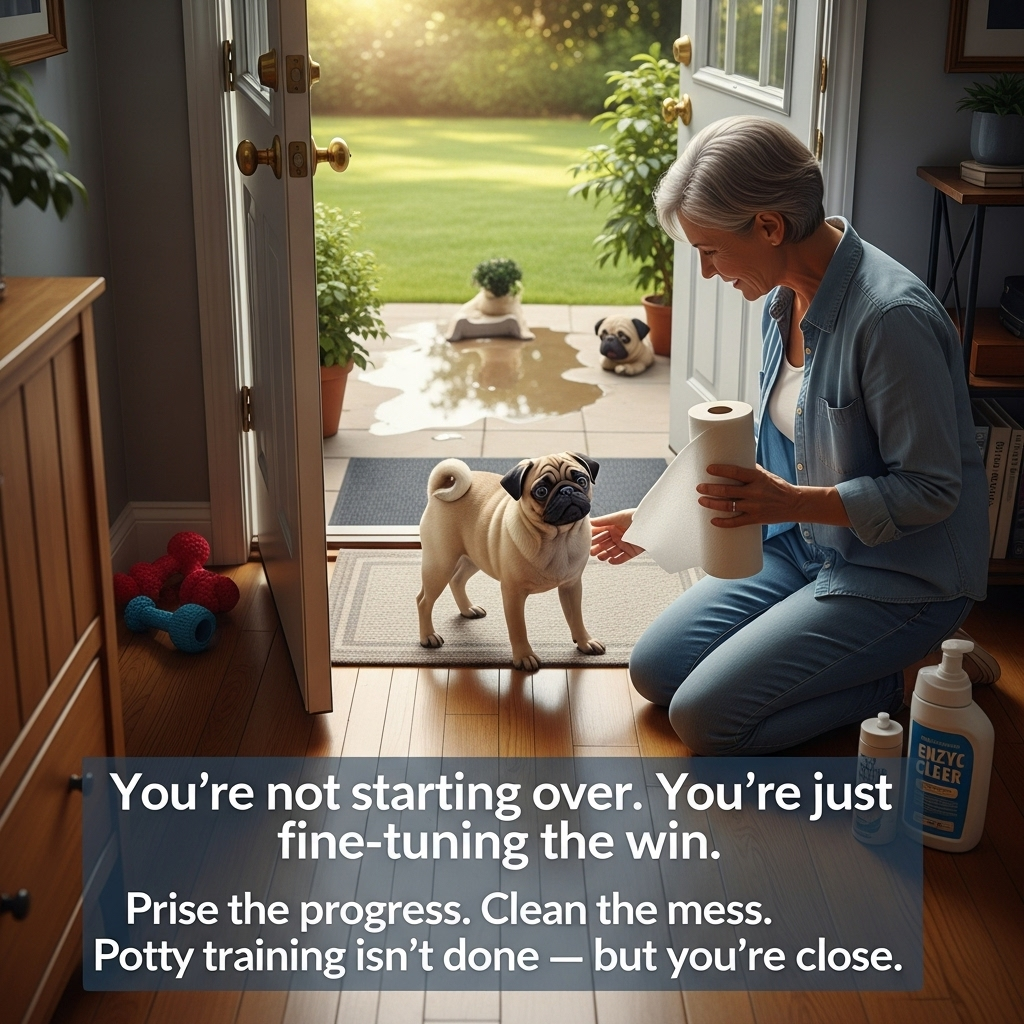
How to train a pug puppy a few weeks of success can give you a false sense of security, let’s face it. Then boom. A puddle in your hallway. Again.
Pug puppies love to keep you humble.
This stage is about reinforcing the routine and tightening up any weak spots.
Stick to a consistent potty schedule. Like religiously.
Praise them like they just discovered fire every time they go outside.
If there’s an accident, don’t get mad. Clean it, reset, and move on.
You’re not back at square one. You’re just smoothing the edges.
6-Month Old Pug Training 03 : Crate Time Is Still Quality Time
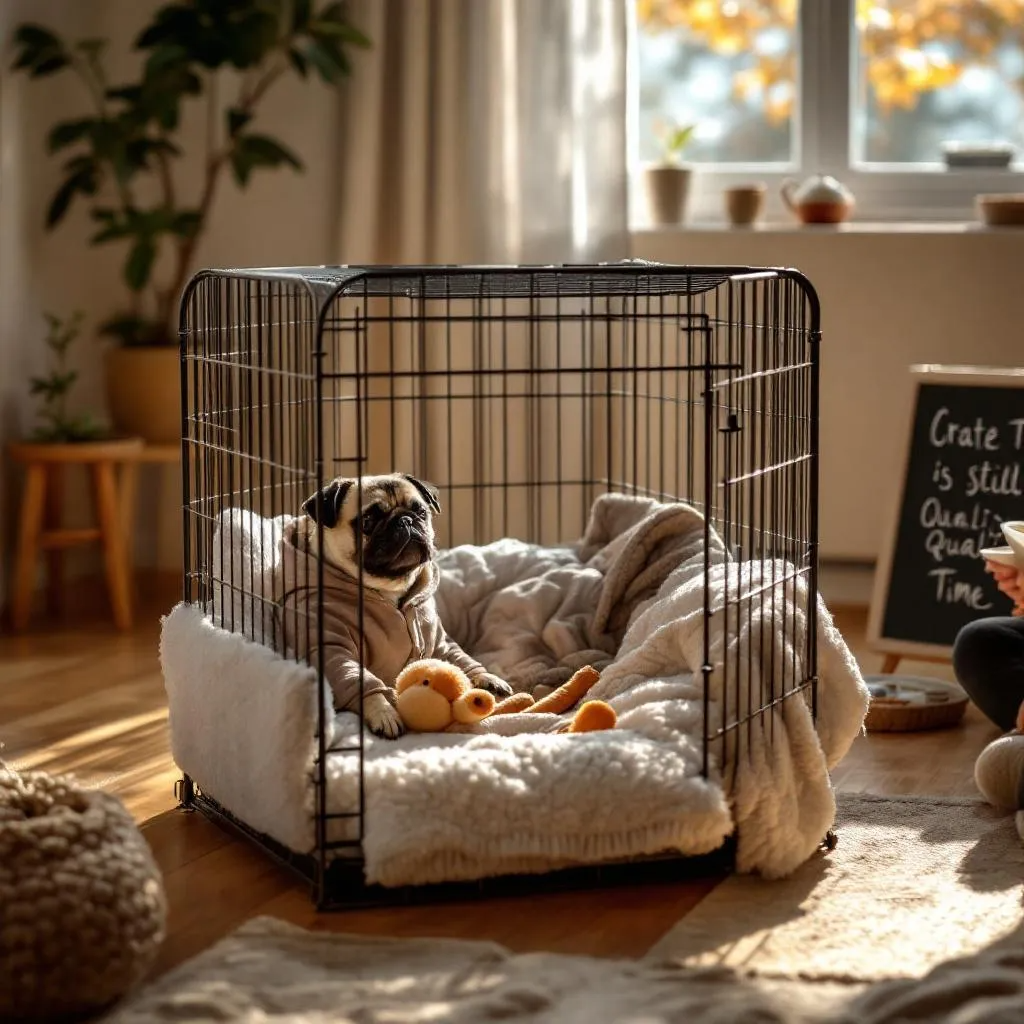
Crate training for pugs: Crates often get a bad rap. However, that comfortable little den is a lifesaver for a pug, both for them and for you.
At this age, they might resist. They might whine. However, they are merely testing you; they are not rejecting the crate.
Make the crate feel like a retreat, not a punishment.
Add soft blankets, toys, and something that smells like you.
Feed meals in there. Let them nap in there.
Above all, maintain consistency.
This is where they learn self-regulation. Where they calm down, reset, and feel safe. Don’t give up on the crate now. It’s more important than ever.
6-Month Old Pug Training 04 : Teach Impulse Control Yes, even with their adorable appearance.
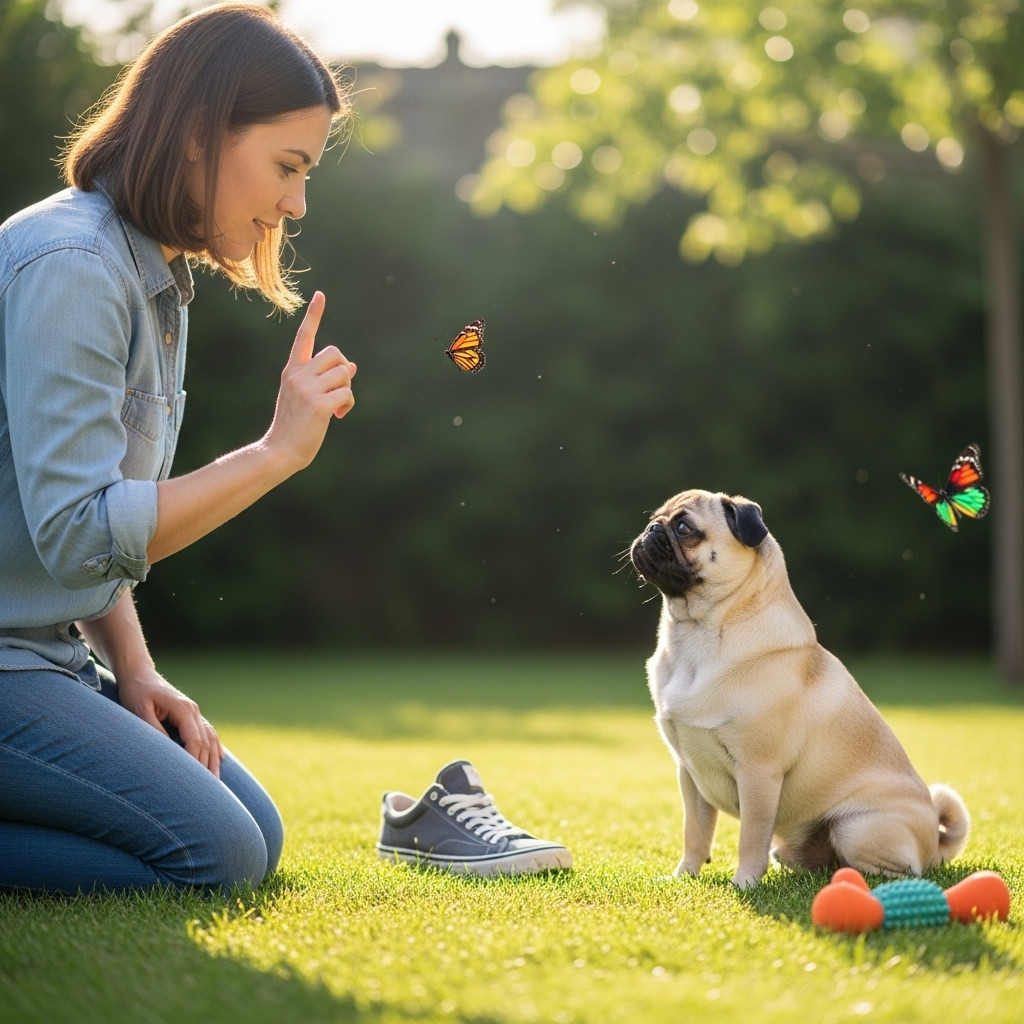
Obedience training for pugs, Six-month-old pups have only one setting: full send. They go after seeing something they want.
The goal of impulse control training is to teach your dog to think things through before acting. It’s challenging. For you and for them.
Practice saying “wait” before eating or leaving the house.
Use high-value distractions to teach “leave it” (food, toys, your shoes).
Use “stay” as if it were a yoga pose. Begin modestly and increase it as they achieve success.
These abilities make the difference between a dog that listens and one that runs into traffic because a butterfly gave them a funny look.
6-Month Old Pug Training 05 : Socialization, Still Crucial, Still Emotional
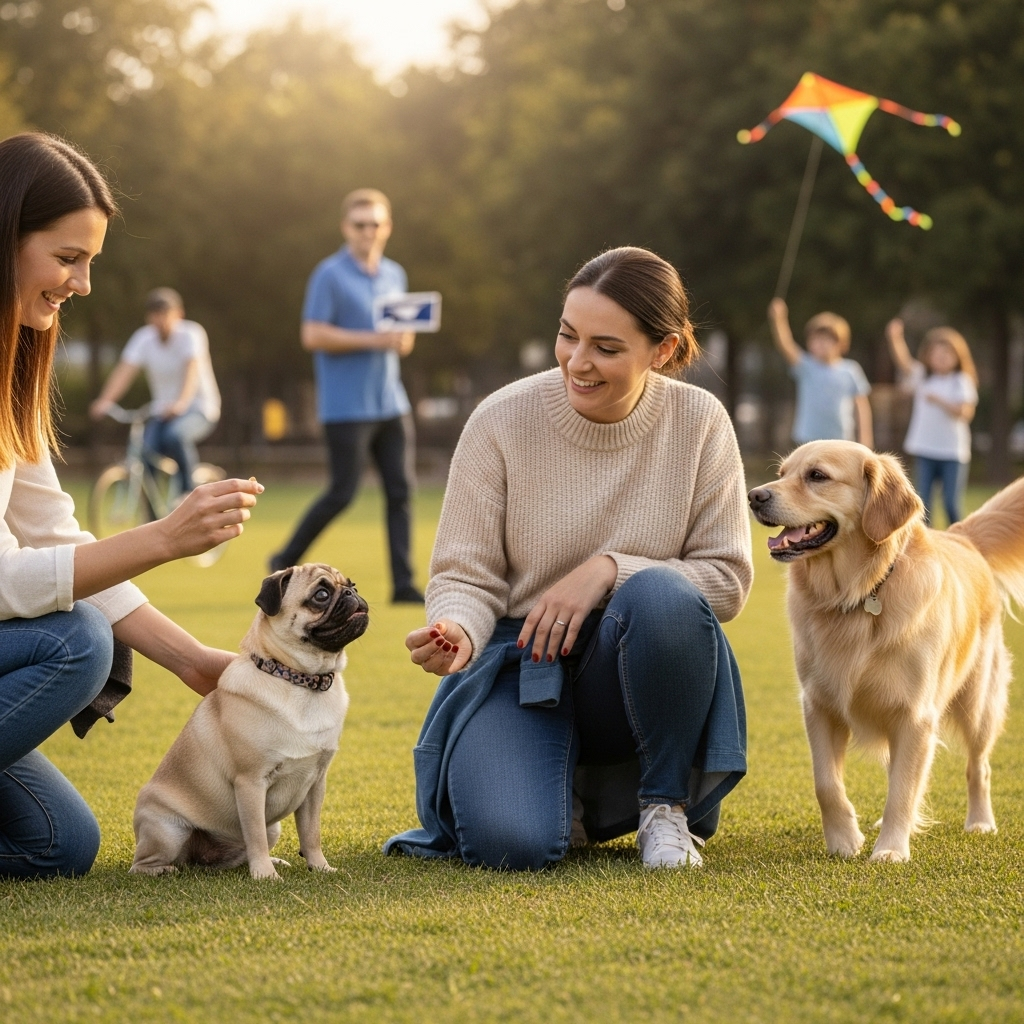
Pug behavior at six months: At six months, your pug is absorbing the world like a sponge. And unfortunately, they’ll absorb fear and anxiety just as fast as joy and excitement.
So dog socialization isn’t optional. It’s your secret weapon.
Gently introduce new dogs, people, sounds, and places.
Keep outings short, safe, and positive.
Pair every new experience with praise or treats.
This is how you raise a confident, inquisitive, and courageous dog. A pug who doesn’t freak out when the mailman shows up in sunglasses.
6-Month Old Pug Training 06 : Play Is Not Just Play, It’s Brain Food
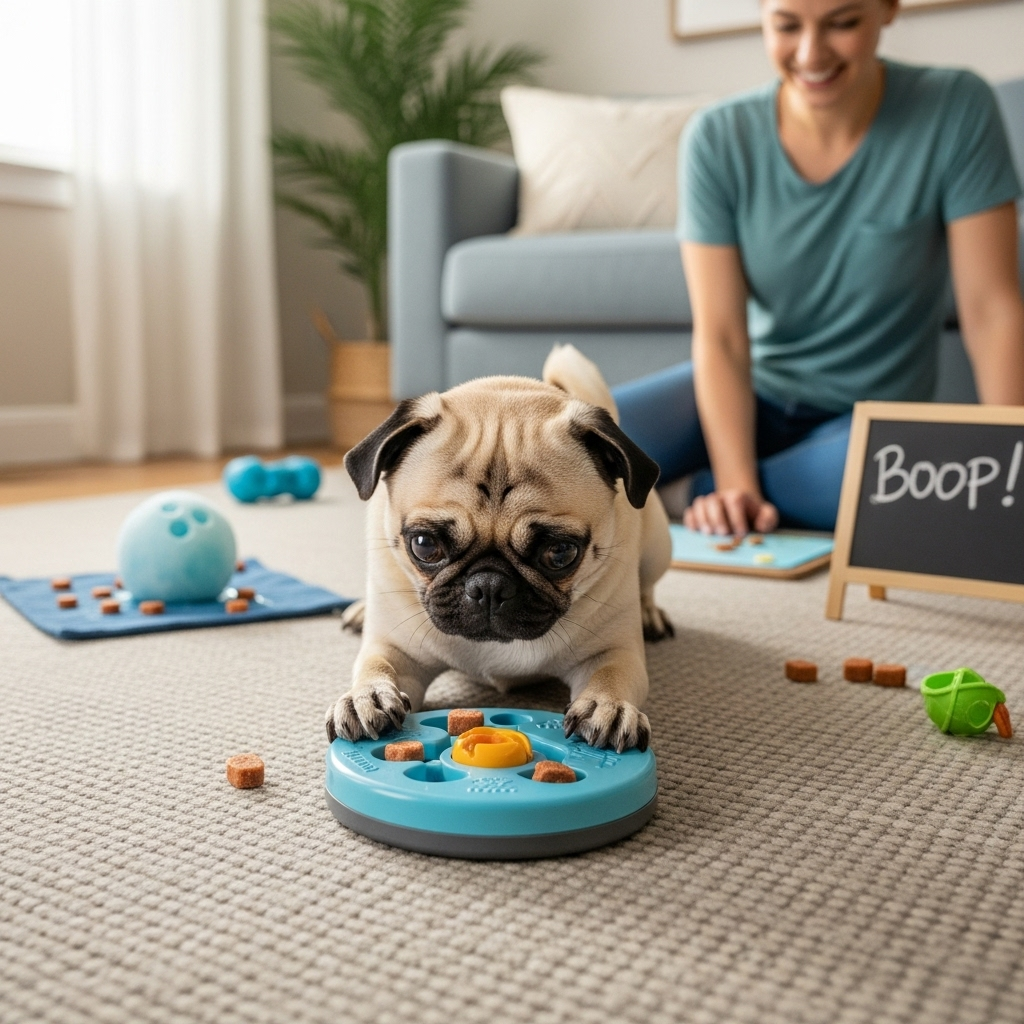
Training a six-month old pug: Pugs may be comedians, but they’re also thinkers. They will find their own amusement if they aren’t stimulated, and spoiler alert: it will involve chewing something pricey.
Hide treats around the house for a mini scavenger hunt.
Teach them silly tricks like “spin,” “high five,” or “boop.”
Use puzzle toys or frozen Kong snacks to keep them focused.
Their behavior definitely improves when their brain is rested.
6-Month Old Pug Training 07 : It's acceptable to feel frustrated, but keep going.

Let’s be real. Some days, you’ll feel like a failure. You’ll cry into your hoodie while your pug gleefully shreds a roll of toilet paper like it’s performance art.
But you are doing amazing. Even when it feels like nothing’s working, it is.
Every moment you stay patient. Every time you reward the good. Every time you choose kindness over yelling. That’s what they remember. That’s how they learn.
Concluding Remarks: You're Only in the Difficult Part, Not Alone
Despite being messy and draining, training a 6-mont old pug training is well worth the effort.
These little dogs? They’re smart. They’re emotional. They’re stubborn. Above all, though, they are devoted. Once you push through this stage, you unlock a bond that lasts for life.
So take a deep breath. Take a break when you need to. And have faith that beneath the mischief, the chaos, and all that love, the dog of your dreams is right there.
You’re not just raising a pug. You’re raising your best friend.
And you’re doing better than you think.
Frequently Asked Questions About 6-Month-Old Pug Training
1. Why does my 6-month-old pug seem defiant or obstinate all of a sudden?
At six months, pugs enter adolescence. Compared to impulse control, which can manifest as stubbornness, confidence grows more quickly. This is not disobedience; rather, it is normal development.
2. Is it typical for my pug to forget previously learned commands?
Yes. Sit, come, and leash manners are among the skills that many teenage pugs seem to “forget.” As your pug learns to react in spite of distractions, these behaviors require reinforcement.
3. How much daily training is appropriate for a six-month-old pug?
It is best to do two or three quick sessions of five to ten minutes each day. Long sessions are not nearly as effective as short, regular training sessions.
4. Why is my pug now pushing boundaries?
Learning independence includes boundary testing. Your dog is learning which rules are consistent and which are not. Clear, predictable boundaries reduce confusion.
5. Does potty training start to regress after six months?
Yes. Adolescents frequently experience temporary potty regression. Keep things consistent, keep a close eye on things, and reward good behavior. Clean accidents calmly without punishment.
6. How crucial is routine for a pug that is six months old?
Routine is essential. Your pug will feel more secure and exhibit fewer stress-related behaviors if you provide regular feeding times, potty breaks, walks, and relaxation.
7. At this age, does my dog still require crate time?
Yes. Your pug can better control their energy and emotions with a crate or peaceful rest area. It ought to be a serene, uplifting space that is never utilized for punishment.
8. How can I control destructive behavior or chewing?
Provide suitable chew toys, switch up the enrichment items, and keep a close eye on things. At this age, chewing frequently increases and should be redirected rather than punished.
9. Does this stage require mental stimulation?
Very much so. Basic training exercises, sniffing games, and food puzzles exhaust the brain and frequently prevent undesirable behaviors more effectively than additional exercise alone.
10. Should I start giving my pug more exercise right now?
Exercise can be increased gradually, but maintaining balance is crucial. Overstimulation and behavioral problems can result from excessive physical activity combined with insufficient sleep.
11. Why does my dog ignore me outside but listen to me inside?
Outdoor environments are full of distractions. Instead of expecting immediate obedience, training reliability increases when skills are practiced in progressively more distracting environments. distracting environments.
12. When does the “gremlin phase” of adolescence typically come to an end?
With regular training, routine, and patience, the majority of pugs start to settle between nine and twelve months.
13. When training a 6-month-old pug, what is the most crucial thing to keep in mind?
This phase is temporary. Your pug will grow into a self-assured, well-mannered adult dog with the help of gentle guidance, consistency, and kindness.
- Quisque aliquet nibh sit amet lectus
- Nulla at metus ultricies, placerat augue
- Curabitur mollis ex vestibulum
- Quisque aliquet nibh sit amet lectus
- Nulla at metus ultricies, placerat augue
- Quisque aliquet nibh sit amet lectus
- Quisque aliquet nibh sit amet lectus
- Curabitur mollis ex vestibulum